Kingdom
CAN 2025: International Press Charmed by the Organization
Even before the end of the 2025 Africa Cup of Nations, several renowned international media outlets have judged that Morocco, the host country of the competition, can already present a very positive assessment of the organization of the continental tournament.

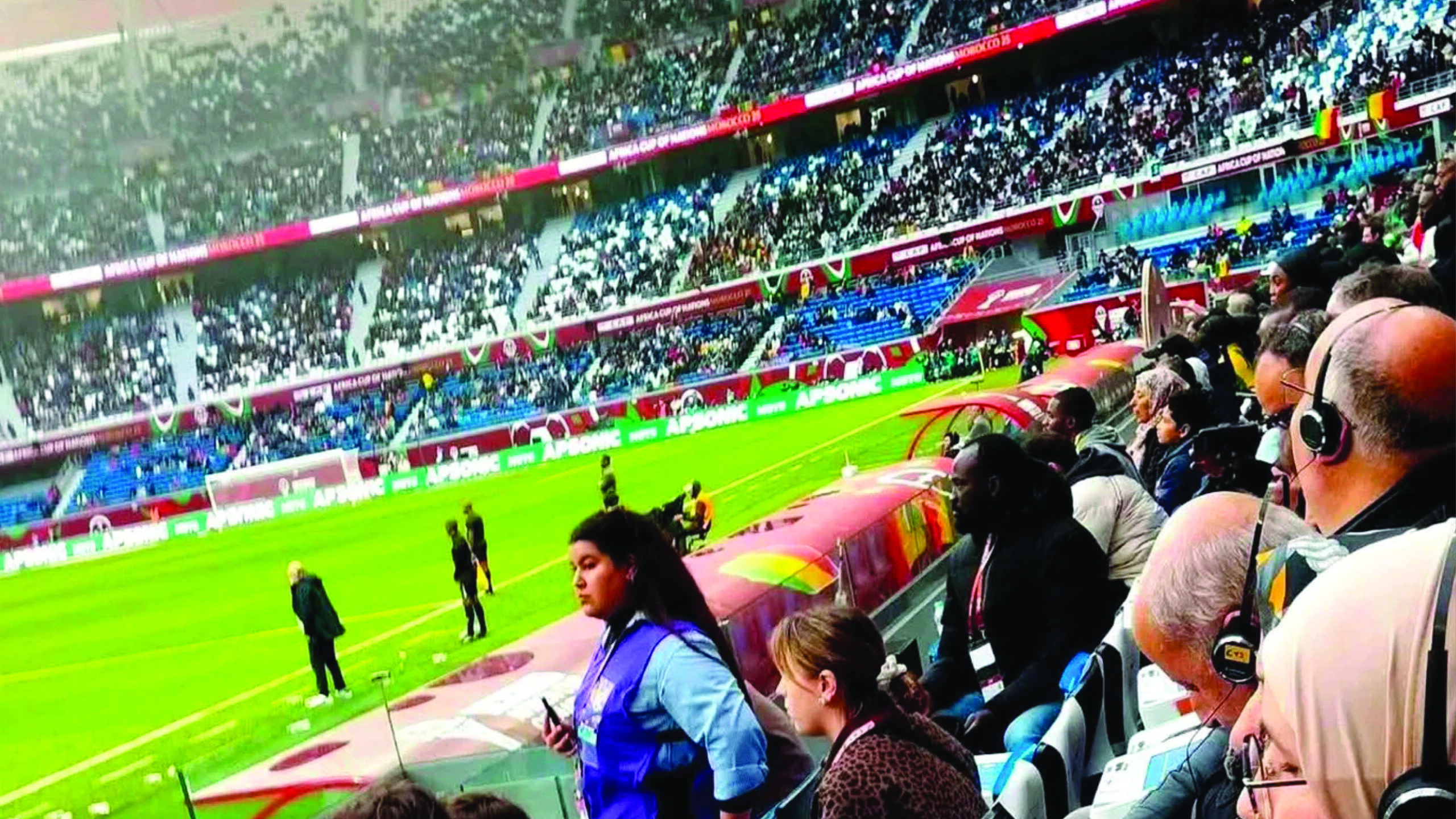
The 2025 Africa Cup of Nations, held in Morocco from December 21, 2025, to January 18, 2026, has generated significant international interest, particularly in Europe, the United States, Asia, and of course across the continent.
Beyond the final match, which pitted the Atlas Lions against the Lions of Teranga at the Moulay Abdellah Stadium in Rabat, one specific aspect captured the attention of the international media: the organization.
It should be emphasized from the outset that the foreign press has been highly complimentary regarding the quality of sports infrastructure, transportation (high-speed rail, airports, highways), hospitality, urban landscapes, security, and the hospitality that characterizes Morocco.
A widely positive assessment
According to the French media RMC Sport, on the eve of the semi-finals of the 2025 Africa Cup of Nations, Morocco, the host country of the competition, could already present a very positive assessment of the tournament’s organization.
In the view of this internationally renowned sports media, the quality of the infrastructure stands out as one of the most praised organizational aspects.
“The nine stadiums made available, recently renovated to meet international standards, particularly in view of the 2030 World Cup, impressed players and supporters, especially the Prince Moulay Abdellah Stadium in Rabat. The pitches, despite sometimes challenging weather conditions, also provided optimal playing conditions throughout the competition,” describes the French outlet.
This observation by RMC Sport is widely shared by the German public radio station Deutschlandfunk, which, on the organizational front, also highlighted the quality of sports infrastructure and the investments made for the competition, stating that the on-site organization is in fact very good and that Morocco offers a completely different atmosphere and very good organization.
Furthermore, the German radio station presents the Kingdom’s hosting of the continental competition as a successful test, both in terms of atmosphere and organization, especially in perspective of the 2030 World Cup, which the Kingdom will co-host with Spain and Portugal.
Similarly, other prestigious European publications, such as “The Guardian,” “L’Équipe,” “AS,” and “Mundo Deportivo,” were no less effusive in their praise for the quality of stadiums, training centers, and the accommodation conditions for the African teams.
In fact, some of them suggested that Moroccan infrastructure rivals the facilities of major European leagues. In doing so, they highlighted the quality of pitches, punctuality, and organizational efficiency.
Moreover, it is worth noting that around thirty African journalists covered the continental tournament, invited by the National Association of Media and Publishers (ANME). This clearly contributed to enhancing the visibility of CAN 2025 across the continent.
A strategic lever
The analysis by the Italian newspaper “Notizie Geopolitiche” underscores the strategic importance that the Kingdom places on football and, by extension, on CAN 2025.
“HM King Mohammed VI has made football a strategic lever for Morocco, capable of consolidating the Kingdom’s position as an emerging power and a crossroads between Africa, Europe, and the Arab world,” writes the Italian media.
It adds in essence: “This is evidenced by the immense popular, organizational, diplomatic, and media success of CAN 2025, which is the culmination of a long-term policy pursued under the enlightened leadership of the Sovereign for over twenty years.”
“Notizie Geopolitiche” also notes a royal policy of grand projects, economic modernization, internal stabilization (through development), and international influence.
According to the Italian media, the success of the AFCON in Morocco is the result of continuous investments in transport (high-speed rail, airports, highways), hospitality, urban renewal, security, hosting international events, and the training of administrative elites.
This analysis aligns with that of the Bulgarian news portal “novinata.bg.” According to the site, CAN 2025, constituting a major success, far exceeding sporting expectations, is a “true showcase of contemporary Morocco.”
Given how the organization of CAN 2025 unfolded, it is clear that Morocco, which invests in its infrastructure, its international image, and its capacity to host the world, is already projecting itself in the best possible way towards the 2030 World Cup.
The national team impresses
Beyond the organization of the AFCON, the Moroccan team has not left many prestigious international media indifferent. The British “The Guardian” praised the Atlas Lions, one of the most talented teams during the continental tournament, both tactically and in terms of efficiency.
The British daily dedicated a special podcast to the competition’s semi-finals, reviewing the impressive journey of the Atlas Lions and their legitimate ambition to secure a second continental title.
Right from the introduction of the podcast, “The Guardian” emphasizes that Morocco is experiencing a pivotal moment in its football history. According to the podcast’s authors, with Walid Regragui as national coach, the Atlas Lions appear stronger, more mature, and more ambitious than ever.
Also according to the British outlet, at the heart of this Moroccan dynamic are several international stars like Brahim Diaz (top scorer of the AFCON), a Real Madrid player, and Achraf Hakimi of Paris Saint-Germain.
In the view of “The Guardian” analysts, the convincing quarter-final victory against Cameroon (2-0) constituted a major turning point in the tournament for the Atlas Lions. “This controlled success strengthened the national team’s confidence and confirmed its status as a serious contender for the continental title,” it is essentially noted.
Ultimately, even though Morocco narrowly lost the AFCON final to Senegal, major international media point out that the Kingdom has gained in terms of image and has undeniably demonstrated its great capacity to organize international events. In other words, Morocco has brilliantly passed its first large-scale test in preparation for the 2030 World Cup.
Kenyan press applauds technological prowess
The Kenyan media “Tuko” focused more on the technological aspect, which played a central role in the various Moroccan stadiums that hosted the CAN 2025 matches, one of the most commercially profitable tournaments in history.
The cutting-edge audio description technology, unprecedented on an African scale, allowing blind and visually impaired supporters to follow player movements, key actions, and the complete match proceedings in real time within the stadiums, particularly impressed the Kenyan outlet during CAN 2025.
That said, “Tuko” did not fail to note the great resilience of Moroccan stadiums in the face of heavy rainfall. This is thanks to drainage and aeration technology capable of quickly absorbing water and preserving pitch quality even under the most adverse weather conditions.