Influences
C24/Sahara: Autonomy under Moroccan sovereignty is emerging as the exclusive framework
More than 130 countries now support Morocco’s Autonomy Initiative, including three permanent members of the Security Council—namely the United States, France, and the United Kingdom—as well as Spain.

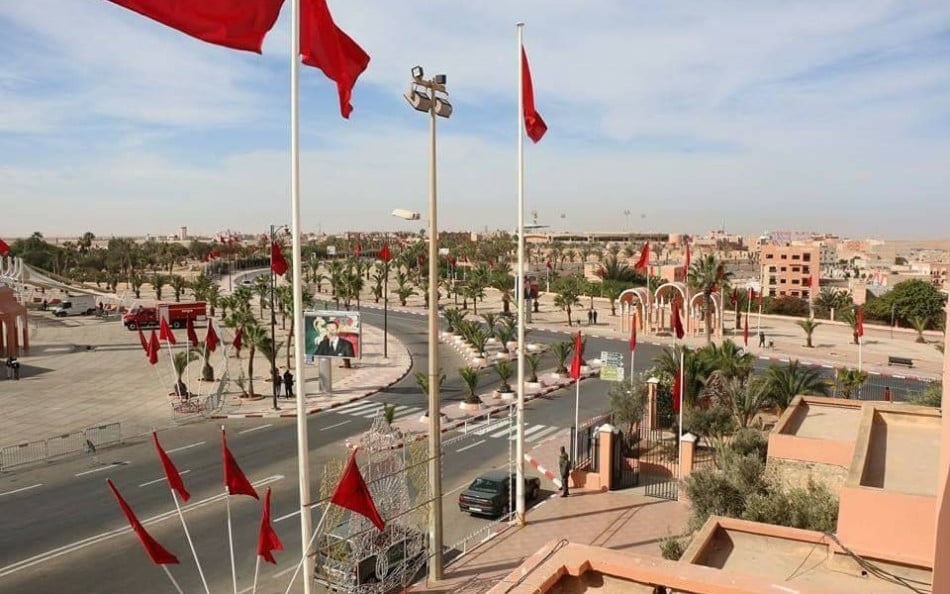
Ghalla Bahiya, an elected member of the Dakhla–Oued Eddahab region, stated during the regional seminar of the United Nations Committee of 24 (C24), held this week in Managua, Nicaragua, that the adoption of UN Security Council Resolution 2797 has marked “a genuine historic turning point,” opening, in accordance with the vision of His Majesty King Mohammed VI, “a new era after 31 October 2025.”
Speaking as a woman native to Dakhla and a democratically elected representative of the region, she noted that this resolution establishes a new international dynamic in addressing this regional dispute, reflected in five major developments.
The speaker thus highlighted the clear and unambiguous recognition by the Security Council that autonomy under Moroccan sovereignty constitutes the most feasible, realistic, and sustainable solution to this dispute.
Ms Bahiya, who is participating in the seminar in her capacity as a local elected representative of the Dakhla–Oued Eddahab region at the official invitation of the Chair of the C24, pointed out that more than 130 countries now support the Moroccan Autonomy Initiative, including three permanent members of the Security Council—namely the United States, France, and the United Kingdom—as well as Spain.
She further emphasised the opening of 32 consulates general in the Moroccan Sahara by countries from four continents, considering that this diplomatic presence constitutes “a concrete expression of political recognition and confidence in the stability and economic potential of the region.”
The speaker also referred to “the progressive erosion of support for the separatist narrative,” recalling that more than 50 countries, including recently Mali and Honduras, have withdrawn their recognition of the so‑called “SADR.”
Referring to the terrorist attacks carried out by the “Polisario” against the Moroccan city of Smara on 5 May 2026, Ms Bahiya stated that these acts “should prompt the international community to seriously question the true nature of this armed separatist group.”
She stressed that the wave of condemnations following these attacks—emanating from permanent members of the Security Council, as well as several UN member states and international and regional organisations—demonstrates that the “Polisario” constitutes “a threat to regional peace and stability.”
In this context, she recalled discussions within the United States Congress regarding a possible designation of the “Polisario” as a terrorist organisation.
Ms Bahiya also highlighted the new orientations established by Resolution 2797, particularly the importance given to the census of populations in the Tindouf camps, describing this step as essential to achieving a credible and sustainable political solution.
In this regard, the speaker denounced “a prolonged situation of deprivation of fundamental rights,” recalling the continued absence of a population census in the Tindouf camps despite repeated calls by the Security Council since 2011.
Considering that this situation remains “unprecedented in the history of international refugee protection,” she deplored the diversion of humanitarian aid documented by several international bodies, as well as restrictions on freedom of movement and the principle of voluntary return.
In contrast to this situation, Ms Bahiya highlighted the profound transformations taking place in the southern provinces under the New Development Model launched by His Majesty King Mohammed VI in 2015, noting that this model has mobilised more than 100 billion dirhams, with an implementation rate exceeding 96%, enabling the development of strategic infrastructure and major energy, logistical, and social projects.
In this context, she specifically cited the Tiznit–Dakhla expressway and the Dakhla Atlantic Port, which serves as a strategic platform connecting Africa, Europe, and the Atlantic.
The speaker situated this momentum within the framework of major Atlantic initiatives launched by His Majesty the King, particularly the Atlantic Initiative for Sahel States, the Process of African Atlantic States, and the Africa–Atlantic Gas Pipeline, which reflect “an integrated and coherent African vision” based on connectivity, South–South cooperation, and the transformation of the Moroccan Sahara into a strategic hub oriented towards Africa and the Atlantic.
She emphasised the democratic legitimacy of this model, recalling that the populations of Morocco’s southern provinces are represented through elected institutions established through regular and transparent elections marked by high voter turnout.
Ms Ghalla Bahiya also stressed that “the convergence between realities on the ground and international positions is now clear,” affirming that autonomy under Moroccan sovereignty “is no longer one option among others, but the exclusive framework supported by the Security Council and by a growing international consensus.”
Finally, she reaffirmed that Morocco continues to extend “a sincere hand of dialogue” to Algeria, in a spirit of mutual respect, good neighbourliness, and regional cooperation and stability.