Business
Battery ecosystem: How far has Morocco come?
2026 is a pivotal year for ramping up Morocco’s electric-battery ecosystem. Here’s a close look at the structuring projects—those already in service and those whose start-up is imminent.

Today, heightened awareness of the harmful effects of climate change and global industrial shifts require a deep transformation toward a circular economy, low-carbon processes, and, above all, innovative energy solutions.
This transition has inevitably opened new opportunities for Moroccan industry to position itself in high value‑added segments, such as green hydrogen and batteries.
Indeed, the global rise of electric vehicles and the development of energy storage solutions are driving an unprecedented acceleration in demand for electric batteries.
For example, according to the IEA (International Energy Agency), the global lithium‑battery market reached a historic milestone in 2025, exceeding $150 billion, up more than 20% year on year. Demand is expected to intensify in the coming years.
That said, thanks to its energy‑related resources—such as phosphate (with 68% of the world’s reserves), cobalt and potentially lithium—Morocco, the leader of the automotive industry in Africa with a capacity of 1 million vehicles per year, has major assets to develop an integrated and competitive industrial battery sector, which is also essential for storing clean energy (solar, wind, etc.).
At the fourth edition of the International Chemistry Forum, held in May under the theme “Chemistry at the Heart of Industrial Integration,” the progress of building Morocco’s battery ecosystem was a central topic of discussion.
Start-up imminent
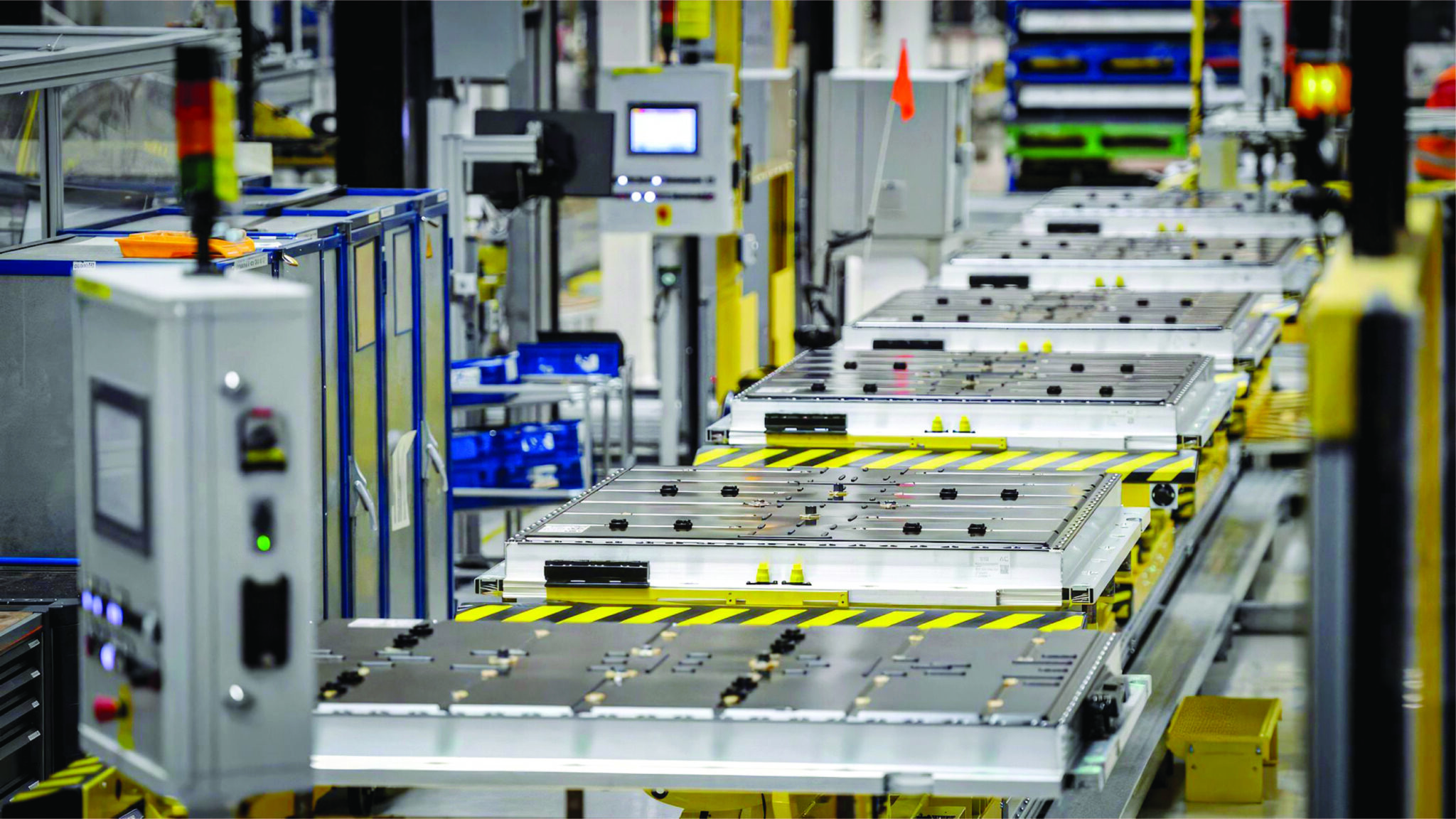
Highly anticipated, the commissioning of Morocco’s first gigafactory, that of Sino‑European group Gotion High‑Tech established in Kénitra, is expected to take place in August 2026, specifically for phase I of the project, the first of its kind in Africa and the Arab world (MENA).
It should be recalled that this first component (phase I) will mobilize an investment of MAD 12.8 billion for a 20 GW capacity, and is expected to create 17,000 direct, indirect and induced jobs (including 2,300 highly skilled positions).
Reflecting genuine confidence in the national industrial platform, Gotion High‑Tech—ranked among the world’s top 10 lithium‑battery manufacturers—aims ultimately to raise the capacity of its Kénitra site to 100 GW.
Kénitra is already a leading automotive hub, strengthened by the Stellantis plant, whose capacity has doubled to more than 535,000 units per year.
It should be noted that phases I and the four subsequent phases of Gotion High‑Tech’s gigafactory are expected to mobilize a total of MAD 65 billion in investments.
To grasp the scale of the Kénitra battery manufacturing project, whose batteries will be used for mobility (automotive) and energy storage (renewable energies), it is useful to note that Tesla’s only European factory does not exceed 50 GW.
Moreover, another strength of the Rabat‑Salé‑Kénitra industrial project lies in Gotion High‑Tech’s DNA, shaped by a strong logic of industrial integration and value‑chain integration, spanning from the mine to the battery pack.
It is important to recall that the electric‑battery specialist has made the strategic choice to produce LFP (lithium‑iron‑phosphate) batteries in the Kingdom, known for their competitive price.
This choice comes in a context where automakers must meet the challenge of making electric and hybrid vehicles accessible to the general public through affordable purchase prices.
Another factual advantage that will facilitate and accelerate the group’s industrial integration—whose shareholder base includes, among others, Volkswagen and other players—is that the Kingdom holds large iron deposits and 68% of the world’s phosphate reserves.
In addition, the materials essential to battery manufacturing will be produced in the Kingdom (cathodes, anodes and modules).
Indeed, the industrial unit of the China‑based company is expected to start with a remarkable integration rate of 70%. Note that the batteries produced locally by Gotion High‑Tech will be destined, for the automotive sector, to the two manufacturers established in the Kingdom (Renault Group and Stellantis) and to the European market.
In contrast, for energy storage, the main target markets will be Africa and the Middle East—two regions where demand for storage solutions will explode in the coming years due to the rapid growth of renewable energies.
What about BTR New Material Group?
An assessment of the construction of Morocco’s battery ecosystem would be incomplete without considering the industrial project of the Chinese company BTR New Material Group.
The lithium‑battery materials specialist is a central link in the national ecosystem, which is progressing slowly but surely.
Based on official communication (Q1‑2026 report), the Chinese industrialist is working to accelerate its anode and cathode production project located in the north of the country.
Under development at Tanger Tech, the two production units—anodes (with a capacity of 60,000 tonnes per year) and cathodes (50,000 tonnes per year)—are expected to mobilize a total investment of $750 million, and ultimately create more than 2,500 jobs.
BTR New Material Group’s ambitious objective for its Moroccan platform is to meet the needs of more than 500,000 electric vehicles per year. According to the project’s initial forecasts, highly strategic for Morocco’s battery value chain, the Tanger Tech site should enter service during the second quarter of 2026.
Towards ramp‑up
In June 2026, the Jorf Lasfar industrial unit of the Cobco joint venture—born from a partnership between Moroccan investment fund Al Mada and Chinese group CNGR, a global leader in battery materials—celebrated its first anniversary.
This marks a year of activity in Morocco and the production of active materials, the NMC (nickel‑manganese‑cobalt) precursors, for electric batteries.
As a reminder, the 238‑hectare industrial site, which mobilized a total investment of MAD 20 billion, targets a production capacity of 120,000 tonnes per year of NMC precursors and LFP cathodes, with a target capacity of 60,000 tonnes/year.
Beyond that reminder, it should be noted that in 2026 one of Cobco’s major announcements—Cobco will eventually generate more than 3,600 direct and indirect jobs in Morocco—concerns financing granted by its shareholders (Al Mada, CNGR Advanced Material) in the form of a loan of approximately MAD 1.3 billion.
This funding will strengthen the company’s financial base, which pursues a dual strategic ambition for Morocco’s battery production value chain: to reinforce local integration and generate industrial value in Morocco.
This will be achieved through the refining of critical metals (nickel, cobalt, manganese) used in the production of NMC precursors, and the recycling of black mass.
Black mass is the residue from crushing end‑of‑life batteries to extract strategic metals (lithium, nickel, cobalt), with a treatment capacity of 30,000 tonnes/year.
By way of illustration, the development of all its capacities will allow Cobco, whose activity will ramp up gradually as the national ecosystem expands, to produce the equivalent of 70 GWh/year.
A capacity sufficient to equip about 1 million electric vehicles each year.
A commissioning planned in 2028
One notable fact in 2026 related to Morocco’s electric‑battery ecosystem is the launch by Chinese group Tinci Materials of construction of its electrolyte plant in Jorf Lasfar.
With a total investment of more than MAD 2.5 billion, the industrial unit—whose commissioning is scheduled for the second half of 2028—will produce 150,000 tonnes of electrolytes for electric batteries.
In addition, the industrial site of this leading chemical and lithium‑battery materials actor will also produce strategic materials such as lithium hexafluorophosphate (LiPF6), a key component of lithium batteries.
Thus, Chinese group Tinci Materials will contribute substantially to strengthening Morocco’s integration into the global supply chains for electric batteries.