Business
Batteries: Which value chains for critical minerals?
Managem, the OCP Group and other international players are shaping the value chain of critical minerals, essential for the production of electric batteries in Morocco. An overview.

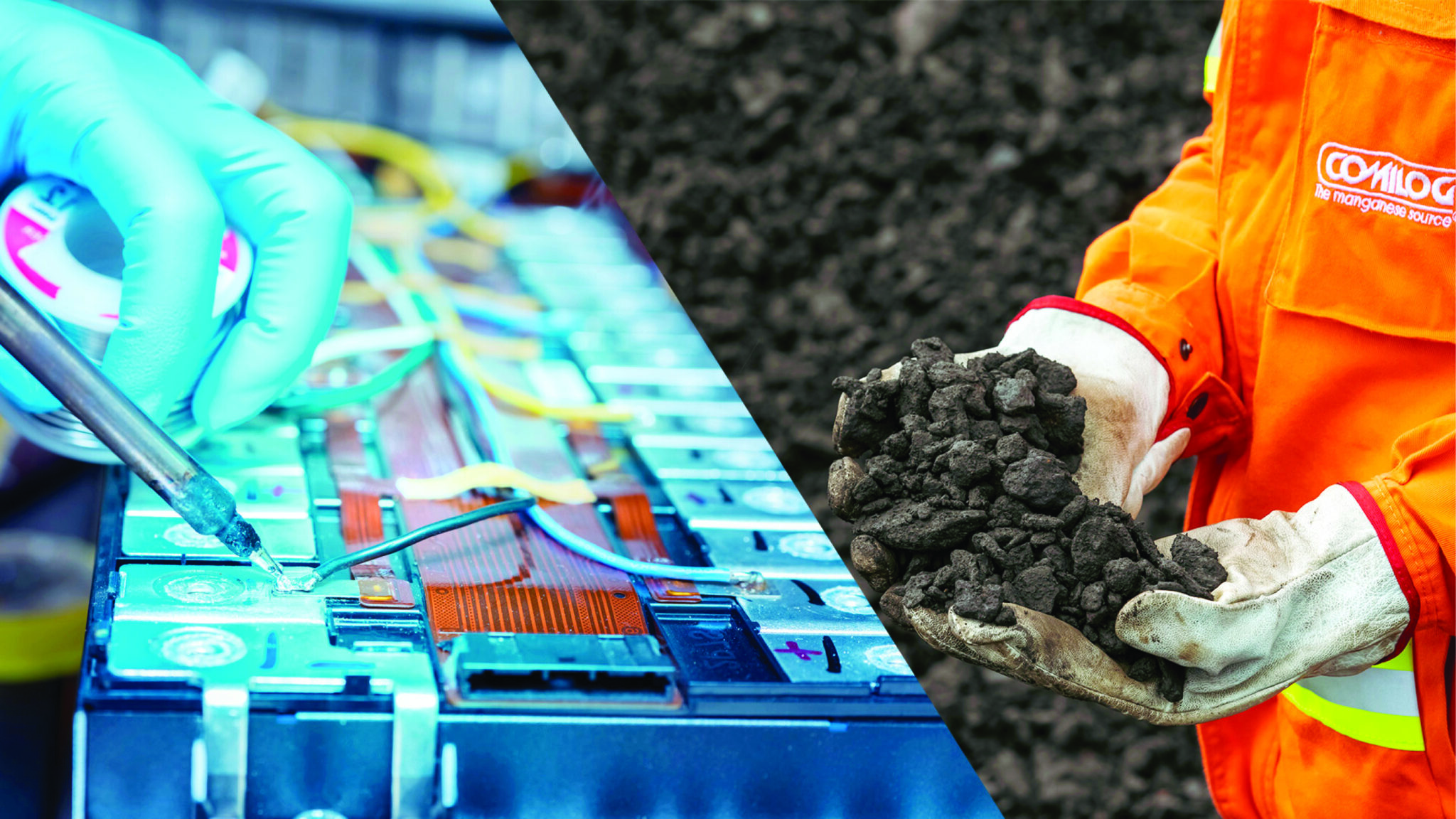
Morocco has realized that countries which have chosen to build a broad ecosystem ranging from the mine to the battery are likely to secure a lasting place in the global electric-battery market, used in the automotive sector and in renewable energy storage.
The Kingdom has also fully understood the great importance of redefining its industrial and energy policies around securing and upgrading critical raw materials, which are essential for manufacturing lithium electric batteries of the LFP (lithium-iron-phosphate) and NMC (nickel-manganese-cobalt) types, a market that will be worth several hundred billion dollars in the coming years.
In reality, some public and private actors have decided to take the bull by the horns by launching or commissioning, sometimes with foreign partners, structuring projects aimed at producing and locally processing battery minerals.
This approach, which aims to complete the battery value chain and is embodied, among others, by foreign actors, the OCP Group (Fluoralpha) and Managem, is all the more beneficial because national mining production makes it possible to produce no less than 60% of the metals essential to electric-battery production.
This shows the immense national mining potential that needs to be enhanced through the refining of raw ores.
The cornerstone
During the fourth edition of the International Chemistry Forum, held recently in the administrative capital, Intissar Benzakour, scientific and sustainable development director at Managem Group, shed light on the flagship projects of the pan-African mining leader, linked to the upgrading of critical materials essential for manufacturing electric batteries.
“The cobalt sulfate production project, in the ramp-up phase, is the expression and realization of Managem’s long-term research and development efforts,” the executive says.
And she explained: “After the project for producing cobalt cathodes (metal), used in battery manufacturing, it was essential for Managem to aim at producing an essential ingredient, namely cobalt sulfate, the first cornerstone of Morocco in the field of components intended for the manufacture of electric batteries.”
In the same vein, it is worth recalling that Managem’s first industrial cobalt sulfate unit, located in the Marrakech region and which has started production, is the result of a collaboration with China Electronics Corporation.
The plant, which in fact upgrades minerals from the Bou-Azzer mine, is designed to reach a production capacity of 6,000 tonnes of cobalt sulfate per year.
On the commercial side, Renault Group and Managem concluded a 7-year agreement covering the miner’s delivery of 5,000 tonnes of cobalt sulfate per year.
In short, in terms of industrial integration and research and development, cobalt sulfate production reflects the maturity level of the listed company, which today claims a position in two strategic pivot sectors, namely materials linked to the energy transition (cobalt, copper, zinc, manganese, graphite) and precious metals (gold, silver).
Intissar Benzakour also provided details on the crucial projects of the Al Mada subsidiary related to copper.
“We have just launched a very large mining operation in the copper sector, which is used four to five times more in the manufacture of electric vehicles than in that of thermal cars,” she revealed.
It should be noted that, on the industrial level, the Tizert copper mine (Taroudant Province), which required a total investment of MAD 4 billion, has entered service.
This project, which symbolizes the mine of the future in technological terms, will allow Managem to double its copper production in the Kingdom. Part of an industrial integration and local value-creation logic, this project will serve as a basis for the mining group to produce, among other things, copper cathodes and wire, as well as iron oxide.
“Beyond national needs, Managem aims to become a key link in the global supply chain for materials related to the energy transition,” the scientific and sustainable development director of the Al Mada subsidiary said.
The OCP Group
The world leader in phosphates, namely the OCP Group, is pursuing an ambitious project to produce LFP (lithium-iron-phosphate) lithium batteries. This is being carried out through UM6P’s subsidiary, InnovX.
The objective announced to the public in 2024 is to reach a battery production capacity of 1 GWh per year in 2026. Clearly, this project to manufacture a 100% Moroccan battery, intended for the automotive sector and energy storage, reflects the strong commitment of the public office to phosphate upgrading and industrial integration.
Still in connection with the OCP Group, it should be recalled that Fluoralpha, a subsidiary of InnovX, has joined forces with the Canadian company Falcon Energy Materials PLC to develop in Morocco an industrial unit for the production of purified and coated spherical graphite (CSPG), a key component for battery anodes.
Fluoralpha will offer fluorinated products, which will be used as reagents for the production of high-quality graphite in Morocco. It should be noted that fluorine, present in Moroccan phosphates, is highly strategic for the manufacture of lithium salts, the most expensive element in the battery.
In the end, the various initiatives and projects reviewed prove that Morocco is working to improve its supply chain in critical minerals, which are essential for manufacturing electric batteries.
That said, additional efforts are needed to accelerate the development work on potential deposits of lithium, graphite and nickel, three minerals that are missing or produced in low volumes in the national mining sector.
Lithium refining
For now, Morocco does not have any operational lithium mine, even though some credible scientific work has identified promising lithium deposits in the country.
Despite the non-extraction of this crucial mineral for electric-battery manufacturing, the Kingdom hosts an ambitious lithium refining project led by the LG-Yahua duo.
In detail, the Korean company LG Energy Solution, the first Korean manufacturer of batteries for electric vehicles, and the Chinese company Yahua Group will set up a lithium refining unit whose first phase will mobilize an investment of more than MAD 5.5 billion, with the creation of more than 430 highly qualified direct jobs.
Concretely, the project will enable Morocco to produce lithium hydroxide, a raw material for cathodes, one of the key components of electric vehicle batteries.