Kingdom
Baraka: “Morocco Has Moved Past the Drought Stage”
The water inflows from the recent precipitation experienced by Morocco allow for gaining on average one year of drinking water at the national level.

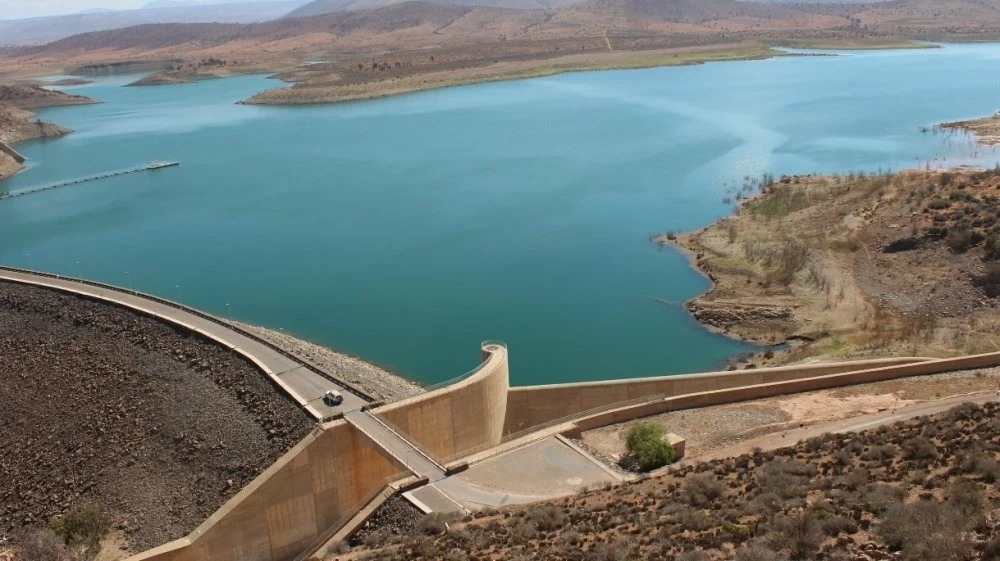
Morocco has emerged from a seven-year drought thanks to recent rainfall and snowfall, which have increased water inflows and dam filling rates, the Minister of Equipment and Water, Nizar Baraka, stated on Monday in Rabat.
In response to oral questions in the House of Representatives regarding “the Kingdom’s water situation,” the minister explained that Morocco recorded, from September 1 to January 12, precipitation of 108 mm, representing a surplus of 95% compared to the previous year and 17.6% compared to the usual average.
These indicators confirm that Morocco has moved past the drought stage, noting that a dry year is one where the precipitation rate is more than 20% below the average, whereas a positive surplus has been recorded this year, he pointed out.
The minister indicated that exceptional snowfall was recorded covering approximately 55,495 km², before decreasing to nearly 25,000 km² currently, with snow depth ranging between one and two meters in mountainous areas exceeding 2,500 meters in altitude.
This situation has positively reflected on water inflows, with the dam filling rate increasing from 28% during the same period last year to 46% currently, equivalent to 7.7 billion cubic meters, while the water inflows recorded between September 1, 2025, and January 12, 2026, reached 3.5 billion m³, of which 3.1 billion m³ were recorded in the last month alone.
A positive impact on the hydraulic basins was also felt in the filling rate of several dams across 8 hydraulic basins, where retention reached between 80% and 100%, stated the minister, who reviewed the situation of several dams, notably Oued El Makhazine, Charif Al Idrissi, Nakhla, Chefchaouen, and Ibn Battouta (Loukkos basin), Allal El Fassi, Bab Louta, and Bouhouda (Sebou basin).
Regarding the Sidi Mohammed Ben Abdellah dam (Bouregreg basin), whose filling rate reached 92%; water releases were carried out there to prevent exceeding its retention capacity, he specified.
This improvement has, moreover, concerned several other basins, including those of Oum Er-rabia, Tensift, Souss-Massa, and Moulouya, in addition to the Ziz-Rhéris basin, where the filling rate of the Hassan Addakhil dam stood at 71.5%, he noted, adding that 37 other small dams displayed a filling rate of over 100%, necessitating water releases.
These water inflows allow for gaining on average one year of drinking water at the national level, affirmed Mr. Baraka, estimating that this is a positive indicator providing an additional margin. He emphasized in this regard the continuation of the water desalination policy, with the launch of new stations in Nador, Driouch, and Tangier, as well as the planning of other stations next year in Souss-Massa, Tiznit, Guelmim, Tan-Tan, and Rabat.
Finally, the minister reaffirmed the continuation of efforts, in accordance with the Royal High Guidelines, towards the realization of the “water highway” interconnection projects between hydraulic basins, which will extend from Oued Laou and Loukkos towards Oum Er-rabia, with the start, during this year, of the connection of the Sebou basin to those of Bouregreg and Oum Er-rabia.