Business
Badr Benyoussef: “The launch of the futures market has delivered on its promises”
The launch of the futures market has been successful. All platforms operated smoothly, and market participants showed up as expected. Unsurprisingly, the first players are mainly institutional investors. However, the ambition is also to include individual investors. A review of the first days of this market segment with the CEO of the Futures Market Management Company (SGMAT) and Chief Strategy and Transformation Officer at the Casablanca Stock Exchange Group.

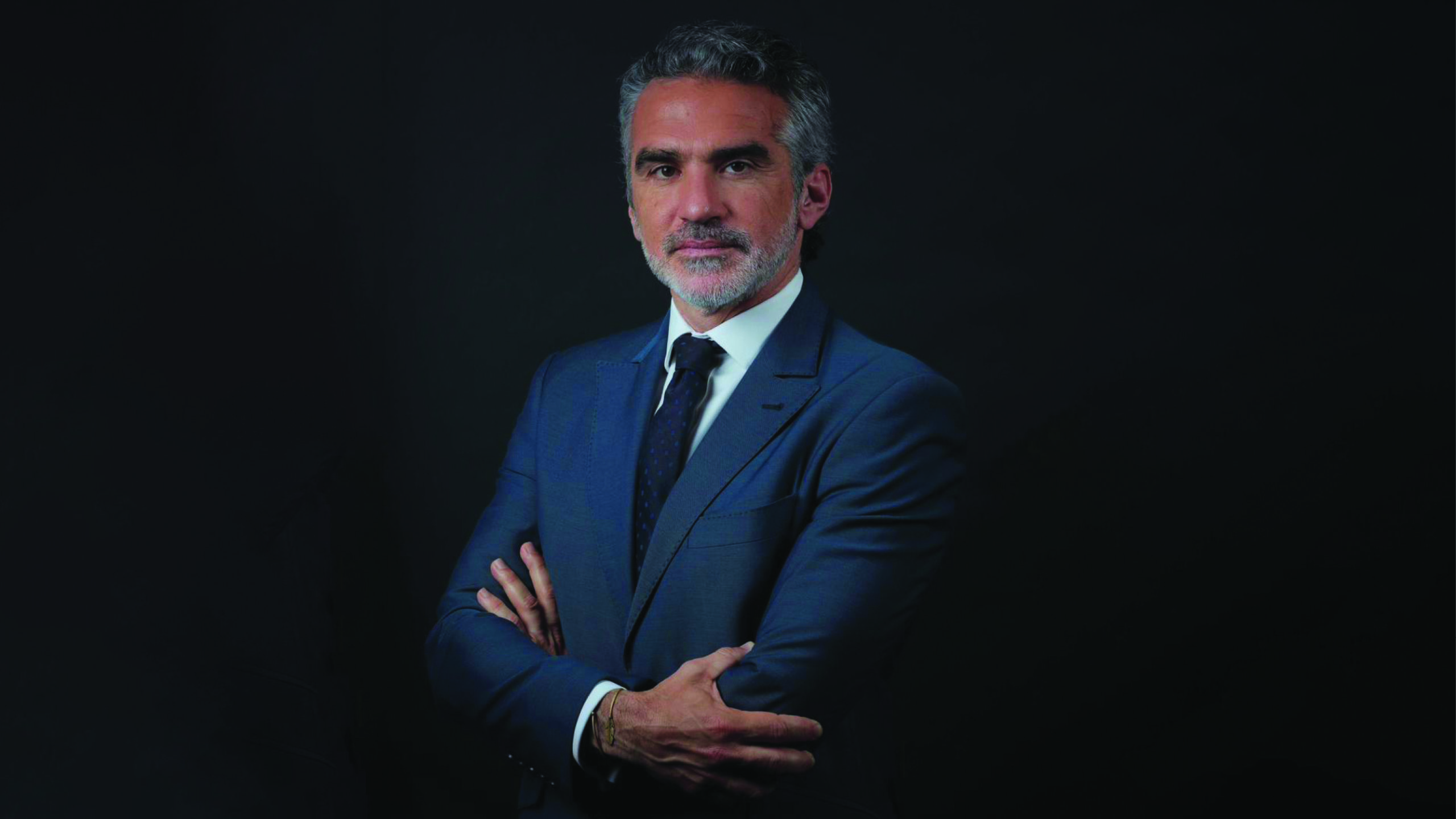
The first days of the futures market confirm a successful launch, marked by a well-controlled technical and operational setup and active participation from institutional investors.
Insights.
What initial assessment do you draw from these first days of trading?
We are in the early days of a market that is being built for the long term, but the initial signals are very encouraging. I would even say that operator enthusiasm has exceeded our initial expectations.
If we are to assess it, I suggest splitting it into two parts: a structural assessment and an operational assessment.
On the structural level, it is important to recall that the launch of this new futures market also marks the start of two new market infrastructures and an entirely new and unprecedented ecosystem.
We have made operational two subsidiaries of what is now the Casablanca Stock Exchange Group: SGMAT, the futures market management company, and CCP Maroc, the clearing house.
These two entities operate, in accordance with Law 42-12, under concession agreements with their own specifications defining their prerogatives and obligations toward the State, the granting authority. We have also worked with the entire ecosystem of this new market around this launch, and their mobilization has been exemplary.
From the outset, we have 8 approved trading members and 3 clearing members, market makers in place, and above all operators who have done considerable preparatory work to be ready from day one.
On the operational level, the launch has delivered on its promises. The trading platform, the same one used by the London Stock Exchange, has functioned perfectly.
The clearing system, which we developed entirely in-house, has processed and secured transactions in line with international standards. Market participants have operated with the expected rigor. It is this first successful test of reliability that gives investors reason to trust this new market.
This level of preparation does not happen by chance. It is the result of months of joint work, training sessions, technical testing, and operational simulations. This outcome belongs to all the parties who contributed to the project, notably the Ministry of Economy and Finance, Bank Al-Maghrib, the AMMC, ACAPS, and professional associations (GPBM, APSB, ASFIM, AMSM). Their mobilization has been exemplary.
And this work does not stop on launch day. We have set up regular monitoring committees and daily check-ins with operators to track liquidity, identify any operational frictions, and address them in real time. A market must be managed daily, especially in its initial phase.
Have you observed dominant investor profiles?
Have individuals carried out transactions?
Unsurprisingly, the first participants are mainly institutional investors. This is typical for any derivatives market at its early stages: these are the players who have the processes, risk limits, and trained teams to use these instruments from day one.
I must say that the groundwork we carried out beforehand with these investors—meetings, training sessions, simulations—has clearly paid off. Several of them participated from the opening, and we expect the Masi.20 futures to gradually become part of the day-to-day management tools of portfolio managers.
As for individual investors, our ambition is, of course, to include them. This requires a real understanding of leverage mechanisms, margin requirements, and margin calls. Access to this market requires genuine comprehension of how it works—not out of excessive caution, but because it is essential for making informed decisions.
Trading members have an obligation to advise and assess each client’s profile. This filter is not a barrier; it is a safeguard. Individuals who have the required capacity and understanding can certainly participate, and we are actively working to expand this base through our communication and financial education programs.
The principle of the futures market is to hedge against risk. How does this work in practice?
The best way to understand is through a concrete, numerical example. An investor holds a stock portfolio valued at 1 million dirhams. They anticipate a market correction by the end of the quarter but cannot sell their positions: they are pledged as collateral, or selling would generate a loss.
The Masi.20 currently stands at around 1,300 points for simplicity, corresponding to a nominal value of 13,000 dirhams per futures contract, since each index point equals 10 dirhams. To hedge a portfolio of 1 million dirhams, the investor must sell 77 Masi.20 futures contracts (i.e., 1,000,000 divided by 13,000, rounded).
To do so, they must post a margin deposit of 1,500 dirhams per contract, or 115,500 dirhams in total. Note that this amount may be increased by the trading member depending on the investor’s profile.
Scenario favorable to the hedge: the market declines by 4% at maturity, and the Masi.20 stands at 1,248 points. The stock portfolio loses 40,000 dirhams, but the 77 contracts sold at 1,300 and bought back at 1,248 generate a gain of 40,040 dirhams (77 contracts × 10 dirhams × 52 points). Overall result: around 1 million dirhams. The portfolio has been fully protected.
Opposite scenario: the market rises by 4%.
The portfolio gains 40,000 dirhams, but the sold futures incur an equivalent loss. The hedge has therefore “cost” the potential gain. That is the price of protection: you give up upside to eliminate downside risk. Hedging locks in the portfolio’s value at its initial level, in both directions.
This mechanism relies on two operational pillars. First, contract standardization: a fixed size of 10 dirhams per index point, quarterly maturities in March, June, September, and December, and cash settlement.
It is this standardization that enables liquidity and transferability. Second, daily marking to the clearing price: each evening, gains and losses are calculated and settled through margin calls. Losses do not accumulate; they are handled continuously.
In the event of default by one of the parties, what role does the clearing house play?
It is precisely to address this issue that the CCP exists. In a market without a central intermediary, each participant alone bears the risk that their counterparty may fail to meet its obligations.
If that happens, for financial or operational reasons, they must absorb the consequences themselves, often in an already stressed market environment. It is this structural and widespread risk that the clearing house is specifically designed to eliminate.
The CCP eliminates it by design, thanks to a fundamental legal mechanism: novation.
As soon as a transaction is concluded on the futures market, the CCP, through the trading and clearing members, substitutes itself for both parties.
It becomes the buyer to the seller and the seller to the buyer. The two original counterparties no longer face each other; both now have the CCP as their sole counterparty.
In the event of a member’s default, the CCP has a cascade of resources to absorb the shock without affecting other participants. First, the margin deposit posted by the defaulting member, calculated to cover the risks of liquidating its open positions.
Next, its contribution to the guarantee fund, funded by all clearing members. And if necessary, the CCP’s own capital.
It is no coincidence that international regulators impose some of the strictest resilience standards in the financial sector on CCPs. Their role in global systemic stability is well established and was clearly demonstrated during the 2008 financial crisis.
Ultimately, what CCP Maroc provides is certainty: regardless of a member’s default, the successful completion of transactions is guaranteed. It is on this certainty that investor confidence in the market rests, both domestic and international.
How can a futures market help improve liquidity in the spot market?
This is an often underestimated effect, but it is structural and deep. The link between the futures market and the spot market operates through several simultaneous channels.
The first channel is arbitrage. Specialized players continuously exploit price differences between the Masi.20 future and the underlying basket of stocks. To do this, they constantly buy and sell on both markets, generating additional flows in the spot market and contributing to more efficient price formation.
Their activity helps narrow spreads—that is, the gap between bid and ask prices—and improves quote quality for all participants.
The second channel is the dynamic hedging carried out by market makers. We ensured that our market had active market makers from the outset.
These market makers, who continuously quote on the futures contract, hedge their directional risk by taking opposite positions in the spot market. Once again, additional flows feed liquidity in the equity market.
The third channel is perhaps the most profound. The futures market allows certain investors to remain exposed to the equity market under all circumstances, including during periods of stress.
An institutional investor who can hedge using futures no longer has reason to massively sell their shares during a correction. This mechanism mitigates downward spirals and contributes to the stability of the spot market.
In short, the futures market is not a parallel segment; it is an amplifier of the efficiency and resilience of the entire market, including the spot market that everyone is already familiar with.
Speaking of market makers, were they mobilized from the start?
Market makers are a central element of the system, and their mobilization is one of the most positive signals of this launch.
There are already two of them, and other trading members have expressed their intention to become market makers. This is a clear sign that the enthusiasm is real and sustainable.
Their role is simple to state but demanding to fulfill. They commit to continuously quoting bid and ask prices on the Masi.20 future during trading hours, within predefined spreads and minimum sizes set contractually.
In practical terms, regardless of market volatility, an investor wishing to open or close a position must find a counterparty. It is this guarantee that market makers provide, and it is what makes the market usable from day one.
Their obligations are precisely defined in the agreement signed between SGMAT and each market maker: minimum presence time in the order book, maximum bid-ask spread, and minimum quote size. In return, market makers benefit from preferential pricing conditions.
What I want to emphasize is the groundwork carried out with these players beforehand. We worked with them on their models, their operational procedures, and their technical connectivity.
The objective was to ensure that their presence and the quality of their quotes were effective from day one, not merely formal. Our regular check-ins with operators allow us to monitor this quality in real time and adjust if necessary.
The quality of market making will improve over time as market makers refine their models and the market gains depth. We have successfully launched the futures market, but we remain in a continuous project mode.
It is also in this spirit that we are already preparing the launch of the next product: interest rate futures. Each new product broadens the base of participants, strengthens overall momentum, and confirms that what we launched on April 6 is only the beginning.