Business
Aviation: Morocco Steps on the Gas
Over the past 20 years, the Kingdom has become indispensable in the global aeronautics value chains. Now mature, it is shifting into supersonic speed by entering the highly demanding engine industry. In its sights: reaching a new growth milestone, with very ambitious goals by 2030.

Although nothing predestined it for this, Morocco has successfully joined the exclusive club of countries with a dedicated aerospace industrial platform.
In an industry dominated by major contractors, complex due to its demand for high-level technological expertise, where on-time delivery and relentless production rates pose a constant challenge for subcontractors, and where rigorous standards and certifications abound, integrating into global value chains is no small feat.
That Morocco has achieved this is nothing short of a feat. “One day, we will speak of the Moroccan miracle,” enthuses Industry Minister Ryad Mezzour before a gathering of industrialists at the Casablanca Aerospace Meeting, a business convention bringing together key global sector players.
Yet, skeptics were numerous at the start. Industrialists recall how, during their initial participations in international trade shows in Montreal, Toulouse, or elsewhere, they were not truly taken seriously. “At first, many wondered what we were doing there,” one of them recalls, amused…
“Some said Morocco had no place in this industry. We proved them wrong,” emphasizes Ali Sedikki, Director General of AMDIE.
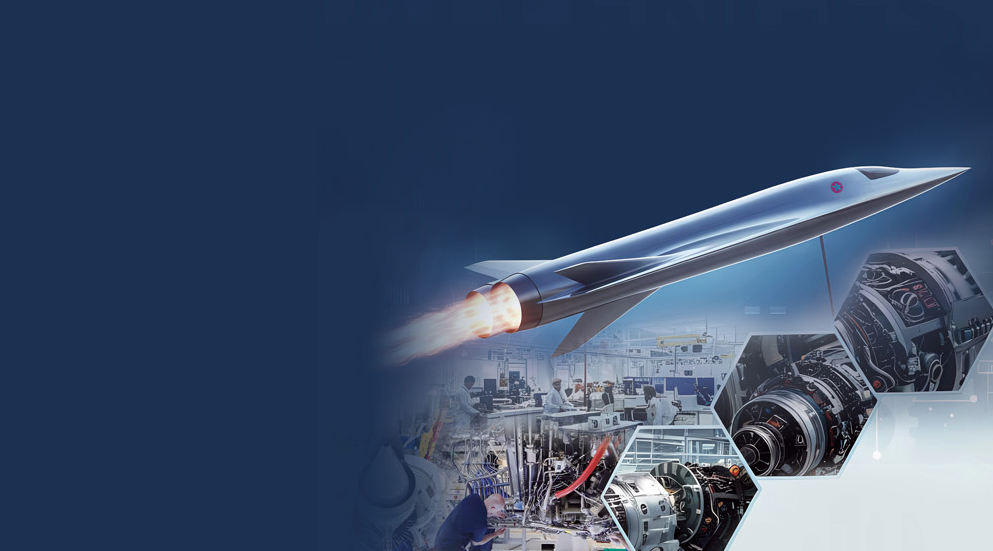
The Moroccan aerospace platform has indeed become indispensable, as it has demonstrated its ability to meet the strictest requirements of contractors, earning their trust.
In a sector like aerospace, “trust is already half the success,” recalls Hamid Benbrahim El Andaloussi, president of Midparc, a multi-service free trade zone entirely dedicated to aerospace located in Nouaceur.
Today, 20 years after taking its first steps, the Kingdom is considered one of the most dynamic emerging destinations in this industry, akin to Mexico, and positions itself as a major regional hub at the gates of Europe, playing a key role in subcontracting, component assembly, maintenance, and aerospace services.
The recipe for success is well-known: competitive production costs, strong state support, a skilled workforce, an ecosystem approach built brick by brick, and modern infrastructure like the Midparc zone in Nouaceur, not to mention its geographical proximity to major assembly hubs, particularly Toulouse in France.
Turnover multiplied by 35 in 20 years
Result: from 2000 to 2025, around 150 companies operating in the aerospace industry have established themselves in Morocco, employing over 25,000 workers.
Among these groups are global leaders like Boeing, Airbus, Safran, Spirit AeroSystems, Hexcel, Pratt & Whitney, as well as dozens of equipment manufacturers and subcontractors active in machining and manufacturing composite and metal parts, assembling aeronautical subsystems, electrical and electronic wiring, and maintenance activities (MRO).
Morocco has successfully integrated flagship programs like the Airbus A320 and Boeing 737, as well as the A350 and A330. For certain parts, Morocco is even the single source, the ultimate mark of contractor trust.
This is the case, for example, with cockpit parts for the A320, exclusively manufactured at the Airbus Atlantic Maroc Composites factory, one of the European aircraft manufacturer’s two Moroccan plants. “Every aircraft flying worldwide contains at least one part made in Morocco,” proudly notes one industrialist.
On the export side, the figures illustrate this steady rise. In 20 years, export turnover has multiplied by 35, rising from nearly 700 million dirhams to over 25 billion dirhams in 2024.
The Covid-19 crisis certainly caused a marked slowdown in 2020–2021, with a loss of around 30% of the sector’s turnover and 10% of jobs. But the industry has since rebounded strongly, following the sustained recovery of air traffic post-pandemic.
Order books are full, with visibility for the next 10 years (see box). “The difficult times are behind us,” asserts Ryad Mezzour. The 2025 figures seem to confirm this.
As of the end of August, exports show a 5.6% year-on-year increase, reaching 18.3 billion dirhams in revenue, and are expected to end the year with a new record.
As for local integration, this rate currently stands between 40% and 43% according to professionals. A commendable level given the specificities of this industry, but one that also reflects the need to reach a new milestone.
After wiring and subsystems, it’s time for engines
Because today, it is the assembly of aeronautical subsystems and embedded electrical systems (i.e., wiring activities) that drive exports.
The goal is to move higher up the value chain. “We started small, and we are now moving toward more complex activities and trades with higher added value,” emphasizes the Minister of Industry.
The Moroccan industrial platform is indeed heading toward the development of cutting-edge technological trades in aerospace, such as engine parts, composite materials, and complex avionics.
This strengthens its position in innovative segments of global value chains and fills missing links for greater local integration.
“We have entered a period of acceleration, characterized by greater market diversification, a strong rise in value and skills, with the establishment of world-class engine manufacturers and access to strategic industries, particularly in the defense sector,” summarizes Hamid Benbrahim El Andaloussi.
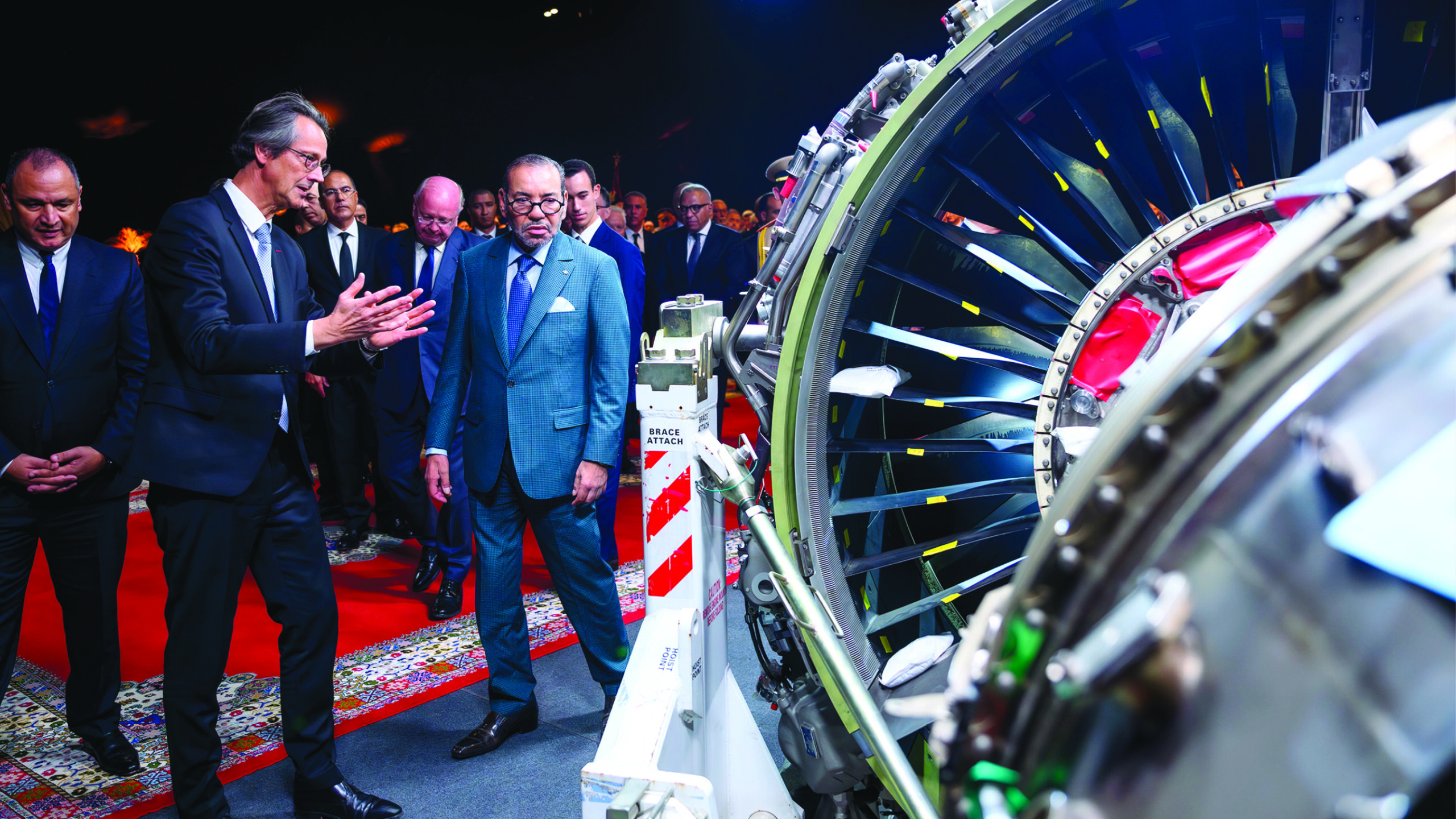
It must be said that in terms of engines, Morocco has made a major move. It is preparing to take its first steps in the highly demanding engine industry with a groundbreaking project in both scale and strategic scope: the aircraft engine industrial complex by the Safran group, whose construction was launched by the Sovereign at Midparc on October 13.
The project includes two components. The first involves setting up an aircraft engine maintenance and repair plant, with an investment of 1.3 billion dirhams, a maintenance capacity of 150 engines per year, and the creation of 600 direct, skilled jobs by 2030.
The second component focuses on developing an assembly and test plant for commercial aircraft engines, such as the LEAP-1A, a global bestseller that powers models like the Airbus A320 Neo and some Boeing aircraft.
With an assembly capacity of 350 engines per year, this 2.1 billion dirham investment will generate 300 highly skilled jobs by 2029. “This engine has experienced very strong growth since its entry into service in 2016, as it is now operational on over 4,000 aircraft worldwide, with an order book exceeding 11,500 engines,” notes Olivier Andriès, CEO of the Safran group.
The significant investment by the French engine manufacturer in Morocco responds to the imperative of organizing a global assembly and maintenance network for this growing fleet of LEAP engines while remaining competitive. It is expected to have significant ripple effects on the supplier network, as the future complex will act as a locomotive for the emerging engine ecosystem.
In addition to Safran, Pratt & Whitney is also developing a project in Nouaceur for the production of precision static and structural machined parts for various aircraft engine models, including the PT6 engine, one of the most widely used turboprops in aviation.
Requiring an investment of 715 million dirhams, this project will promote the establishment of an ecosystem focused on growth and the development of local suppliers.
Over 60 billion dirhams by 2030
New projects are also forthcoming. Equipment manufacturer Collins Aerospace signed three agreements with the Moroccan government on the sidelines of the Aerospace Meeting to develop its local ecosystem and increase sourcing from local suppliers.
These investments bring new high-value-added aerospace specializations, ranging from precision engineering to the production of cockpit and cabin equipment, including the production of backlit cockpit front panels.
This move upmarket will enable the national industrial base to reach a new growth milestone and shatter the “glass ceiling” of 20–30 billion dirhams in turnover.
“Revenue will at least triple over the next five years and exceed the 60 billion dirham mark. This amount is virtually secured given the projects currently in development and those to come. Employment, meanwhile, is expected to double by 2030,” states Mezzour confidently.
In summary, the Moroccan platform, now more mature and in full acceleration, will achieve in 5 years the turnover generated over 25 years. Enough to give wings: “We believe we can propose a final assembly line for commercial aircraft within ten years,” he adds.
A supportive global market
The order books of Moroccan factories are well filled. Industrialists have enough work for at least the next ten years, given the post-Covid boom in the air transport sector.
According to Airbus, approximately 43,000 new aircraft will be needed by 2044 to meet demand and renew the fleet. One study estimates that the global aviation market could grow from $358.85 billion in 2025 to $524.14 billion in 2030, representing an average annual growth rate of about 7.9%.
In this context, the two major global manufacturers are receiving a flood of orders from airlines. As of June 30, 2025, Airbus’s undelivered order backlog stood at 8,658 commercial aircraft. For Boeing, the backlog is estimated at around 6,500 aircraft.
The order backlogs of both manufacturers represent approximately 10 to 11 years of production at current rates, according to some estimates.
A boon for the Moroccan platform, which is already integrated into various flagship programs in the Airbus and Boeing ranges and whose production capacities will increase steadily to meet contractor needs.
On the flip side, rising production rates can strain supply chains, not only in Morocco. Persistent bottlenecks in supply chains could thus limit this growth. This is one of the main challenges the industry will have to overcome.
Retaining Talent
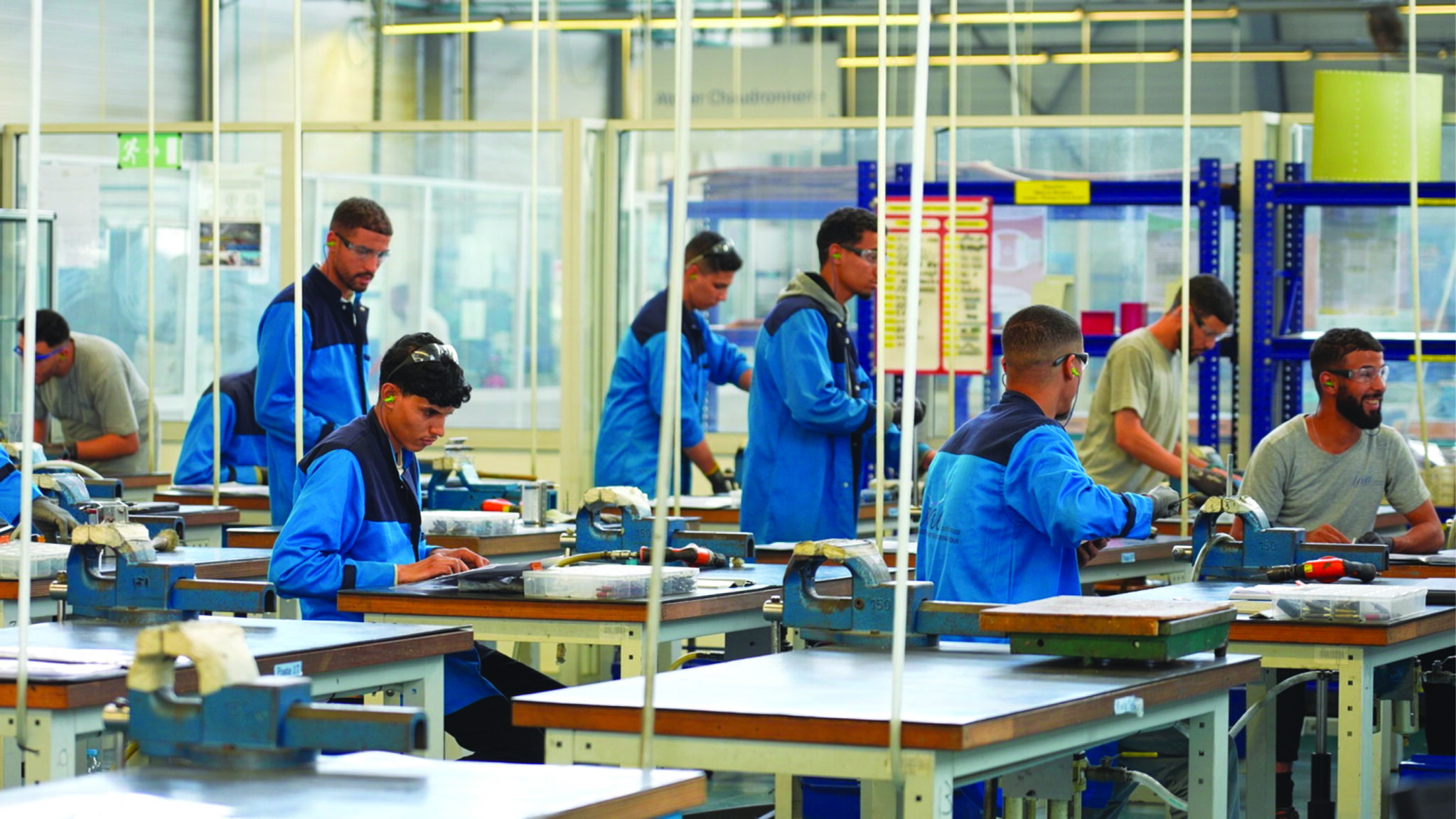
The ability to train a skilled workforce, tailored to the sector’s demands, is one of the keys to the successful takeoff of Morocco’s aerospace industry.
By establishing the Institute of Aeronautical Trades (IMA) in 2011, complemented by Ismala (the Specialized Institute for Aeronautical Trades and Airport Logistics, under OFPPT), the country anticipated its needs.
Both institutes are operating at full capacity and are expected to accelerate further. The IMA, which has trained 15,000 graduates since its creation, is projected to train as many again in the next 5 years.
Additionally, the country trains around 23,000 engineers annually, of whom approximately 400 are directly integrated into the aerospace sector. That said, industrialists face a growing challenge: retaining talent amid global competition.
They denounce a genuine “plundering” of human resources by industrialized countries like Canada and France, as well as by certain Gulf nations. Aeronautical technicians and engineers are among the most sought-after profiles abroad.
The main risk is that if Morocco continues to train engineers, technicians, etc., without offering attractive career paths, incentives, and high-value opportunities, this brain drain could limit the country’s ability to move upmarket (R&D, innovation, industrial autonomy).
According to industrialists, the solution lies in offering more attractive career prospects and higher-value opportunities, particularly in engineering, R&D, and innovation.
This should be supported by the upscaling of national production, the development of technology-intensive trades, and the creation of innovation and research centers.