Kingdom
Automotive Wiring: Moving Upmarket is Accelerating
A historic segment and a major player in Morocco’s automotive industry, the wiring sector has begun its transformation. The objective: to adapt to the strategic shift toward electrification.

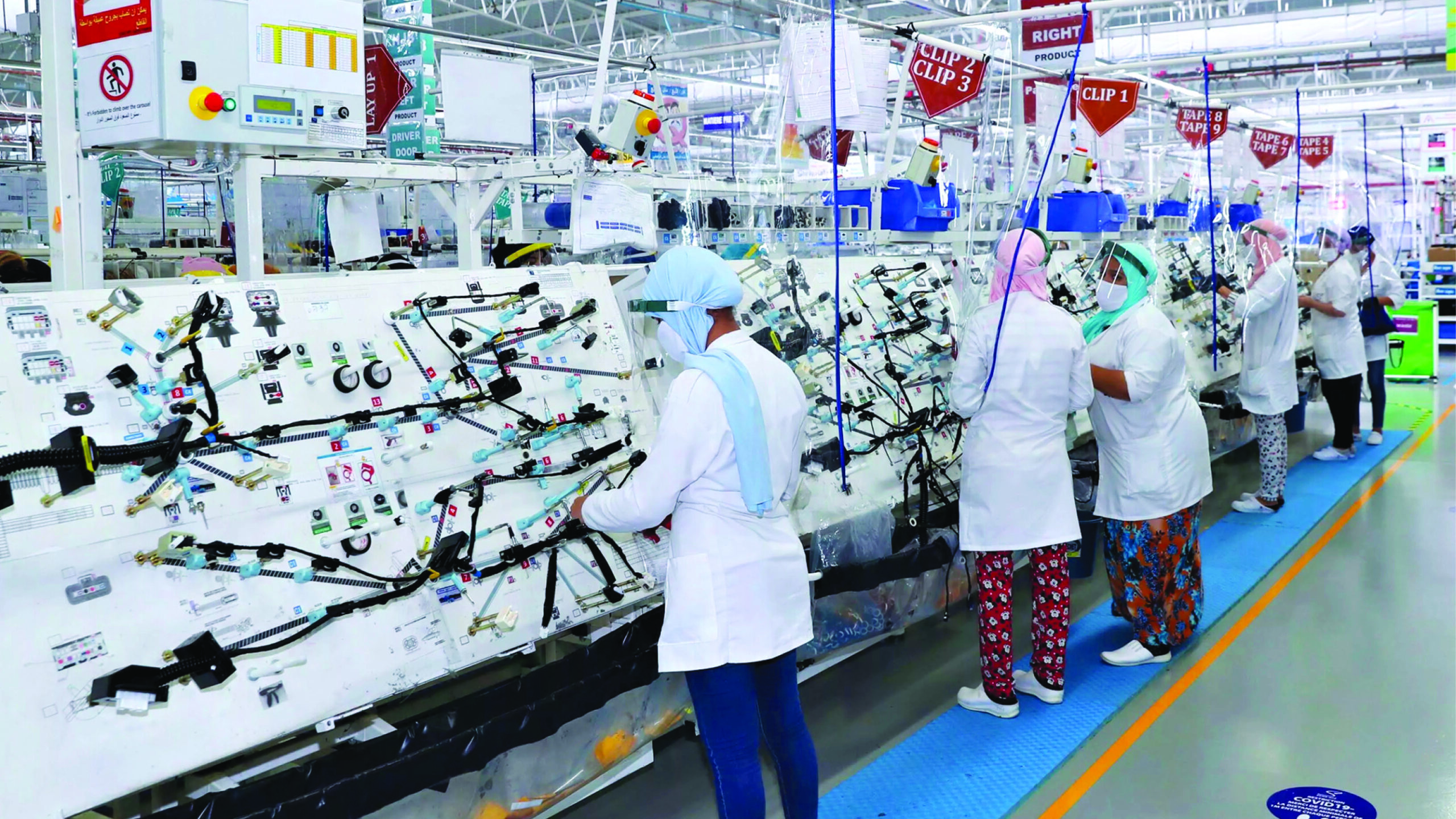
The wiring sector is the beating heart of Morocco’s automotive industry, which is itself the country’s leading export sector. The “automotive wiring” ecosystem was even one of the very first to be established in 2014 as part of the Industrial Acceleration Plan, for the manufacturing of electrical wiring harnesses—true nervous systems connecting the various electronic components of a vehicle.
The harnesses produced in Morocco are integrated into vehicles assembled by major manufacturers, including of course Stellantis and Renault, the two automakers based in Morocco, as well as Volkswagen, BMW, and Mercedes for export. This highlights the importance of this segment in the emergence of the national automotive production platform.
Today, automotive wiring carries significant weight: it employs nearly 100,000 people and accounts for more than one-third of the automotive sector’s total exports. Even more, wiring is not only the historical foundation of Morocco’s automotive industry, it is also its most resilient segment.
While the vehicle manufacturing segment recorded a 13.6% decline in 2025 due to reduced European demand, the wiring segment acted as a buffer, with growth of 7.7%, allowing total automotive exports to limit the damage to just a 2% drop, reaching more than 154 billion dirhams.
This performance is the result of a strategy that has attracted global giants in automotive wiring, such as Yazaki, Sumitomo Electric, Leoni, Lear Corporation (United States), and TE Connectivity (Switzerland/United States), drawn by Morocco’s advantages: proximity to the European market, an efficient logistics platform, a competitive and well-trained workforce, and more.
The country now has around fifty automotive wiring production sites located in industrial zones in Tangier, Casablanca, Fez, Meknes, Agadir, and Kenitra—positioning Morocco as one of the world’s leading hubs for the production of automotive wiring harnesses.
Moreover, the war in Ukraine has reinforced Morocco’s importance in this industry. Automotive harnesses were heavily produced in Ukraine. After the outbreak of the conflict in 2022, several equipment manufacturers shifted part of their production to Morocco to secure supply for European carmakers.
In this context, Sumitomo, Yazaki, Aptiv, and Leoni have not only maintained their presence in Morocco but have also invested heavily to increase their capacities and prepare for the future…
The strategic shift toward electrification
Although Morocco is firmly positioned as one of the main suppliers of electrical harnesses for the European automotive industry, it must nevertheless adapt its production to maintain its standing in a context of growing electric mobility and the planned decline of internal combustion engines in Europe, the primary market for cables made in Morocco.
An electric vehicle requires much more complex wiring harnesses, capable of handling high voltage, with safety components far more sophisticated than those of their combustion-engine predecessors.
In this context, Morocco’s wiring industry is undergoing a profound transformation. Manufacturers, notably Yazaki and Lear, have invested heavily to upgrade their factories in Morocco to produce these harnesses and to integrate sustainably into the global value chains of electric vehicles.
The country is also placing greater emphasis on local engineering, with the emergence of R&D centers (such as Lear’s Tech Center in Rabat), where Moroccan engineers design the electrical architectures of future models.
The sector has thus begun moving up the value chain. The ecosystem now includes the manufacturing of precision connectors and smart terminals. The challenge is no longer just labor cost, but the ability to produce high-precision electrical systems for the cars of tomorrow.