Business
Automobile: A textbook case of integration
In terms of industrial transformation, upgrading, and integration, the national automotive industry ticks all the boxes. Still nascent about twenty years ago, the Kingdom’s automotive platform now positions itself as one of the most competitive in the world and is preparing to play a leading role in the very promising battery industry.

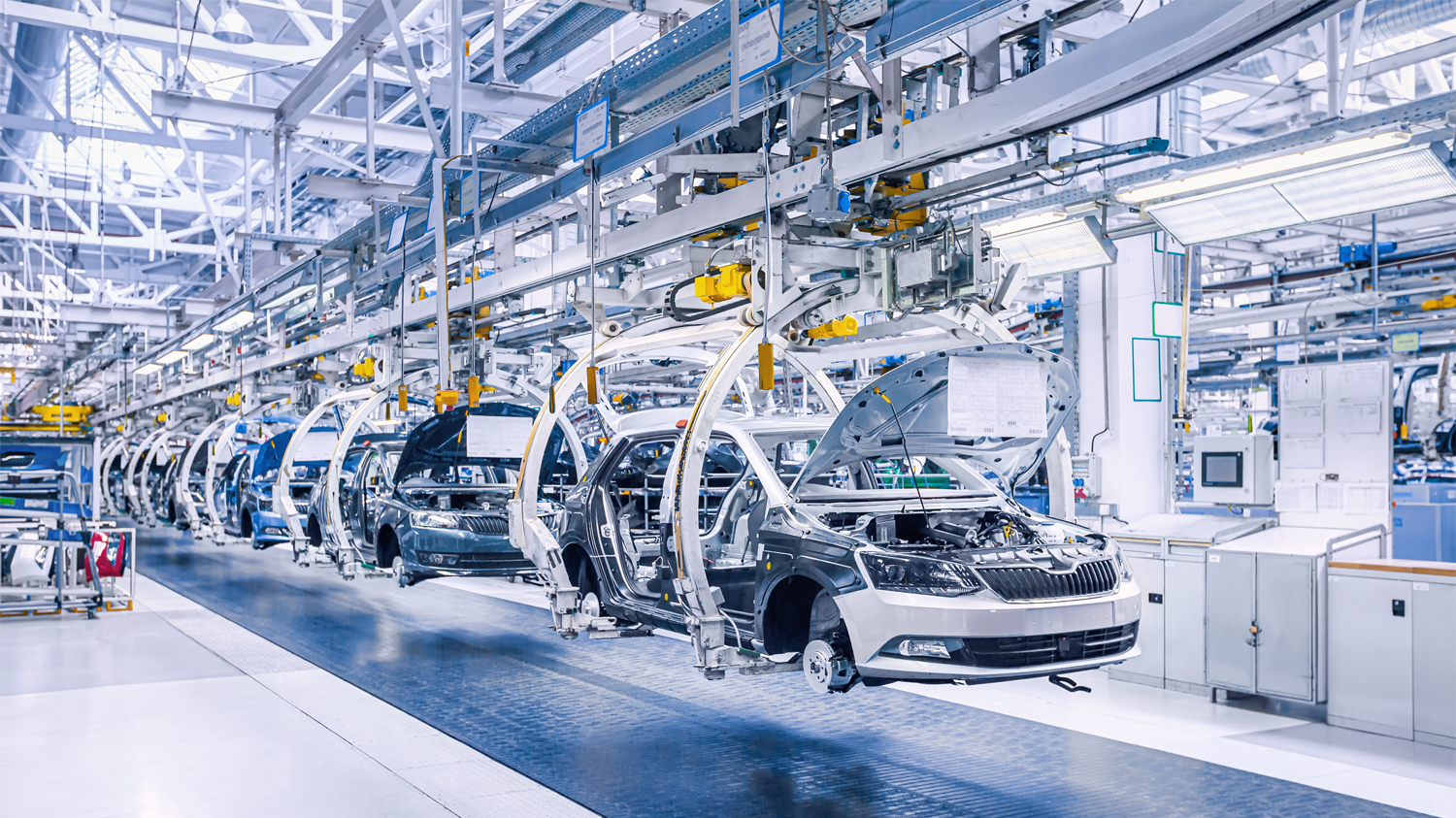
Automobiles are the spearhead of Morocco’s industrial sector, its flagship. Its recent history offers valuable lessons for other sectors, having evolved from a small industry to one of the most efficient and dynamic in the region.
Mohamed Bachiri, from the CGEM Industrial Development Commission and CEO of Renault Group Morocco, measures the progress made. “In 2005, Somaca produced 15,000 cars. That was its best year. In 2024, between the factories in Tangier and Casablanca, we produced 413,000 cars.
This is an absolute record. 90% of what we produce is exported. The Sandero made in Tangier was the best-selling vehicle in Europe last year, across all brands,” he states immediately.
This success is the result of long-term foundational work. With the ministry, he recalls, “we developed together what we call local integration, meaning bringing equipment manufacturers to Morocco, recruiting young Moroccans, and manufacturing the parts we need.
This created the Renault ecosystem, with a local integration target of 65%.” Today, Morocco’s automotive industry includes about 250 equipment suppliers working in the sector and 220,000 direct jobs created. The integration rate has reached 65.5%.
Another telling figure: in 2024, two billion euros worth of “made in Morocco” parts were purchased for the Casablanca and Tangier factories, as well as for the group’s European factories. By 2030, the integration rate is expected to continue rising, following the signing of a second ecosystem.
“We have goals for 2030 with a local integration rate of 80% and a parts purchase turnover of 33 billion dirhams per year. We will be one of the few countries in the world to have this level of local integration. This will allow us to maintain competitiveness and confidently project into the future,” he explains.
Focus on electrifying the range
The challenge for industry players is electrifying the range. On this point, Bachiri specifies that “in the fourth generation of the Dacia range, which will be produced and launched in Morocco between 2027 and 2028, there will be an electric component.”
This is why the Kingdom is setting up an electric battery ecosystem, notably with projects in Kenitra and Jorf, to supply manufacturers.
“There are various challenges ahead,” warns Bachiri. According to him, the main challenge is integrating this ecosystem. “It must have its own local integration roadmap so we can get a certificate from European customs, the certificate of origin, proving that the cars have local content in Morocco and that it is not just battery assembly. Much work is being done at this level, and the roadmap is laid out to achieve this,” he informs us.
Deep local integration
Another major issue concerns deep integration, meaning going beyond first-tier suppliers. “We need to focus on the local integration of these suppliers themselves. A cable manufacturer has about 30% local integration. We want them to strengthen their local integration by buying components used in cable manufacturing.
A car contains about 2 km of copper wire. We need to be able to produce locally the copper wire used in cable manufacturing instead of sourcing it from abroad,” explains Bachiri.
A third challenge is integrating industrial raw materials. It is essential to determine the appropriate business model to extract, refine, and make them available to Moroccan industrialists, especially in the automotive sector.
For Bachiri, raw materials are fundamental for the future of the industrial sector, especially as China has blocked exports of seven rare metals, which has alarmed European and Moroccan industrialists alike.
Ali Seddiki agrees. For the head of AMDIE, “we must succeed in developing a deep local industry, rooted in the various production layers and integrating all the jobs of tomorrow.”
Initiatives have been launched by the Ministry of Industry, the Ministry of Investment, and AMDIE, in cooperation with major players established in Morocco, to identify “commodity by commodity, part by part, assembly by assembly, the missing chains in this anchoring to gain competitiveness,” he details.
Batteries: Morocco in the global top 5
The prospects for Morocco’s electric battery sector are very promising. A whole ecosystem is being built, as confirmed by Ryad Mezzour: “Except for lithium, the entire battery will be Moroccan. Iron, phosphate, electrolyte, separator, module, all will be Moroccan. The Moroccan battery will be more integrated than the Moroccan car.”
The Minister of Industry believes Morocco will be among the five countries worldwide with similar battery integration (alongside Korea, China, India, Indonesia). The ecosystem under construction is already well advanced.
“The first cell coming out of the Kenitra plant in June 2026 has already been ordered by the Renault group. Moreover, the first precursor products made in Morocco are already on their way to Korea. The anode is under construction, the electrolyte is underway,” he revealed.
He adds: “All this allows our partners and investors, whether European or Asian, to say that if we want to succeed today in this new market, in this new world order, in terms of production, especially automotive, the Morocco base is essential because it is the only one capable of competitiveness rivaling Asia.”
China, which is multiplying investments in the battery sector, has understood this well. “For the Chinese, Morocco is the hidden gem,” says Ali Seddiki. “Chinese investments in the Kingdom have returned massively after the health crisis, given the various noticeable advances, knowing that by nature, Chinese investors have a very high risk aversion, especially on the African continent.”
According to him, “it is illusory to think we can progress without the Chinese, especially in the electric vehicle sector.”