Influences
Art and AI: Between Convergences and Ruptures, the FAN Disrupts the Codes
Luminous façades, augmented illusions, poetic VR and heated debates on AI: FAN 2025 transformed UM6P campuses into a territory of experimentation. For an entire week, artists from Morocco and elsewhere brought humanity, technology and collective imagination into tension to question what the machine does to our forms — and what we do with it.

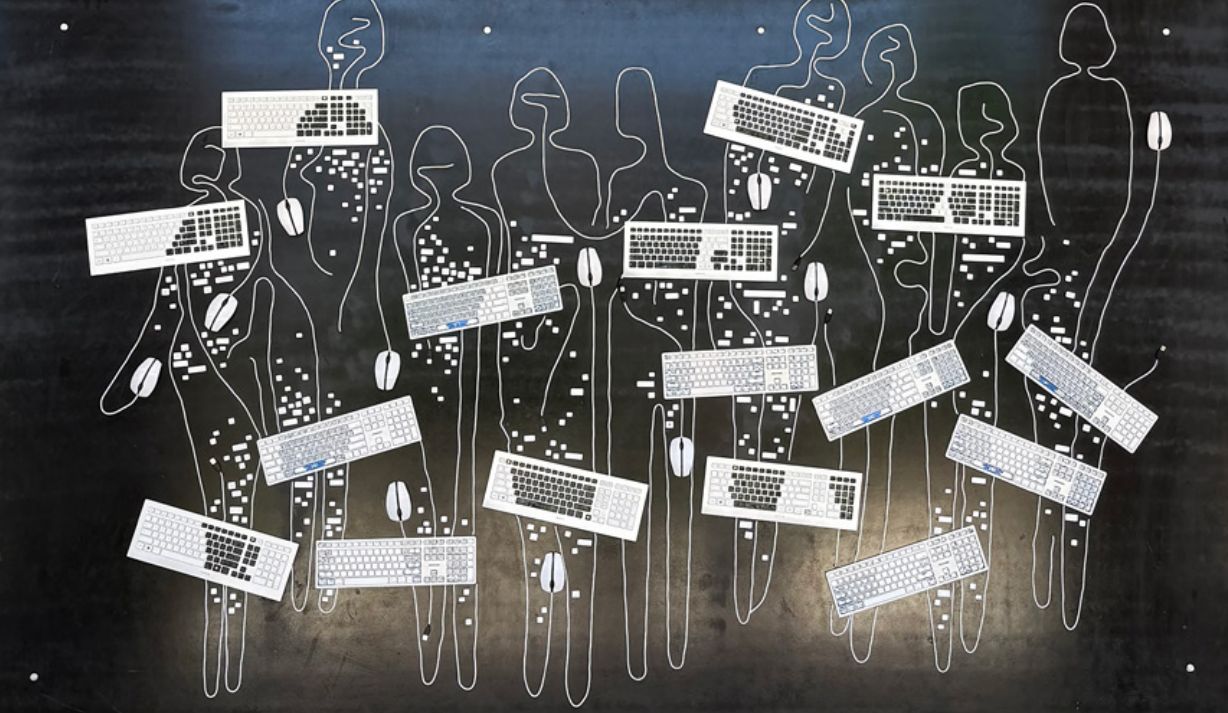
For a week, from November 24 to 30, the campuses of Benguerir and Khouribga ceased to resemble places of study and became boiling sensory laboratories. Mohammed VI Polytechnic University (UM6P) hosted the 2nd edition of the Digital Arts Festival (FAN), also deployed in several emblematic spaces in both cities.
Art, technology, pedagogy: this triptych took shape in an event driven by CANCoop, initiated within the 1337 school in 2024, and organized in collaboration with the Institute of Advanced Studies (IAS) and OMAC. All of this was supported by the French Institute of Morocco and the technology partner EPSON, within the international dynamic of Digital November.
Under the theme “Art and Artificial Intelligence: Convergences and Ruptures”, FAN 2025 questioned our relationship with the machine — fascination, fear, hybridization — and explored how emerging technologies are redefining the ways we see, feel and create.
For seven days, the public navigated between augmented dance performances, interactive works, sculptural installations and experimental videos by artists from Morocco, France, Japan, Tunisia and Spain. Some came to present their works, others created on-site, in residence, in direct dialogue with students.
From the opening, the tone was set: “AI Dream”, the show by Moulla and his Augmented Magic team, shifted the evening into another dimension. Augmented magic, digital illusions, dance, projections: the boundary between real and virtual blurred like a technological mirage. The audience oscillated between disbelief and fascination.
Right after, the façades of the UM6P campuses in Benguerir and the Al Moujahidine square in Khouribga turned into monumental screens. There appeared “Fozemachine” by Fred Chemmama, a figure of interactive mapping, transforming walls into a breathing, vibrating organism. One also encountered the light-architectures of Zineb Sekkat, and the cosmic drifts of Ahmed Khilad and El Mehdi Alislami, young creators from 1337 who asserted their style: raw, free, vibrant.
Machine on stage
FAN 2025 confirmed that digital Morocco exists — young, inventive, fiercely curious. Students from 1337 and other Moroccan schools filled the spaces with hybrid installations: experimental videos, augmented sculptures, contemplative VR, poetic mapping.
Highlights included “Millstones of Ibn Battuta”, a VR odyssey by Alislami, and “What is identity?”, an immersive work designed by students from six Moroccan institutions, offering a sensitive dive into the shadow and light zones of our identities.
Beyond the artworks, the festival functioned as a nomadic agora. Conferences, debates, round tables: the major questions surrounding creative technologies resonated powerfully.
There was talk of robotic art with Naoyuki Tanaka, site-specific creation in public space with Reda Boudina and Zineb Sekkat, and narrative and AI philosophy with Yann Minh, a tutelary figure of cyberspace.
These exchanges fueled a collective reflection on how digital art can stimulate debate, crack certainties, and open imaginations.
In only two editions, FAN has established itself as more than an event: a manifesto. That of a generation that refuses the opposition between art and technology, that deploys its creativity in the interstices of code, that transforms campuses and cities into terrains of collective experimentation.
At UM6P, they repeat it like a mantra: creativity and technique do not oppose each other — they amplify each other. This 2025 edition is the blazing proof of it.