Kingdom
Animal production: A 35% contribution to agricultural GDP
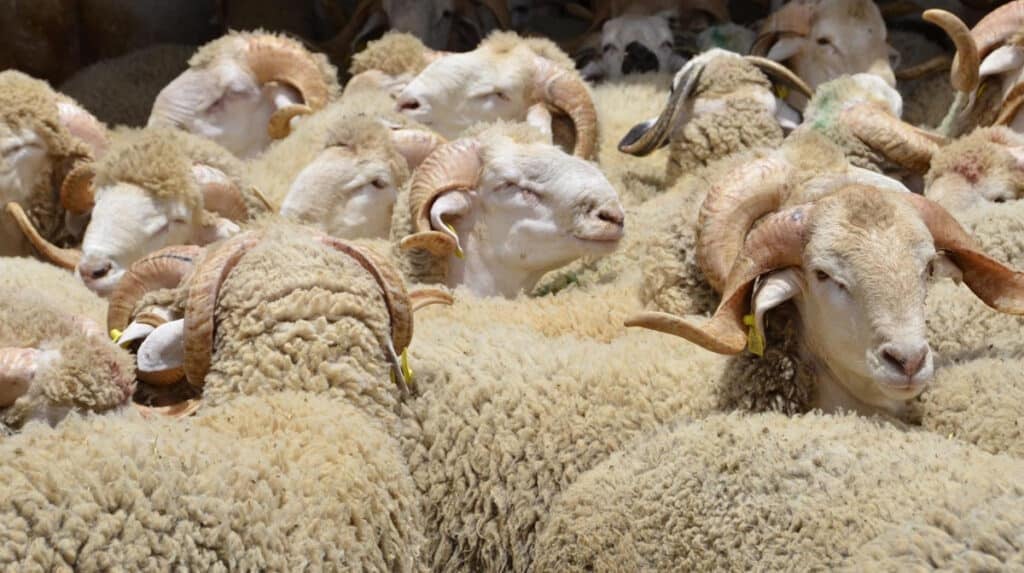
Livestock numbers stand at around 33 million head of sheep, goats, cattle, and camels, enabling an annual production of approximately 530,000 tonnes of red meat and nearly 2 billion litres of milk.

Animal production in Morocco contributes 35% to agricultural GDP, generating around 135 million workdays per year, stated on Tuesday in Meknes the Minister of Agriculture, Maritime Fisheries, Rural Development, and Water and Forests, Ahmed El Bouari.
Speaking at the opening of a high‑level international conference organised on the occasion of the 18th International Agricultural Exhibition in Morocco (SIAM), Mr El Bouari emphasised that animal production is a key pillar of the national agricultural sector, representing a source of income for nearly 1.2 million livestock farmers.
He also noted that, according to data from the 2025 agricultural census, Morocco has a livestock population of approximately 33 million head of sheep, goats, cattle, and camels, enabling an annual production of around 530,000 tonnes of red meat and nearly 2 billion litres of milk.
With regard to the poultry sector, Mr El Bouari reported steady growth, with production estimated at nearly 784,000 tonnes of white meat and around 6.5 billion eggs intended for consumption, thus ensuring 100% coverage of national market needs.
In this regard, the minister affirmed that animal production value chains occupy an important place in the agricultural strategy adopted by the Kingdom, enabling significant progress in the development of production, productivity improvement, and the fulfilment of national needs, while strengthening professional organisation and encouraging investment. He recalled that, in line with the High Royal Instructions, the government has launched an exceptional programme to rebuild the national livestock herd, supported by a substantial budget envelope, primarily aimed at assisting farmers with the purchase of animal feed and the preservation of breeding females.
Mr El Bouari specified that the ministry’s strategy in this area is based on strengthening animal feed production, as well as consolidating the animal health security system through enhanced epidemiological surveillance, health controls, and vaccination against infectious diseases, in addition to improving productivity.
Regarding the development of the red‑meat sector, the minister explained that it will rely on improving cattle breeds intended for meat production, noting that beef accounts for 80% of national consumption.
According to him, the strategy also provides for the development of camel farming, given its economic and social role in the southern provinces of the Kingdom, where it constitutes a key source of income, generating an estimated value added of nearly 225 million dirhams per year and around 2.7 million workdays.
The strategy, Mr El Bouari continued, is also based on the modernisation of marketing circuits, the upgrading of slaughterhouses, the development of logistics infrastructure, the strengthening of cold chains and transport, as well as the promotion of fair contracts, particularly for the benefit of small producers, in addition to the development of training and scientific research in partnership with various stakeholders, with a view to increasing the number of graduates from training institutes.
Initiated around the theme of animal production and the transformation of food systems, this large‑scale event brought together several high‑level political figures, decision‑makers, officials from international organisations, experts, researchers, and sector professionals, confirming its positioning as a strategic platform for dialogue and reflection on the future of agriculture.