Kingdom
Akhannouch: RHGs, a mechanism aimed at unifying healthcare decision-making at the regional level
Speaking from Agadir, the Head of Government highlighted the strategic importance of Regional Health Groups (RHGs). Far from being a simple institutional restructuring, the creation of these groups reflects a deep transformation in the very conception of public health, with the lived experience of citizens serving as its guiding principle.

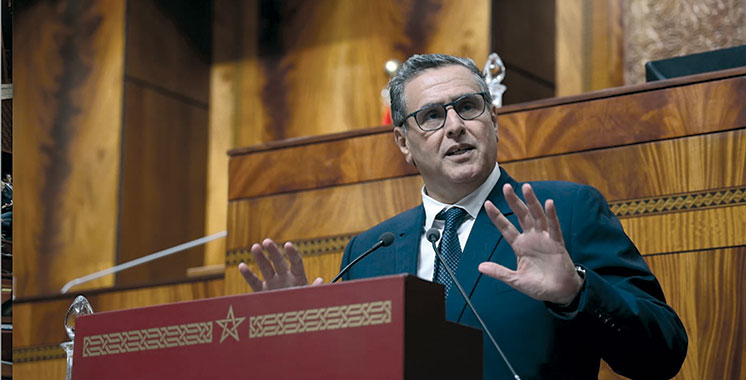
“Under the wise leadership of His Majesty the King, our country has embarked on a profound transformation of the healthcare sector, moving from fragmented management to an integrated national approach,” stated Aziz Akhannouch, who was chairing the Board of Directors of the Regional Health Groups (RHGs).
This shift is not merely a technical adjustment, but a complete rethinking of how the State approaches healthcare. The transition from centralised and fragmented management to integrated regional governance marks a major turning point. He added: “We are moving away from a model based on the ‘accumulation of resources’ to one that prioritises the efficient organisation of care pathways, a direct alignment between budgets and priorities, and rigorous evaluation of outcomes.”
The concept of the Regional Health Group (RHG) lies at the heart of this transformation. It is not about adding a new institution to existing structures, but rather about a strategic mechanism aimed at reorganising responsibilities, unifying decision-making, and linking planning to resources and real needs. This organisation is designed to improve performance, instil a culture of accountability, and make healthcare more accessible and efficient for citizens.
The fundamental challenge is therefore not simply to create regional health groups, but to radically change the everyday experience of citizens within the healthcare system. Reforms are not measured by the number of meetings or the size of budgets, but by the clarity of care pathways, the speed of treatment, effective solidarity, quality of reception, and availability of services.
This defines the “social democracy” envisioned by His Majesty—a State that goes beyond proclaiming rights to actively organising the conditions for access to them, ensuring a concrete legal framework and, above all, tangible impact on people’s lives.
Finally, territorial equity and fairness in the healthcare sector are essential criteria for assessing the success of public policies, reflecting a more human and inclusive vision of the State’s role in health.