Influences
Akhannouch discusses his record with the media
On Thursday 30 April, the Head of Government received representatives of the national media. The open meeting was intended to discuss the government’s track record which, following its presentation to Parliament, is now the subject of a dedicated publication.

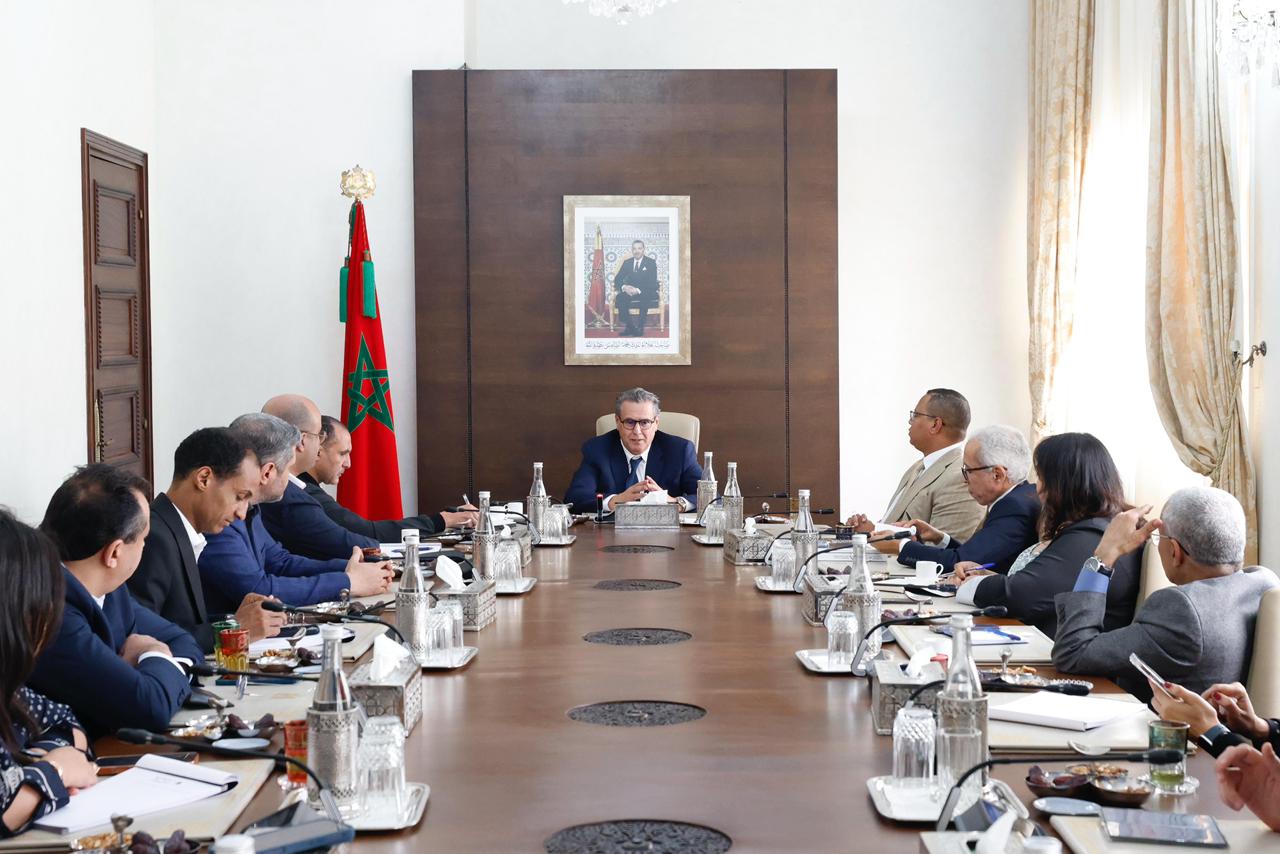
It was a warm and welcoming Aziz Akhannouch, true to his usual manner, who received senior figures from the national media at the headquarters of the Head of Government, at the Mechouar in Rabat. In a gesture marked by humility, the Head of Government even went so far as to open the doors of his office to his guests for a brief guided tour. “It is a small office, but one laden with symbolism,” confided the man who has been leading the government for five years.
“Five Years of Action in the Service of the Nation” is, moreover, the title of the collection recently published by the Government of the Kingdom to trace the remarkable progress the country has experienced during this period. This achievement‑laden work is accompanied by a “statistical review of government action”, made public this Thursday, 30 April.
A strong economy for a social state
On this occasion, the Head of Government engaged in an open exchange with journalists on the Executive’s actions. “Previous governments did not take the time to establish a comprehensive, cross‑cutting assessment of their actions. Together with our partners in the majority, we considered it appropriate to present ours at this stage, in order to enrich the debate around the achievements of this mandate,” explains Aziz Akhannouch, who has invoked Article 101 of the Constitution for the second time to report to Parliament.
During this meeting, he wished to reiterate the guiding principle of government action: reconciling economic development with human development. “Consolidating the foundations of the social state inevitably requires a strong economy. This is a decisive equation,” he stresses.
It must be noted that the post‑Covid economic rebound has been particularly significant, as evidenced by several macroeconomic indicators and assessments by international financial institutions. Yet the past five years have been marked by a succession of crises: emergence from the pandemic, the war in Ukraine, the Al Haouz earthquake, water stress and, more recently, tensions in the Middle East. “A series of trials that could have discouraged even the most seasoned decision‑makers,” seasoned observers acknowledge.
“We made the choice not to reduce budgets; on the contrary, we strengthened them while rethinking their design in order to generate a virtuous dynamic,” says Aziz Akhannouch. “We also favoured an approach based on roadmaps, enabling swift action and effective responses to emergencies,” he adds.
A visible and tangible impact
The economic upturn recorded during this mandate has enabled the Kingdom to mobilise the necessary resources to effectively roll out measures aimed at strengthening the pillars of the social state, in line with the High Royal Guidelines.
In this area, the government’s statistical record is equally impressive, whether in health, education or social protection, not to mention the substantial budgetary efforts devoted to social dialogue.
Today, across all corners of the Kingdom—both in cities and in rural areas—the impact of the actions undertaken over the past five years is perceptible and concrete. Like the verdant landscapes lining the roads in this favourable agricultural year, the trajectory of an emerging Morocco appears more flourishing and promising than ever.
The figures speak for themselves and are sufficient to thwart attempts by the opposition to call into question the Executive’s achievements. In any case, “history will do justice to the government’s record,” as Aziz Akhannouch points out.