Kingdom
Agriculture: an Excellent Season in Prospect…
Signs of a good harvest are multiplying, and the added value of the agricultural sector is expected to exceed 14% in 2026. The coming weeks nevertheless remain decisive.

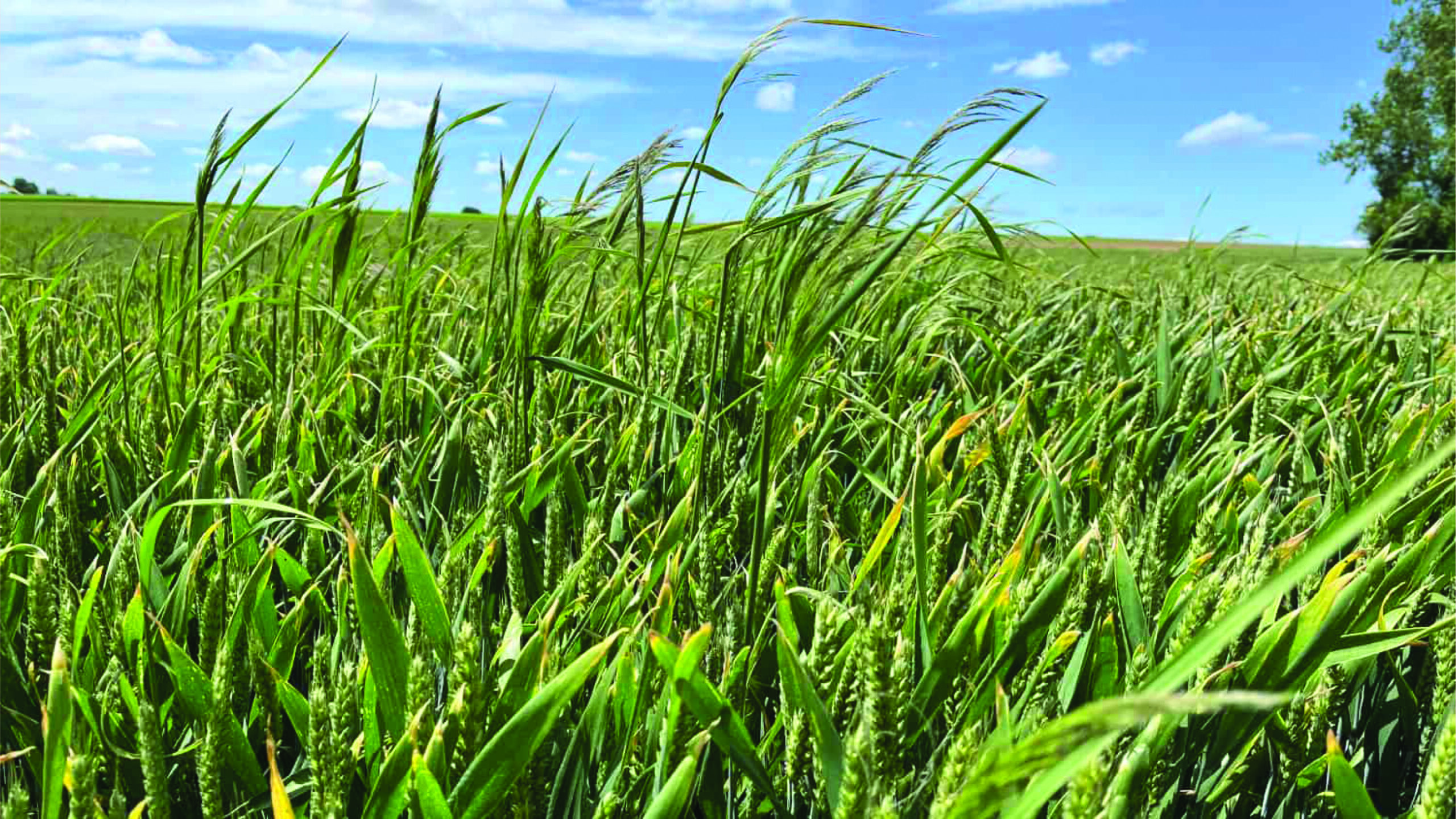
With abundant rainfall and highly favorable weather conditions, the 2025–2026 agricultural season could be an exceptional one. At least, that is what professionals in the agricultural sector hope or anticipate. However, nothing is guaranteed in advance.
It may be said that the situation is clearly better than in previous years—and it is true that things are off to a good start. But everything will be decided in the coming weeks.
“It is still too early to claim that cereal production will reach record levels, because it would only take a week of heatwave, or conversely heavy rain or hail in certain regions, for most of the season to be lost, even though a large part is already almost fully secured,” explains a sector professional.
While cereal crops planted from Settat heading south are doing well, with growth considered satisfactory and markedly different from previous years, this is not yet the case in other areas where cereals have not yet formed their ears. That is precisely why it is still too early to make a definitive judgment.
It should be recalled that the area devoted to cereals, legumes, and fodder crops currently stands at 4.5 million hectares, including 3.9 million hectares for autumn cereals alone—an increase of 48% compared to the previous season.
Agricultural value added above 14%
Nevertheless, forecasts remain positive. The Head of Government had announced that the agricultural sector could record exceptional growth this year, approaching 15%.
In the same vein, Bank Al-Maghrib estimates that the harvest of the three main cereals will reach 82 million quintals, and that the sector’s added value should therefore rise to 14.4% in 2026, marking an increase of 9.2 points compared to 2025.
This would, however, be followed by a decline to 5.3%, under the assumption of a return to an average cereal season. Even so, it would far exceed the GDP of non-agricultural activities, which is expected to average around 4.5%.
For his part, Minister Ahmed Bouari stated that the regions of the North, Saïss, Gharb, and Chaouia have particularly benefited from recent rainfall, allowing for a rapid recovery of crops affected by localized flooding.
Moreover, total national rainfall between September 1, 2025, and March 11, 2026, reached 462 mm—an increase of 56% compared to the average of the past thirty years and 134% compared to the previous season.
These precipitations are expected to significantly improve the productivity of cereal and staple crops, strengthen livestock farming, and reinforce all agricultural sectors.
Doukkala, the turning point
The Doukkala region, long affected by deficits in both rainfall and dam water releases, is also rising from its ashes. After seven years of drought, it is reconnecting with an unprecedented agricultural momentum.
A real turning point, as the autumn crop season shows strong results, with 90% of the program completed. This covers more than 83,700 hectares, mainly in cereals and legumes.
Autumn legume cultivation has even exceeded its target, with 2,080 hectares achieved—more than 100% of the planned objective. Winter crops, dominated by potatoes, cover 1,530 hectares, while an area of 1,965 hectares has already been mapped out for spring.
These performances were made possible thanks to rainfall totaling 413 mm—an increase of 63% compared to previous seasons and more than 28% above a normal year.
In any case, the stability of rainfall and weather conditions has been so favorable that it has enabled farmers to carry out technical operations such as weeding and treatment of fungal diseases.
Overall, this situation would not only meet the irrigation needs of existing crops but also allow spring campaigns to be launched under favorable conditions. It should also help restore balance in several agricultural sectors, notably milk, meat, sugar, and vegetables.
Another major feature of this agricultural season is the impact of rainfall on natural rangelands, which have regenerated and once again become a key resource for grazing. This improvement has reduced reliance on compound feed, providing real relief to livestock breeders in the region.
This, combined with direct support for breeders launched by the Ministry of Agriculture, strongly contributes both to animal production and to the productivity of the national herd.
It is still too early to declare victory, but all signs point in that direction. That said, the coming weeks will determine whether these projections are confirmed, as well as their real impact on cereal crops and livestock, with the ultimate goal being an optimal contribution of the agricultural sector to overall growth.
The rollout of irrigation programs continues
Despite abundant rainfall, Morocco is continuing its program to secure water resources, not only through the establishment of desalination plants but also through the development of irrigation.
A master plan for irrigation development in the Chaouia agricultural region, covering an area of 250,000 hectares, has been launched by the ministry. It aims to modernize and secure agricultural water use in this area, which has become vulnerable and has not yet fully benefited from recent rainfall.
The Gharb region will also benefit from a massive irrigation network covering 30,000 hectares. The Saïss plain is not left out either: a modern irrigation network will be built there, with plans to transport more than 125 million cubic meters of surface water from the M’Dez dam to irrigate an initial 10,000 hectares, with a long-term extension planned to cover 30,000 hectares.