Influences
Ageing differently: Retirement homes are becoming professionalized
If placing a parent in a retirement home continues to spark debate, one reality is emerging. These facilities are gradually becoming an option to consider in a Morocco undergoing major changes: increasing life expectancy and children’s professional mobility. Private institutions and social welfare establishments are trying to respond as best they can to this issue…

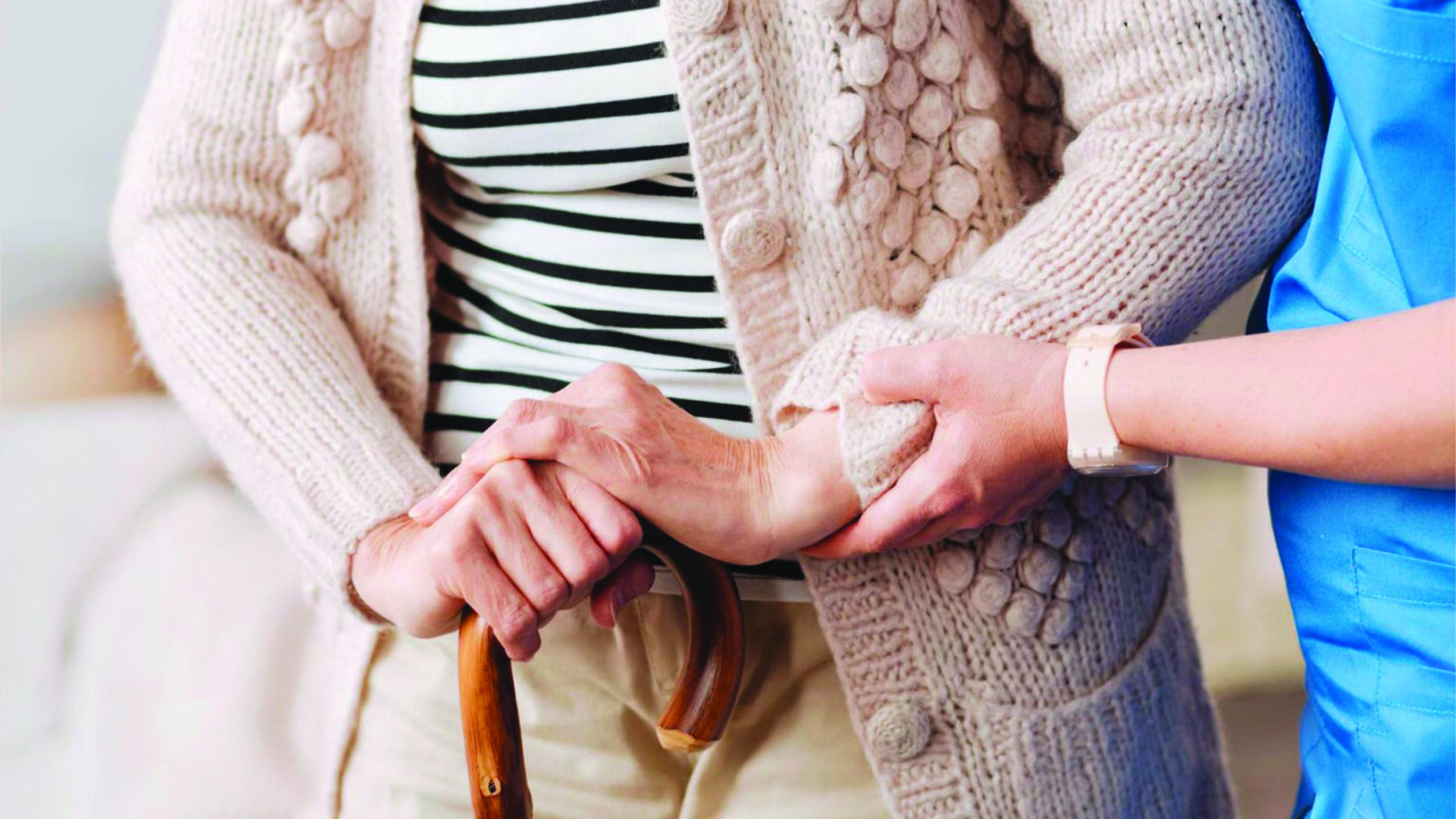
Behind the welcoming facades and comfortable living spaces of retirement homes lies a more complex reality: ageing in a Morocco in full transition.
Long considered a family duty fulfilled at home, care for the elderly is progressively opening up to new solutions.
Among these, private retirement homes are attracting an increasingly diverse clientele: independent seniors, dependent people requiring daily assistance, and Moroccans living abroad who want to ensure appropriate medical care for their parents.
“I didn’t want to be a burden on my children”, says a resident who has been living for several years in one such facility. Even the categorical refusal of his three children did not change his decision.
“The living conditions of my children and the frantic pace of their professional and family lives do not allow them to take care of me. After my wife’s death, I stayed at home for four years, but loneliness and isolation wore down my will to stay… I then decided to live differently”, continues the same resident, who seems to fully assume his choice.
That is not the case for his neighbor in the next room, who explains that “coming to this facility, whose quality of service and professionalism I do not call into question at all, was for me a real rupture with my loved ones. My children live abroad and my sisters did not want to take care of me…”
A choice assumed by some, but imposed on others. Living in a retirement home is a life stage that upends familiar reference points and remains a topic that divides opinion.
For while these facilities offer safety, care and activities, they also raise more sensitive questions related to loneliness, family distance and the evolution of intergenerational solidarity.
Faced with the progressive ageing of the population and the geographic dispersion of families, private retirement homes are emerging as one of the new faces of elder care in Morocco. A reality still discreet, sometimes poorly perceived, but one that reflects profound social transformations.
According to professionals, there are no fewer than ten private facilities located in Casablanca, Rabat and Agadir that welcome both nationals and foreigners.
In light of the sociodemographic changes revealed notably by the results of the latest general population and housing census, the Secretary of State in charge of Social Inclusion has, for several months, held regional meetings on the rights of older persons.
These meetings have, explains Abdeljabbar Rachidi, Secretary of State in charge of Inclusion, “reinforced the debate on ageing and identified the expectations of territorial actors for a better response to the needs of older people”.
The issue of old age has arisen relatively recently in Morocco, due to a population that has been predominantly young, but “awareness of the need to meet expectations in this area is increasingly being expressed”, says Jean-Luc Rizzo, president of the French Association of Mutual Aid and Benevolence (AFEB), which runs the Maison de retraite du Souissi.
Existing since 1930, this establishment currently has a capacity of 57 residents, thanks, explains Rizzo, “to modernization and extension actions that we have carried out in recent years and that we hope to continue with the support of donors, companies and associations and foundations”.
Over time and with both demographic and societal evolution, the institution has shifted from a simple retirement home to something resembling an Establishment for Dependent Elderly Persons (EPHAD).
It should be noted that in Morocco we more often speak of retirement homes, senior residences or reception centers whose services focus mainly, according to the Secretariat in charge of Social Inclusion, on listening and orientation, social and legal assistance, accommodation, food, and medical and social follow-up and support for this population.
But this offer of care in geriatrics, gerontology and psychosocial support remains limited and, according to public authorities, requires improvement.
Indeed, today comprehensive and specialized medical care is essential to support older people. At the Maison de retraite du Souissi, this reality is recognized, because, Rizzo specifies, “the residents we welcome are increasingly older and affected by serious pathologies, notably neurodegenerative diseases.
Thus, our average age is 85 years. Autonomous people are a minority, with a majority of women”.
In a residence, one learns to age differently…
That is why, explain the managers of the Maison de retraite du Souissi, priority is given to people directly or indirectly linked to health, who are the most numerous.
“This affects recruitment profiles, and we are fortunate to have staff who have been here for many years, trained on the job. Today we have begun providing continuous training with the help of geriatricians and the support of our psychologist”, recounts Rizzo, whose institution has a health unit overseen by a coordinating physician and including 3 nurses, 23 care assistants, two referring doctors (general practitioners and geriatricians), as well as physiotherapists.
In addition, a psychologist and two activity coordinators are present to organize activities and workshops. The difficulty of caring for these people stems from the fact that geriatrics encompasses not only medical procedures but also behaviors toward people in situations of weakness and dependency requiring appropriate gestures, words and attention, even affection and a great deal of patience.
For that reason, at the Maison de retraite du Souissi “we do not accept that residents be left to their own devices and everything is done so that they do not remain alone throughout the day”.
If, as in any community, the day is punctuated by meal and snack times, in retirement homes there is also cultural and social support for residents.
In this capital’s retirement home, “there is a dietitian and menus that vary by season; many activities are also organized according to a weekly schedule. These activities aim not only to occupy residents but above all to stimulate their cognitive abilities with reading and cinema workshops, but also gardening, baking…”
Listening to residents and responding to their expectations is part of the services of retirement homes. “This contributes, in addition to seeking safety, which is essential, to bring the sought-after serenity. Most of our residents have little or no family ties, either because they are alone or because families are distant. Our role is therefore to try, as much as possible, to create links at a distance or to compensate with daily attentions with the support of many volunteers”, emphasizes Rizzo, who adds that “every occasion is seized to make it a collective celebration: birthdays, end of year, national holidays, Music Day, barbecue, Aid”. And all of this has a cost.
Thus, overall, the fee for accommodation, catering, laundry, activities and administrative processing is set at 13,910 dirhams per month.
If housed in a private studio, an additional 1,666 DH is required, and for a shared room 1,100 DH. For a room with a private shower, the resident must pay 863 dirhams.
Additionally, nursing care and the medicalized environment are billed monthly at 5,093 dirhams, reimbursable under the agreement with the Caisse française de l’étranger if the resident is of French nationality.
For Moroccans, these costs are their responsibility, as are other medical expenses (doctor visits, dental care, pharmacy, tests, physiotherapy, speech therapy sessions and ambulance transport).
Objective: improve care in centers
Social protection establishments are also aware of the importance of multidimensional care for seniors.
That is why the Secretariat of State in charge of Social Inclusion is working, within the framework of the National Action Plan for the Promotion of Active Ageing 2023–2030, on improving the conditions for caring for older people without family support within social protection institutions.
There are currently 72 establishments located across the country’s regions that, according to the Secretariat of State, host around 7,000 residents (men and women).
“Many elderly people suffer from isolation, family rupture and psychological distress. Emotional support activities, social participation and skills validation remain limited. That is why we plan to improve the quality of services, strengthen human resource capacities through training in the fields of geriatrics, gerontology and psychosocial care”, says Rachidi.
To this end, the Ministry of Solidarity, Social Inclusion and Family, through Entraide Nationale, provides technical and financial support to elderly centers in partnership with managing associations.
These improvements also aim to encourage home-based care. In addition to the axes chosen by the 2023–2030 plan, Law 65-15 establishes the norms and standards of care services in social protection institutions, through regulatory and supervisory tools based on terms of reference.
All of this should contribute, according to the Secretariat of State, to improving the living conditions of this segment of the population at a time when both private and public structures are seeing increased demand for elderly care.
It is certain that retirement homes do not replace family ties, but they remind us, at a time when lifestyles are changing, that it is possible to age differently.