Kingdom
AFCON 2025: Beyond a “simple” sporting competition
Everyone agrees on this point. Football is more than a competition and a show in stadiums. It is a formidable instrument of soft power. Morocco has known how to draw great benefit from it. An epic that has continued since 2022.

Hundreds of millions of spectators around the world undoubtedly followed the opening, on Sunday, December 21, of the 35th edition of the Africa Cup of Nations. This is indeed a first, since the broadcasting rights for this Moroccan edition (a collector of records and firsts) have been acquired in all corners of the globe.
Between China, Japan, India, as well as Russia and the United States, and of course several European countries (30 in total) and the whole of Africa, the number of viewers is counted in billions.
A large number of them are discovering Morocco and Africa for the first time. One can easily understand the stakes of this extraordinary AFCON and its enormous potential in terms of image and soft power, not of one country but of an entire continent.
What strikes the mind even more is this skillful showcasing of the Kingdom and its institutions, which are working in tandem with a single goal: to show the entire world a Morocco that is being built and developed, an emerging country.
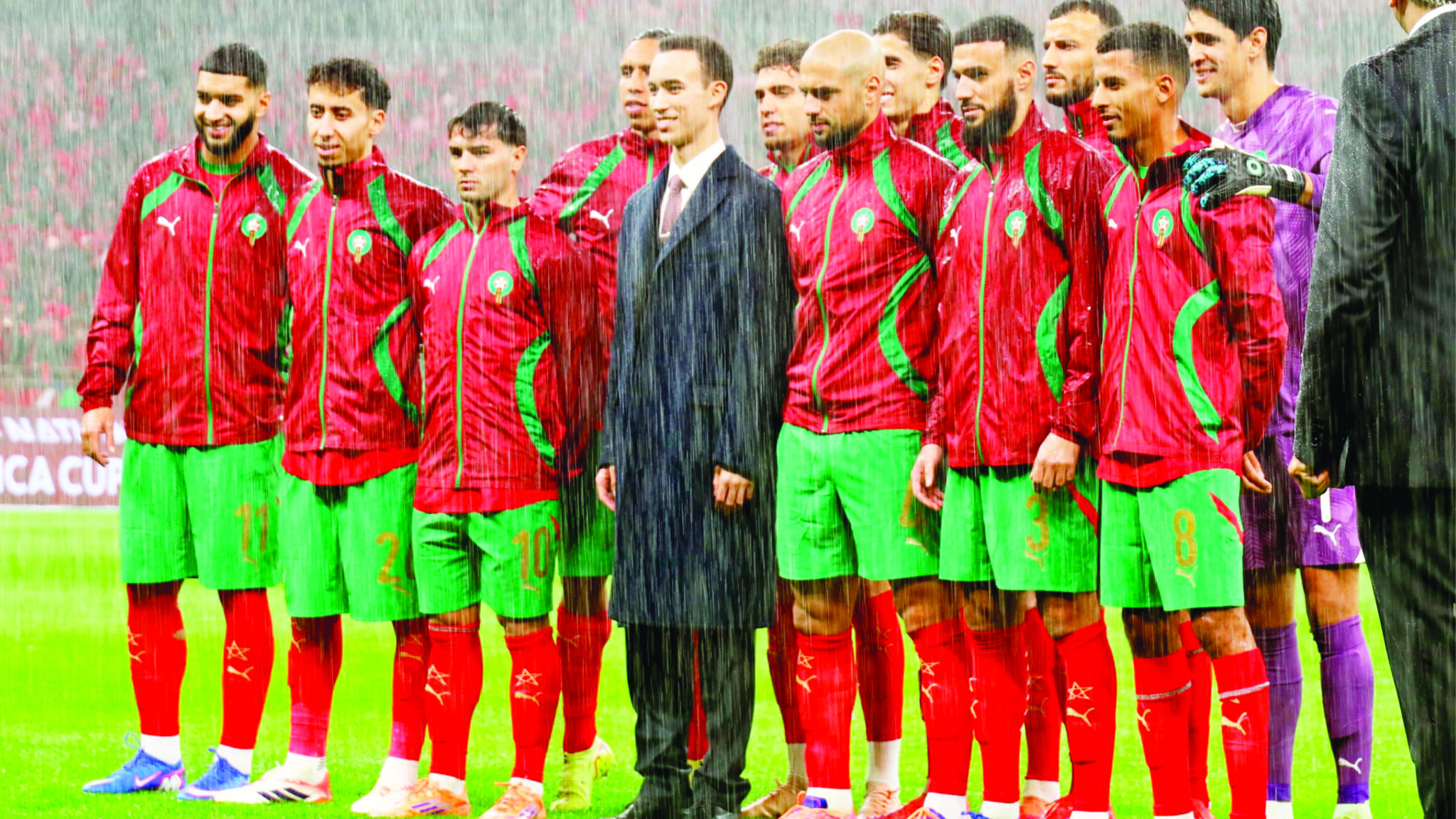
The image of the kickoff of the opening match given by Crown Prince Moulay El Hassan, under pouring rain, will remain etched in everyone’s memory.
This AFCON is not limited to highlighting—beyond the performances of its team and the relevance of its sports policy—the quality and importance of Morocco’s infrastructure and organizational capacities.
The Kingdom also demonstrates its now indisputable security expertise. The inauguration in Salé, a few days earlier, of the African Police Cooperation Center, designed with the support of Interpol, reinforces this vocation.
The center includes representatives of the security services of the various countries participating in the AFCON, delegates from FIFA, CAF and Interpol, in addition to representatives of the security services of the States of Qatar, Portugal and Spain.
In the wake of the launch of this center, a robust security system was put in place. Already several months earlier, all the cities hosting AFCON matches were equipped with a sophisticated surveillance camera system.
On “D-day,” the system is fully deployed. The DGSN, we learn, has also put in place security and safety protocols specific to each match, doing so by “taking into consideration the number of spectators and the nature of the football match”.
It has also mobilized security resources in the various spaces intended to host supporters in the different cities, “in order to guarantee the highest required standards of security and safety”.
For its part, the Ministry of Justice has opened judicial offices in the concerned stadiums. This initiative, it is explained, “introduces an unprecedented institutional mechanism, intended for the immediate handling of cases likely to be submitted to the public prosecutor in connection with possible offenses committed on the occasion of the matches”.
It responds above all to a “logic of anticipation and modernization of judicial action in the sports environment”.
A brand image
All of this clearly shows that the Kingdom is deploying all means—whether security-related, diplomatic or technological—to make this Cup a success and a demonstration of what the country is already capable of, four years before the 2030 World Cup.
Indeed, in addition to the security dimension, the diplomatic aspect is also very present. It is precisely within this framework that the official opening took place, in the presence of the Minister of Foreign Affairs, of the AMCI Fan Zone, dedicated to international students and graduates of Morocco’s Cooperation program, open to more than 50,000 visitors, including nationals of 47 African countries, which clearly illustrates the Kingdom’s African vision.
The sporting event being an opportunity to reaffirm the principle that “the development of the continent can only be envisaged within the framework of shared development, based on cooperation, economic synergies and solidarity between African countries”.
All the more so since the event gives another image of the continent. Proof of this: on a Dutch channel, the TV set is 100% Moroccan—the décor, the clothing and the indoor atmosphere.
Across the Atlantic, the newly elected mayor of New York, who shows up at a Moroccan restaurant and willingly allows himself to be filmed just after the kickoff of the opening match, is among the unprecedented and highly symbolic situations.
One could multiply such examples at will, whose repercussions are certain both on the image of the Kingdom and on tourist activity, for example, and even on investments.
The main concern of the foreign investor is moreover security, stability and the quality of infrastructure. This is what Morocco has just given a glimpse of through this AFCON 2025.
Indeed, what will also attract the attention of many people is that despite hours of torrential rain, this had no impact on the opening ceremony, and even less on the course of the first match.
And when one knows that just a few days earlier, and a few thousand kilometers away, it took half an hour of rain in a stadium that had nevertheless already hosted the 2022 World Cup for the Arab Cup classification match being played there to be interrupted because of the condition of the pitch, one can deduce an idea of the quality of Moroccan sports infrastructure.
Behind it, whether the stadium or the pitch, it was Moroccan companies that were at work. There is no better argument to showcase the expertise of Moroccan companies in the field.
This comes at a time when, in order to maintain the same organizational standards, Morocco—incidentally having set the bar very high—the prospect of calling on this expertise by the organizers of future editions is not excluded.
Moroccan companies are, moreover, well established on the continent in many sectors, including construction and public works. This is to say that beyond tourist revenues, the impact generated by the modernization of sports and transport infrastructure, the economic benefits will undoubtedly be felt for many years still after this 35th edition.