Kingdom
Aeronautical Wiring: Promising Prospects
With 10 billion dirhams in exports, the wiring segment confirms its status as a pillar of the national aerospace sector. In a favorable environment, it is now evolving toward greater technical complexity to meet the new standards set by manufacturers.

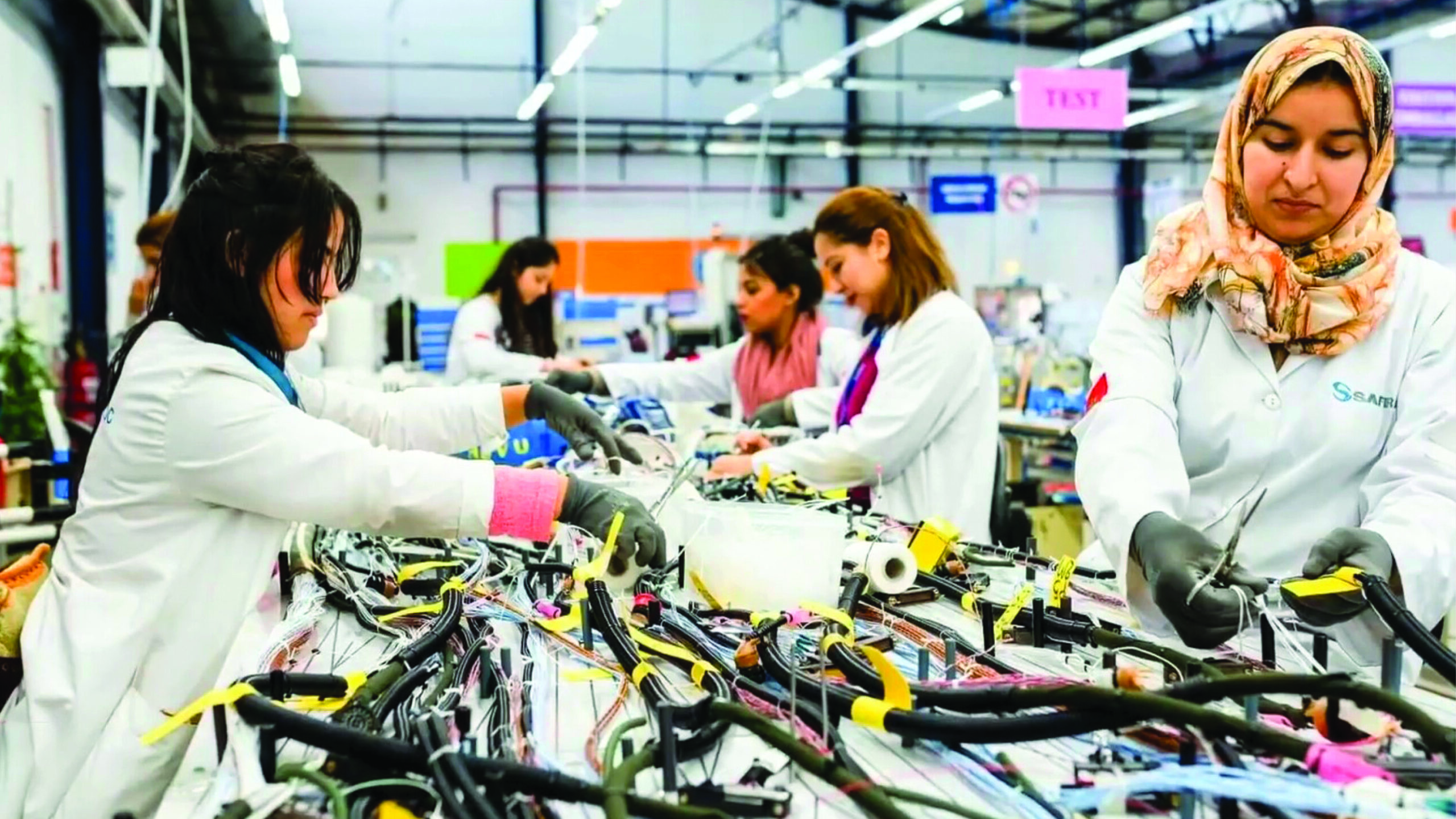
The aeronautical wiring industry, known by the acronym EWIS (Electrical Wiring Interconnection System), is one of the most mature and strategic segments of Morocco’s aerospace platform.
Unlike automotive wiring, which has so far relied more on massive volumes, EWIS is based on higher technical complexity, generating more added value per unit. With a record export revenue of 9.8 billion dirhams in 2025, steadily increasing, the segment now accounts for nearly one-third of all exports in the aerospace sector.
It must be said that over the past 25 years, Morocco has managed to attract the elite of the global industry. Safran, the sector leader, has made the Kingdom its strategic base, with sites such as Matis Aerospace in Nouaceur—a joint venture with Boeing—as well as its units in Rabat and Tiflet.
These factories are not merely mass production centers: they are certified to the highest quality standards, producing cables for manufacturers such as Boeing, Airbus, and Dassault, as well as wiring harnesses for LEAP engine programs, which equip the Airbus A320neo.
Safran Electrical & Power Morocco also operates, in Ain Atiq near Rabat, a center of excellence specializing in wiring harnesses for various Airbus aircraft models and helicopters. It is one of the largest factories in the world specializing in this field.
Toward increased added value
Other major players such as Latécoère, Collins Aerospace, and the American company Spirit AeroSystems complete this ecosystem. Their strong presence is explained by a winning combination: immediate geographic proximity to European assembly lines (Toulouse, Hamburg), political stability, and a highly skilled workforce, trained mainly at the Institute of Aeronautics Professions (IMA).
As in the automotive sector, aeronautical wiring has entered a phase of technological upgrading: power management for future “more electric” aircraft, integration of optical fibers for high-speed data transfer, reduction of harness weight to meet decarbonization requirements… As a result, we no longer speak only of wire bundles, but of complete systems including onboard electronics.
From being a center of competitive costs, Morocco is thus transforming into a hub for higher value-added technical solutions. Local integration, which now exceeds 40%, is targeting an ambitious 50% by 2030, by incorporating more electronic components and connectors produced locally. Growth prospects are, moreover, flourishing.
Safran’s major investment (280 million euros announced at the beginning of 2026) for a new LEAP-1A engine maintenance and assembly site in Nouaceur is a major catalyst. These engines, among the best-selling in the world, require highly precise electrical harnesses, which will boost local production.
Growth will no longer come only from production, but also from design. Engineering offices, such as Safran Engineering Services, are already working on the design of interconnection systems, enabling a larger share of the value chain to be captured. Moreover, with Airbus and Boeing order books full for the next 10 years, Moroccan factories have strong long-term visibility.
In addition, there are projects for the maintenance and manufacturing of military aircraft, particularly drones, on national soil. According to experts, these projects are expected to create a new, highly lucrative niche for wiring specialists.