Kingdom
Advanced Regionalization: 2026, a Pivotal Year
The Court of Auditors’ latest report highlights the factors that are still hindering the full operationalization of advanced regionalization. On the ground, a roadmap takes effect this February to accelerate the process.

More than fifteen years after the launch of the advanced regionalization process, with the establishment of the Consultative Commission, 2026 is shaping up to be a real turning point—and for several reasons.
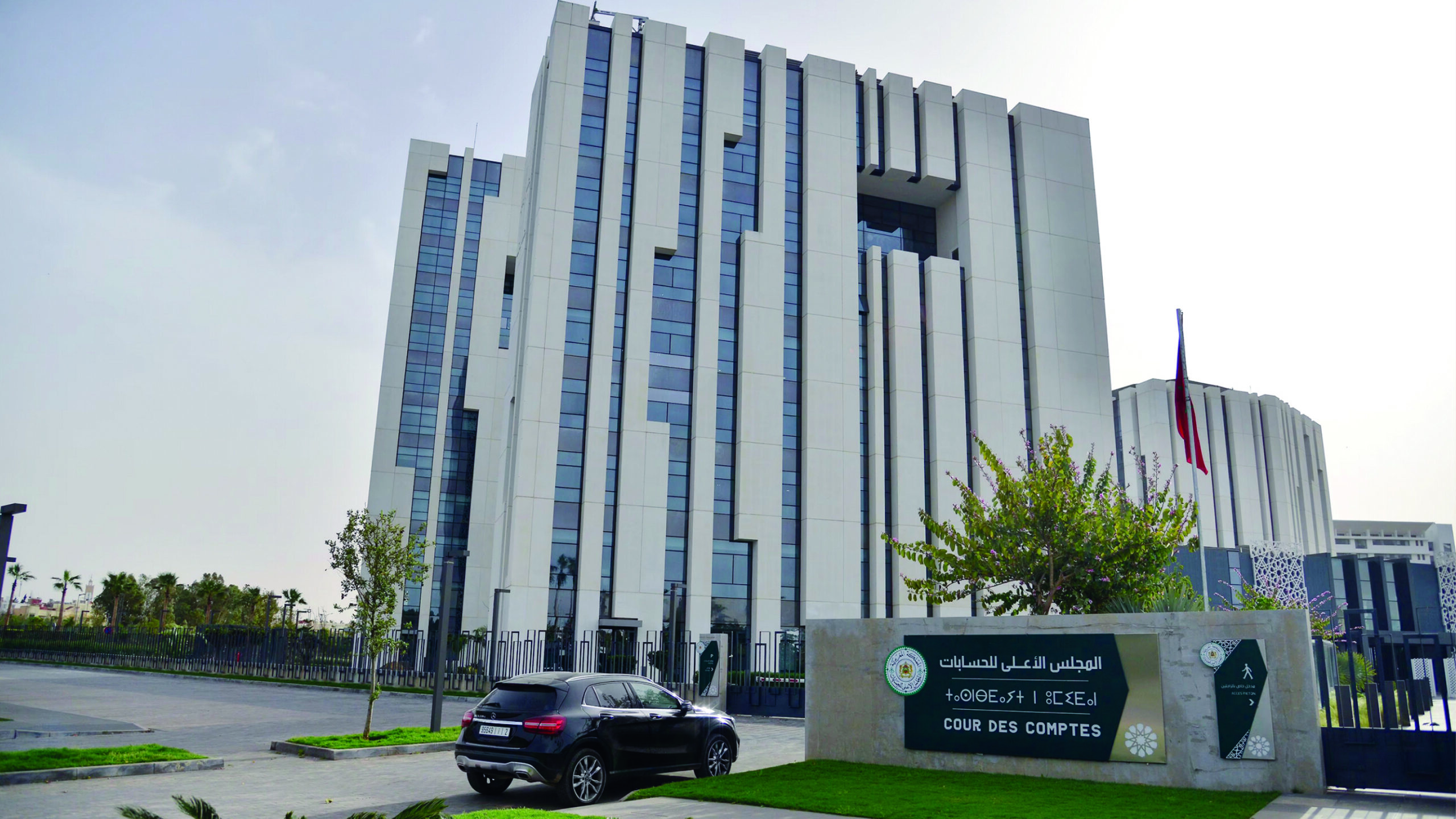
In its latest report, just published in the Official Gazette, the Court of Auditors highlights the main factors that are still hampering the completion of this process, foremost among them development disparities and the issue of administrative deconcentration.
However, the momentum that has since been injected into this project reflects the public authorities’ determination to move to a more advanced stage. Nor should one overlook the potential impact, in this respect, of the implementation of the Autonomy Plan—negotiations on which are set to begin shortly—in the Sahara regions.
Even if, at this stage, matters are not yet clear, many observers and specialists are leaning toward a gradual convergence between advanced regionalization and the Autonomy Plan.
Be that as it may, that same year will see the rollout, in all regions, of the Territorial Health Groups (THGs), which represent the most advanced sectoral expression of advanced generalization.
Another sign of the acceleration of this project is the scheduling of draft texts—without having been adopted by the Government Council on 19 December—providing for the creation of regional administrative representations.
This can be seen as a sign that the administrative deconcentration project has matured and is now ready for effective deployment—without forgetting the implementation of a new advanced regionalization roadmap starting this February.
Administrative deconcentration
Thus, a few weeks before the publication of the financial jurisdiction’s report, which covers the 2024–2025 period, an important meeting was held at the Ministry of the Interior, attended by several ministers as well as the regions’ walis, to review progress on the advanced regionalization project.
It follows that several major advances have been achieved in recent years. Among other indicators, it was specified that all twelve regions now have regional land-use planning schemes and Regional Development Programs (RDPs).
On the financial front, transfers from the State to regional budgets reached, in 2025, a record execution rate of 100%, “reflecting a clear determination to support local authorities,” as was emphasized. The meeting also pointed to the main obstacle to date, raised by the Court of Auditors.
This concerns “the effective implementation of the Charter of Administrative Deconcentration, the clarification and genuine exercise of the regions’ powers, as well as the issue of sustainable financing for advanced regionalization.”
Nevertheless, a notable effort has been made by the government in this regard. The Court of Auditors notes, in this sense, that “with regard to the transfer of priority investment-related powers to deconcentrated services, with the aim of simplifying administrative procedures and providing favorable conditions for investors, the Head of Government urged the sectors concerned to speed up this process.”
This has resulted, according to the Court of Auditors’ report, in the fact that “as of September 2025, the number of powers delegated or in the process of being delegated had reached 29 out of a total of 44, compared with only 14 at the end of 2024.”
The process is therefore underway, and it will be accelerated with the start of implementation of the new roadmap drawn up by the Ministry of the Interior, in keeping with the Royal Letter addressed to the National Conference on Regionalization, held in Tangier in December 2024.
A three-phase rollout
This roadmap was approved during the meeting held at the Ministry of the Interior and includes 97 concrete measures, 35 of which are priority actions to be deployed initially.
These measures are structured around four major strategic pillars: “strengthening productive investment to boost employment; developing infrastructure and basic services in urban and rural areas; improving management of water, energy and environmental resources; and promoting integrated, balanced territorial development.”
Implementation of this program is expected to begin, as already indicated, as of this February.
It should be noted, as the president of the Association of Morocco’s Regions, Mbarka Bouaida, recently recalled in a media appearance, that the advanced regionalization process has gone through two phases since the adoption of the new Constitution in 2011.
First came an initial phase focused on laying the legal foundations, with the promulgation of the organic law in July 2015.
This foundational phase extended through 2019, with the completion of the legislative and regulatory framework, the strengthening of the administrative framework, and the adoption of the first territorial planning schemes and regional development programs. The second phase began with the inauguration of the current government and the rollout of operational programs.
Regions began to fully exercise their powers, either autonomously or under program contracts signed with the State.
The third phase has only just begun with the start of implementation of the new roadmap, as well as efforts to accelerate investment in the regions through the incentives introduced by the new Charter, and to speed up the water and transport infrastructure program—alongside, of course, the delivery of the health reform (with the rollout of the THGs) and education.
New-generation IDPs for better targeting
In the wake of the policy to reduce territorial inequalities, a new generation of Integrated Development Programs (IDPs) is in the process of being launched.
At the regional level, this new generation of IDPs can make up for the shortcomings left by the Program to Reduce Territorial and Social Disparities, covering the 2017–2023 period, with a budget of around 50 billion dirhams.
According to the Court of Auditors’ report, at the time it was drafted, nearly 82% of the planned projects were under way, with variations in execution rates between regions (ranging from 12% to 98%).
According to the financial jurisdiction, all achievements in the classified roads sector were limited to upgrading and rehabilitation works, without any real expansion of the road network.
In the education and health sectors, the majority of projects also focused on rehabilitating and expanding existing infrastructure.