Kingdom
2025: A Year of Consolidation for Participative Banking
The participative sector strengthened its growth in 2025, driven by commercial dynamism and improved profitability. However, this development took place in an environment marked by a persistent imbalance between financing and deposits.

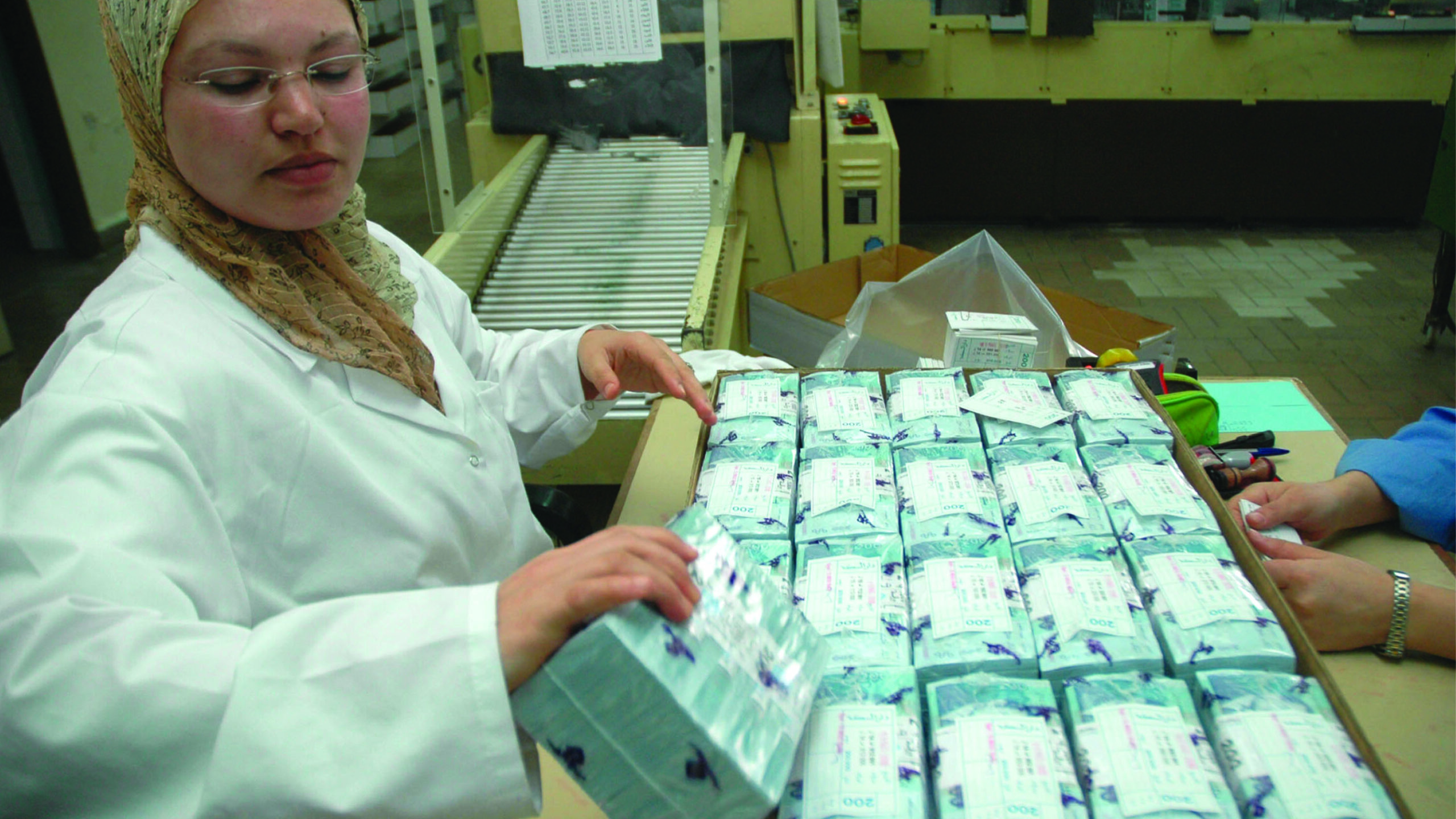
The participative banking sector continues to gain momentum year after year. After a 2024 financial year marked by a return to profitability, 2025 confirms this trend, with commercial and financial indicators on the rise.
However, this growth remains largely driven by a single lever—Murabaha financing, which continues to form the backbone of the sector’s activity. That said, disparities between institutions persist.
Indeed, outstanding Murabaha financing reached 42.2 billion dirhams by the end of 2025, up 27.6% compared with the previous year. The market also remains highly concentrated, dominated by the top three banks—Umnia Bank, Bank Assafa, and Bank Al Yousr—which alone account for 65% of total outstanding financing.
Real estate Murabaha represents the largest share of this total, at 80%. Other products authorised by the Higher Council of Ulema struggle to gain traction, as they are either minimally offered by banks or attract limited demand.
As a result, participative banks reported total net banking income of 1.3 billion dirhams, up 26.4% year-on-year. This still represents only around 1% of the consolidated net banking income of conventional banks.
Around 28% of this income was generated by Umnia Bank (357 million dirhams), followed by Bank Assafa with 240 million dirhams (18.9%) and Bank Al Yousr with 244 million dirhams (19%). With a combined market share of 66%, these three banks account for more than two-thirds of the sector’s total value creation.
The refinancing challenge persists
Despite these commercial performances, the sector’s main structural imbalance remains: financing is growing significantly faster than resources.
Outstanding deposits stood at 15.4 billion dirhams, up 16.3% over the year—well below the growth rate of financing. Once again, the leading trio dominates, capturing 74% of deposits. CIH’s subsidiary leads with over 34.5% of sector customer resources and a quarter of total financing granted.
This mismatch between assets and funding translates into a utilisation rate exceeding 200%, a particularly high level. In this context, Wakala bil Istithmar remains the central refinancing instrument. The outstanding amount mobilised through this mechanism reached 13.7 billion dirhams at the end of 2025, up 39%—around one-third of total Murabaha outstanding.
At the same time, since 2019 banks have introduced investment deposits to grow clients’ savings and support their commercial activities. However, six years on, this product is still struggling to take off.
Outstanding investment deposits remain limited to just 4.6 billion dirhams, despite a 26% increase—insufficient to meet the sector’s financing needs.
Combined, these two refinancing sources cover only about 35% of participative financing needs.
The sector is still awaiting the development of an interbank participative market, or the issuance of sukuk, which could provide a much-needed boost. Although promised for 2025 and included in the 2026 Finance Law, it has yet to materialise.
Significant increase in profits
This refinancing constraint directly affects the cost of funding. Participative banks face structurally higher funding costs than conventional banks, which can refinance at levels close to the 2.25% benchmark rate.
By contrast, participative institutions must remunerate investors through investment deposits and pay returns to parent banks in Wakala operations, putting pressure on their margins.
In terms of profitability, indicators show clear improvement. The sector’s aggregate net profit rose sharply, reaching 198.7 million dirhams compared with 96.8 million in 2024—more than doubling.
This performance is mainly driven by Umnia Bank and Bank Assafa, which recorded exceptional profit growth: the first reached 57 million dirhams (up from 15 million in 2024), and the second 11 million dirhams (up from just 1 million).
Bank Al Yousr also increased its profits by 68%, reaching 42 million dirhams. Together, these three banks generated more than half of the sector’s total profits.
The only negative point is Bank Al Karam, the participative window of Bank of Africa, which remains in deficit, posting a net loss of nearly 30 million dirhams compared with -40.8 million a year earlier.
This underperformance is explained by high operating costs, which reached 61 million dirhams (up 5% year-on-year).
Overall, the significant improvement in results and continued growth in outstanding financing confirm the sector’s gradual move towards stabilisation.
After several years of heavy investment and operational adjustments, participative banks appear to be moving towards a more balanced economic model.
However, this progress remains dependent on product diversification, the expansion of refinancing sources, and better mobilisation of savings—key structural challenges for the sector’s maturation.
Murabaha: Other segments gaining ground
Beyond real estate Murabaha, other types of financing are beginning to develop, showing strong growth rates. The fastest-growing segment is participative equipment financing, driven exclusively by the Salam product, whose outstanding volume reached nearly 6 billion dirhams, up 60%.
Driven notably by car financing, consumer financing outstanding reached 2.5 billion dirhams, also up 60%, while treasury financing more than doubled to 657 million dirhams.
Although still limited in relative weight, the growth in treasury financing reflects the early positioning of participative banks in short-term financing for businesses—a segment still largely dominated by conventional banks.