Kingdom
2025, a Bounty for Public Finances
The review of the implementation of the 2025 Finance Law, presented to the parliament, demonstrates the upholding of social commitments, the strengthening of social protection, and the pertinence of the Kingdom’s economic and financial policies, which has strengthened international confidence.

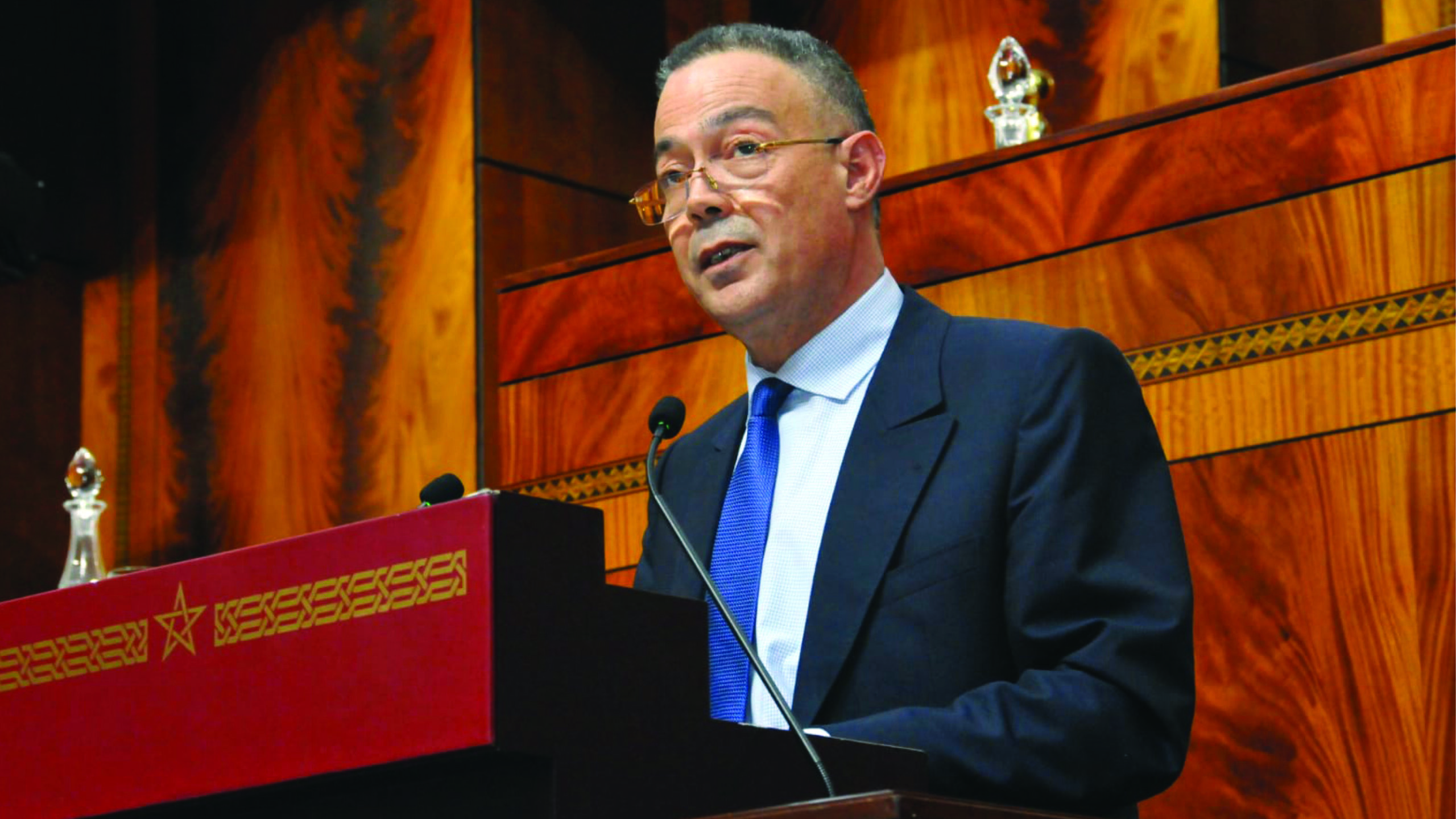
“The review of the 2025 Finance Law implementation highlights a positive economic and financial momentum, confirming the soundness of the strategic choices made by the Kingdom under the guidance of His Majesty the King, as well as the robustness of macroeconomic fundamentals, despite a challenging international context.”
This is how Fouzi Lekjaa, the Minister Delegate in charge of the Budget, addressed the members of the House of Representatives on January 26. And it is true that the national economy shows clearly positive indicators on several fronts.
First, agricultural activity has seen a notable improvement, with an expected growth of 4.6% after a contraction of 4.8% in 2024, supported by promising rainfall indicating a good agricultural season.
For their part, non-agricultural activities are consolidating their positive trend, with projected growth of 4.6% compared to 4.5% in 2024.
Several sectoral indicators attest to this vitality, such as the 8.2% increase in cement sales in 2025 or the achievement of approximately 20 million tourist arrivals by the end of 2025, an increase of over 14% compared to 2024. “These indicators confirm the continued strong performance of the non-agricultural sectors, which will enable our country to achieve a growth rate of around 5% in the coming years,” says Lekjaa.
Record Revenues
Due to the strong performance of tourism revenues, transfers from Moroccans residing abroad, and the influx of foreign direct investment (approximately $5 billion), foreign exchange reserves surpassed 440 billion dirhams at the end of 2025, an increase of 18% compared to 2024, equivalent to over 5.5 months of imports.
The state’s ordinary revenues have also seen a clear improvement: “The execution of the 2025 Finance Law resulted in ordinary revenues of around 424 billion dirhams, an increase of about 53 billion dirhams compared to 2024 (+14.2%),” specified the Kingdom’s Treasurer.
According to him, this evolution is explained by the significant increase in tax revenues, which grew by 43.8 billion dirhams (+14.7%), with an implementation rate of 107% compared to the Finance Law’s forecasts. This reflects the effectiveness of the ongoing tax reforms and the improvement in economic momentum.
This strong revenue performance allowed for the mobilization of 15 billion dirhams to cover the increase in the wage bill for civil servants, ensuring they benefit from the salary adjustments agreed upon through social dialogue. It also enabled an increase in the budget for the generalization of social protection to 37.7 billion dirhams in 2025, compared to 32 billion in 2024.
Direct support for purchasing power has not been overlooked: 17.7 billion dirhams were allocated to maintain price stability for butane gas, wheat, and sugar; 4 billion dirhams were allocated to support the National Office of Electricity and Drinking Water to maintain electricity price stability; and finally, 5.5 billion dirhams were allocated to the national program for replenishing the national livestock.
In this regard, it should be emphasized that the effective coordination between the implemented fiscal policy and the measures adopted in monetary policy has contributed to maintaining an inflation rate below 1%, thereby strengthening price stability and preserving citizens’ purchasing power.
The significant improvement in revenues, combined with rigorous expenditure management, has helped keep the budget deficit at 3.5% in 2025, in line with the Finance Law forecasts. Consequently, the Treasury’s debt ratio decreased by 0.5 percentage points, from 67.7% of GDP in 2024 to 67.2% in 2025.
This downward trend is expected to continue, reaching around 64% by 2028, alongside a stabilization of the budget deficit around 3% for the period 2026-2028.
“These results reflect the relevance of the development strategies and the soundness of the economic and financial orientations adopted by the Kingdom,” Lekjaa emphasized.
The national economy is now achieving growth rates that are respectable on a global average, while Morocco is establishing itself as an attractive hub for investment and a key player in global value chains.
This momentum is underpinned by a sound and sustainable financial framework, which has been commended by international financial institutions, particularly the International Monetary Fund and the World Bank, as well as by rating agencies, all of which have unanimously highlighted the robustness of the future prospects for the Kingdom’s economic and financial policies.
What does the 2026 budget provide for?
The 2026 Finance Law is set within an economically favorable economic climate, characterized by a near-consensus among key macroeconomic indicators and positive economic prospects.
Initially, it was based on a growth estimate of 4.6%, a target which has now been exceeded in light of favorable climate conditions. The growth rate is now expected to reach 5%.
On the demand side, gross fixed capital formation (GFCF) is expected to be a key driver of growth, with an increase of 6.6%. This will be supported by the continuation of major structural projects, a rebound in foreign direct investment, and a strong momentum in equipment financing.
Household consumption is also expected to maintain a positive trajectory (+3.7%), benefiting from moderate inflation, projected at 1.3% in 2026 compared to 0.8% in 2025, along with robust remittances from Moroccans residing abroad and consumer credit.
The macroeconomic assumptions for the 2026 budget include an oil price of $65 per barrel, a EUR/USD exchange rate of 1.17, and a 2.3% growth in foreign demand. In terms of public finances, ordinary revenues are expected to increase by 38 billion dirhams, driven by economic growth, continued tax reforms, and enhanced revenue collection efforts.
Regarding expenditures, the wage bill is projected to increase by 15 billion dirhams to reach 195 billion, due to new recruitments and salary adjustments, while subsidy expenses are expected to decline to 14 billion dirhams, representing just 0.8% of GDP.
Public investment is expected to reach 380 billion dirhams, an increase of 40 billion dirhams, reflecting Morocco’s firm commitment to continuing its major infrastructure projects.