International
Pasolini: The Art of Resistance and the Cost of Truth
Pier Paolo Pasolini, the influential Italian artist and intellectual, was murdered in 1975, a tragic event that has come to symbolize his contentious life and uncompromising critique of societal corruption. His art and prescient warnings about the rise of fascism intertwined with capitalism continue to resonate in today’s political landscape.

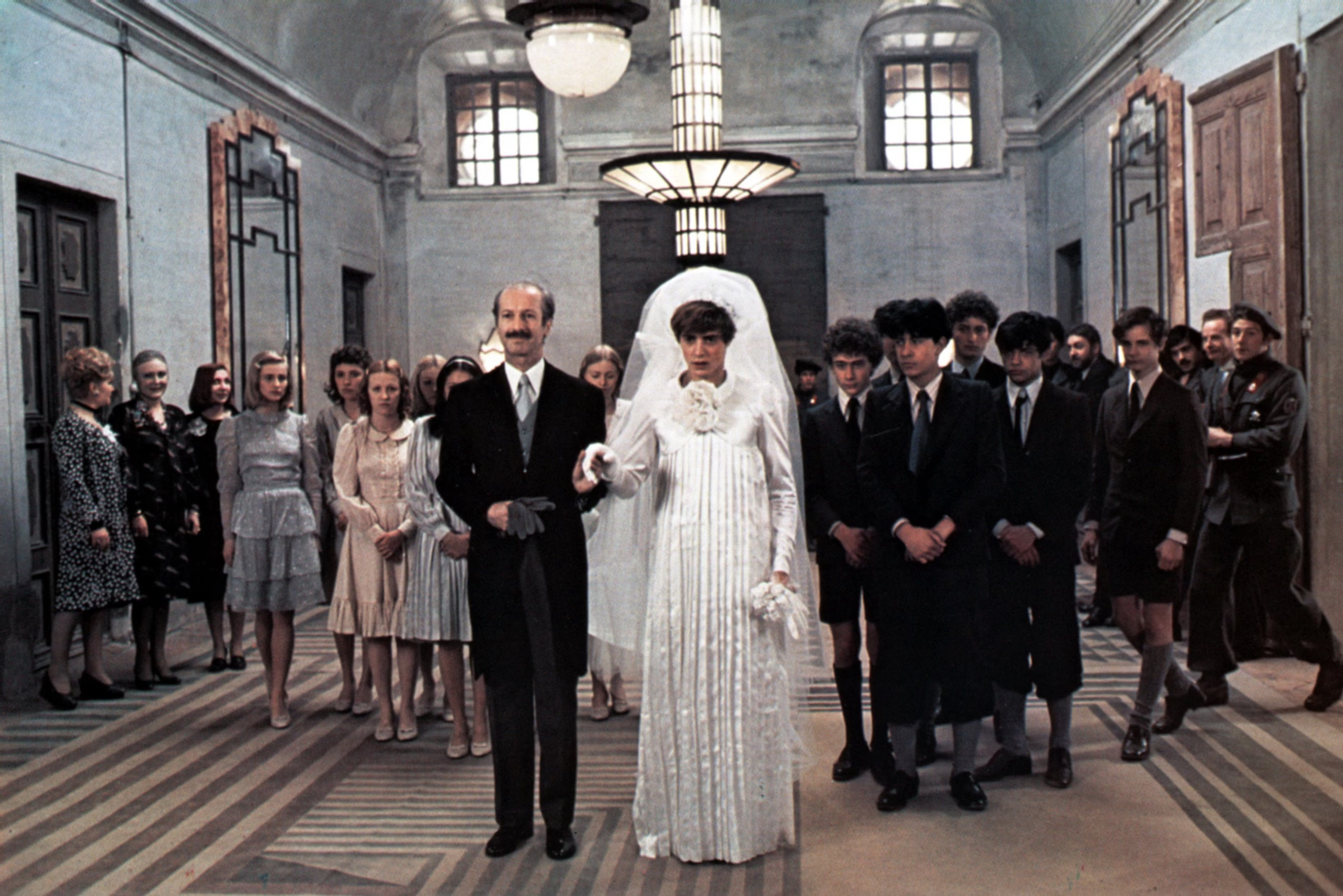
Pier Paolo Pasolini, a renowned Italian intellectual, artist, and provocateur, was tragically murdered in Ostia on November 2, 1975, under circumstances that have led to much speculation about the motives behind his brutal death. His assassination, marked by violent and gruesome details, has been interpreted as emblematic of his tumultuous life, with critics suggesting that it represented a punishment for his provocative art and unabashed homosexuality during a time of political upheaval in Italy. Despite his sexual orientation and political activism, Pasolini fiercely criticized both the left and right, exposing the pervasive corruption and emerging fascism in 1970s Italy.
Born into a military family, Pasolini’s childhood experiences, particularly in Friuli, shaped his artistic vision and sexuality, influencing much of his later work. He gained notoriety through a series of films and literary works that explored the lives of the marginalized while tackling complex social and political issues. His final film, “Salò,” represents a brutal commentary on power and complicity, reflecting his evolving worldview as society became increasingly commodified.
In the days leading up to his death, Pasolini warned of the rise of capitalism intertwined with fascism and spoke about the societal implications of greed and moral decay. His premonitions about the future and the dangers posed by compliance within a corrupt system resonate strongly in contemporary discourse. Despite his controversial views and personal flaws, Pasolini remained a passionate advocate for truth and a critic of societal norms. His legacy is one of artistic brilliance coupled with an unwavering moral conviction, leaving behind a powerful call to resist conformity and seek genuine human connection.
SOURCE: THE GUARDIAN