International
Culture, Conflict and the Crisis of Neutrality at the Venice Biennale
The return of Russia to the Venice Biennale has sparked protests, political backlash and the resignation of the jury, exposing tensions between artistic neutrality and ethical accountability. The controversy highlights how global art institutions function as sites of soft power rather than spaces insulated from contemporary conflict.

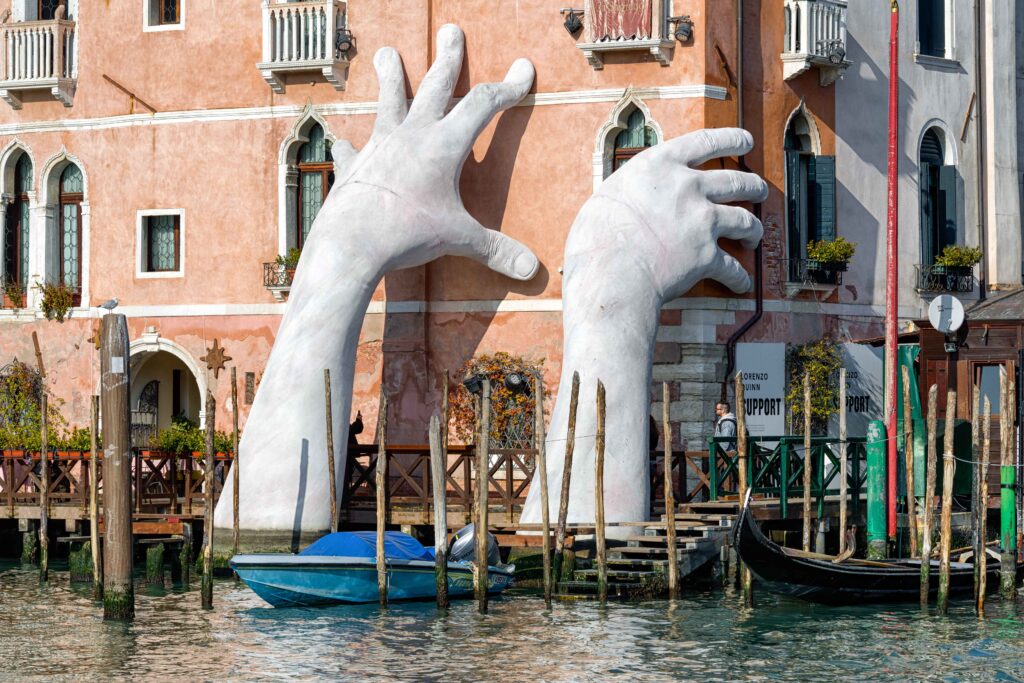
The Venice Biennale has become the centre of intense controversy after Russia was allowed to participate for the first time since the full‑scale invasion of Ukraine, triggering protests, resignations, and sharp political criticism. Demonstrators, including activists and artists, argued that Russia’s presence normalises or obscures ongoing violence in Ukraine, staging visible protests near the Russian pavilion that drew heavy police attention. The backlash quickly escalated beyond the art world, drawing in European politicians and cultural figures who questioned whether an event of such symbolic weight should offer space to a state accused of war crimes.
The decision also exposed deep rifts within the Biennale’s own governance. The entire jury resigned after disputing the inclusion of countries whose leaders face accusations at the International Criminal Court, creating an unprecedented situation in which the exhibition opened without its traditional prize‑giving structure. Biennale leadership defended the move by framing the event as a forum for dialogue rather than judgment, insisting that cultural institutions should not function as courts. Critics, however, warned that such neutrality risks functioning as complicity, particularly in a moment of ongoing war.
As a result, an exhibition intended to foreground global artistic exchange has been overshadowed by debates about ethics, soft power, and the limits of cultural diplomacy. Rather than insulating art from geopolitics, the crisis has exposed how deeply intertwined they remain, raising unresolved questions about responsibility, representation, and the political stakes of international cultural platforms.
SOURCE: BBC