Influences
Projection: A “Déchirure” in History… A Film That Sheds Light
Premiered in Rabat, the documentary «Déchirure – تمزّق», by Fouad Souiba, gives voice back to the Moroccans expelled from Algeria in 1975. Between wounded memory and restored dignity, the film revives a forgotten chapter of the shared Moroccan-Algerian history.

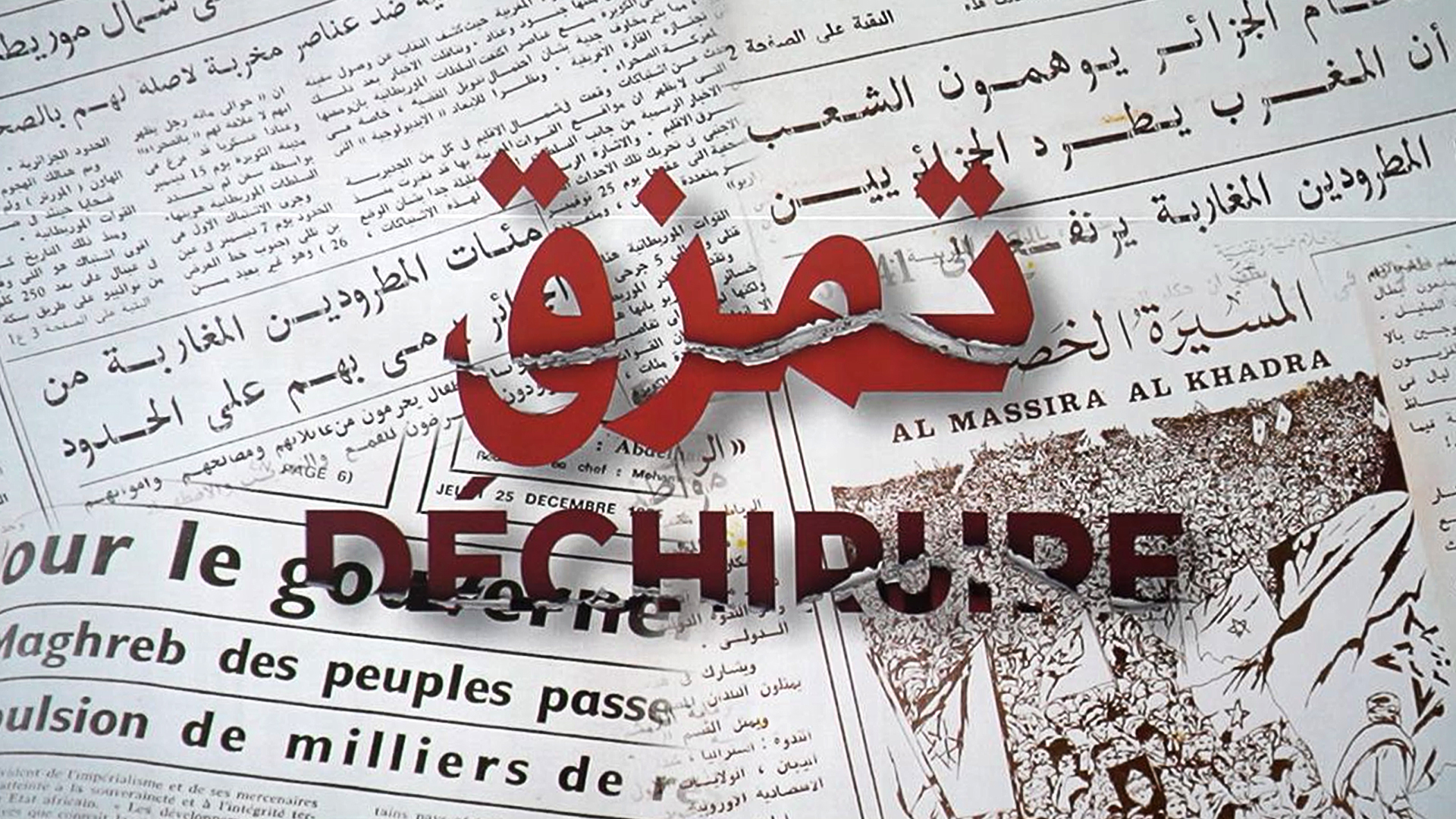
Premiered worldwide on November 10, on the sidelines of the Rabat International Auteur Film Festival, the documentary «Déchirure – تمزّق», directed by Fouad Souiba based on an idea by Karim Douichi, returns to a painful and little-known episode of our recent history: the expulsion of 45,000 Moroccan families from Algeria in 1975, over 300,000 people, a human tragedy often forgotten, which occurred in the context of the Marche Verte.
In 1975, while His Majesty King Hassan II called for the Marche Verte, mobilizing 350,000 volunteers for the peaceful recovery of the Sahara, the Algerian president Houari Boumédiène responded with what history will remember as the «marche noire». In retaliation, nearly half a million Moroccans – sometimes settled for several generations in Algeria – were expelled, torn from their homes, separated from their loved ones, and dispossessed of their belongings. Many of them had never even seen Morocco.
“After the launch and success of the Marche Verte, President Boumédiène reacted by carrying out what was called the marche noire”, explains Fouad Souiba, the film director. In retaliation, nearly half a million Moroccans – sometimes settled for several generations in Algeria – were expelled, torn from their homes and separated from their loved ones. “We are talking about 45,000 families uprooted overnight. Many did not even know what Morocco looked like, having known it only through stories”.
The filmmaker evokes a brutal uprooting. “This tragedy happened on a day of l’Aïd Al-Adha when the Algerian regime ordered their expulsion. They were dispossessed of everything, even their identity papers. Some managed to rebuild their lives here, others still live with this open wound. The testimonies heard in the film are, I believe, stronger than the images themselves”.
Since then, these victims collected by Morocco have lived a life on hold. Cut off from their roots and distant from their heritage, they have feet in Morocco but their minds elsewhere. These women and men are forever marked by this ordeal passed down from father to son.
For Asmaa Alaoui Yazidi, the film’s producer, «Déchirure» is above all a gesture of recognition: “This documentary is a way to give some consideration to people who were unjustly treated in a country they considered their own. They have not had their rights and still carry a burn in their hearts that will never erase”.
She also stresses the need to bring this ignored episode to light. “While working on this project, I discovered that many Moroccans do not know this history. People needed to know what this pain was. With this film, I hope we have mended a small part of this tear”.
This screening was thus a journey into collective memory, a dive into the stories of uprooted families, their wounds, but also their dignity and courage.
Through the voices of those who experienced forced exile, «Déchirure» tells the great story of the marche noire through individual stories, offering a duty of memory as moving as it is necessary.