Business
Festivals: June drives up the bill in Morocco
Every year in June, Morocco turns into a huge festive fair where sacred music, stand-up, nostalgic beats and gnawa compete. The bill for the flagship events this year approaches 150 million dirhams. A massive investment, both a cultural showcase and an economic lever. We break it down.

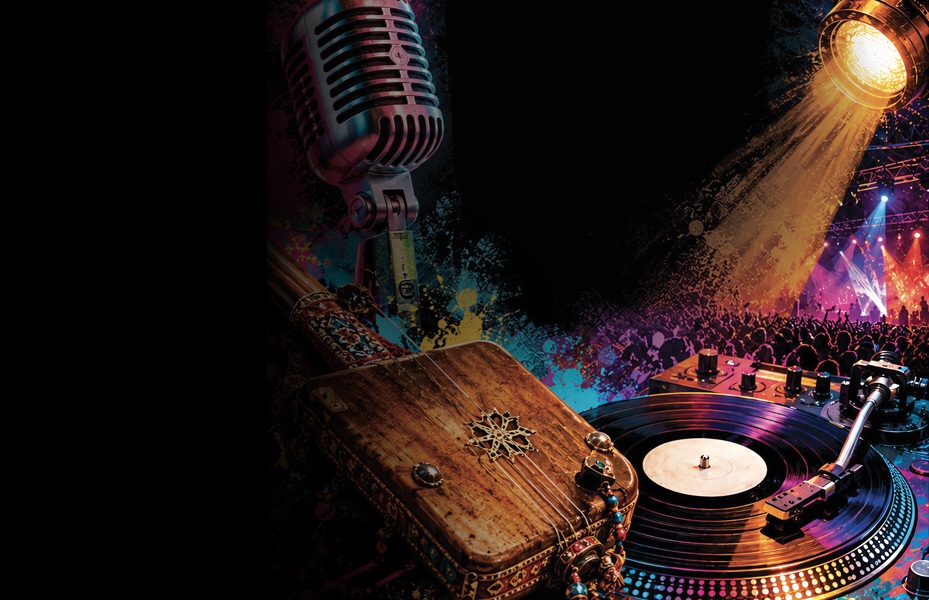
The sun beats down on Morocco, suitcases open and stages go up. June is no longer just a summer month; it has become the big national festival circus, where sacred music, laughter, nostalgic beats and gnawa fight for space on the streets, public-private budgets and the attention of festival-goers.
Between Fes, Casablanca, Essaouira and Rabat, the total grows heavier. According to our estimates, just for the flagship events, the bill nears or exceeds 150 million dirhams (MDH). A massive investment for a season rich in colour… and questions.
The Fes Festival of Sacred Music remains a spiritual and tourist pillar of the imperial city. Its budget traditionally ranges between 13 and 20 MDH. A more intimate event focused on heritage, it attracts a demanding international audience without seeking mass hysteria.
In Casablanca, Comediablanca has established itself as one of the year’s comedy highlights. With an estimated budget of between 8 and 9 MDH, the festival bets on Arabic- and French-language galas, masterclasses and a more accessible atmosphere. Less costly, more urban, it targets a middle class keen on stand-up.
Then comes Nostalgia Beats Lovers.This year, the edition at the Casablanca Velodrome shows a declared budget of 40 MDH. A significant leap for a retro-80s-90s (and 2000s this year) concept that is a hit with nostalgic thirty- and forty-somethings. With XXL scenography, a calibrated line-up and polished production, the event plays in the big league.
The Gnaoua and World Music Festival of Essaouira, scheduled around mid-June, is listed at 22 MDH for 2025. A stable figure for an event that mixes gnaoua heritage with world-music stars, attracting hundreds of thousands of visitors to the blue city.
Finally, even if it sometimes spills into July, Mawazine in Rabat often closes the show with a colossal budget estimated between 60 and 70 MDH. Thanks to megashows, international headliners and free stages, the festival remains the undisputed heavyweight, with millions of spectators accumulated over recent editions.
The big equation
The estimated total for these spring–summer flagship events therefore ranges between 143 and 161 MDH. That figure does not include indirect costs (heightened security, urban arrangements, additional transport) nor, above all, the local economic fallouts.
These festivals rely on a clever mix: public subsidies (direct or indirect via regional authorities and institutions), private sponsors (telecoms, banks, industrial groups) and revenues from ticketing and merchandising.
For Mawazine, sponsors and own revenues often cover the majority, officially limiting the impact on the state coffers. But the reality is more nuanced.
An organiser of a major festival, speaking on condition of anonymity, told us that “attracting an international headliner costs 5 to 20 MDH by itself depending on the name. Add production, tech, comms, logistics…Free for the people has a cost.”
Supporters of these events brandish the multiplier theory. And the figures sometimes speak for themselves. According to a Valyans study cited by the organisers of the Gnaoua Festival, each dirham invested would generate up to 17 dirhams of economic returns for the city of Essaouira.
A spectacular ratio that results in full hotels, crowded restaurants, boosted artisan activity and a tourism effect that far exceeds the duration of the event.
In Fes as well, the impact is tangible.You find animated medinas and an enhanced brand image. Overall, according to various studies on Moroccan festivals, one dirham spent would generate between 3 and 17 dirhams in the local economy (through hotels, restaurants, taxis, artisans and guides), depending on the size of the event and its capacity to attract external visitors.
Moroccan tourism has posted record figures in recent years, and these events contribute fully to that.
Yet negative externalities exist. Pressure on prices (temporary gentrification), massive waste production, blocked traffic, a carbon footprint never really quantified publicly.
Not to mention geographical concentration: Casablanca, Rabat, Fes and Essaouira capture the bulk, leaving other regions on the sidelines. Territorial disparity remains glaring.
The real cost
Sociologically, these festivals mix audiences and generations. They offer young people seasonal jobs (security, technical, stalls), stages for expression and a cultural showcase. Mawazine as a tool of diplomatic soft power? Quite possibly.
It should be noted that the 2000–2010 decade was the golden age of festival proliferation. From Tangier to Dakhla, festivals sprang up, driven by a desire to modernise Morocco’s image and give youth spaces for expression. Today, the question of sustainability arises sharply. Some events are born and disappear, others struggle to survive without faithful sponsors.They go through what roses go through!
The almost-all-free model shows its limits. It builds audience loyalty but complicates financial balance. Dependence on private sponsors makes programming vulnerable to economic fluctuations.
The real challenges? Training a qualified local workforce in technical and production roles, diversifying funding sources, linking festivals to year-round cultural actions (artist residencies, training, small permanent venues) and better measuring real impacts through independent studies (input–output models, cost–benefit analyses).
The Moroccan June costs — a little — a lot. But it also pays back, in image, social cohesion, tourist dirhams and collective pride.
The question is no longer just “how much does it cost?”, but “how do we make it sustainably profitable for all territories?”, because June is no longer just a festive parenthesis.Today’s Morocco is betting on culture as a lever for development.
Jazzablanca, 100 MDH and a well-oiled mechanism
Behind the Anfa Park stages, Jazzablanca (July 2–11) has risen to the rank of a cultural industry in its own right. The festival now displays a budget of around 100 MDH versus 4 MDH at its beginnings.
An upgrade that reflects both artistic ambition and the sophistication of its economic model. This model rests on a three-tier architecture: institutional partners and sponsors, which make up the main financing base, complemented by general public ticketing and revenues from corporate offers, VIP areas and hospitality.
An equation where the premium experience finances a large part of the artistic offering, in a context where Moroccan festivals are industrialising, balancing cultural logic and profitability imperatives.