Kingdom
RNI: A Pool of Talent
Drawing on a pool of high-profile figures, the National Rally of Independents brings together a range of personalities whose names could, tomorrow, be associated with the Headship of Government. The lineup.

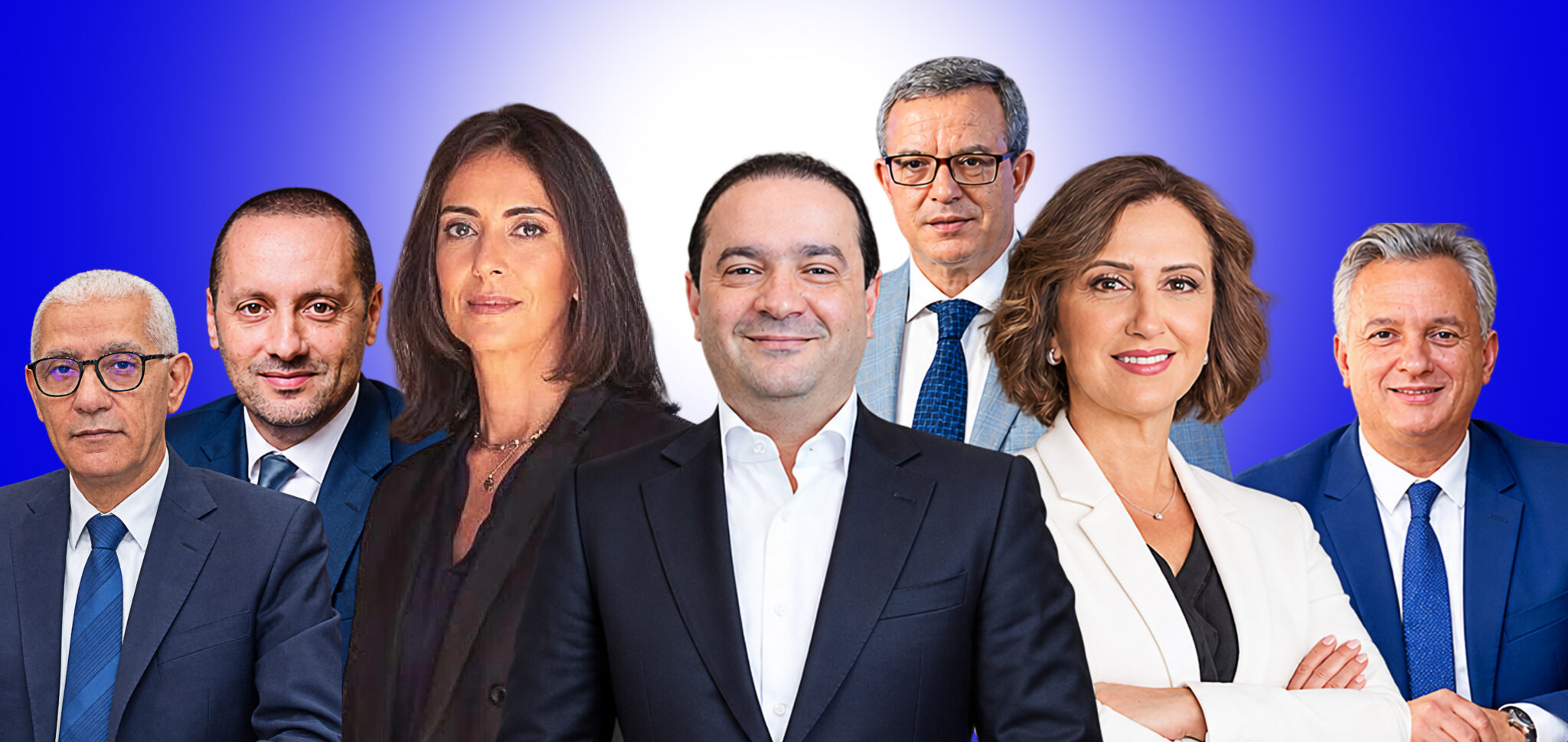
Beyond the hundreds of designated candidates that enable it to cover all electoral constituencies in the upcoming legislative elections, the National Rally of Independents (RNI) approaches this decisive electoral deadline with a pool of high-profile figures whose diversity and depth constitute one of its main assets. This wealth is, of course, no coincidence.
Throughout the past decade, Aziz Akhannouch, the outgoing president, has made attracting talent one of the structural pillars of his action, convinced that the conduct of public affairs benefits from being enriched by experience from the business world.
This strategy has enabled the political party to build an atypical pool of talent within the partisan landscape, bringing together seasoned managers, executives from the private sector, and elected officials well-versed in institutional intricacies.
It includes profiles from finance and corporate management, such as figures who built careers in investment banking or at the helm of industrial groups before putting their expertise at the service of the state. It also includes women and men who have proven themselves at the head of strategic ministries, combining tangible results with managerial rigor.
Others embody the most accomplished institutional experience, forged over decades of elected and governmental responsibilities, or the diplomatic and activist dimension, shaped by a constant commitment in the service of major national causes.
The RNI talent pool also includes representatives of the Moroccan diaspora, whose careers attest to the party’s determination to broaden its pool of expertise beyond the borders.
This diversity of trajectories, between public management and business management, territorial anchoring and international reach, paints the portrait of a political formation that has made pragmatism and competence the watchwords of its action.
As the RNI approaches the legislative elections with the ambition of confirming its position on the national political chessboard, this plurality of profiles constitutes a significant argument, likely to reassure regarding the party’s ability to once again conduct the affairs of the Kingdom.
In the event of an RNI victory, it may be among these personalities that the Sovereign could designate the next Head of Government.
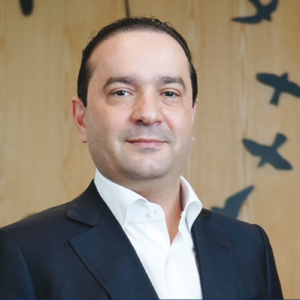
Mohamed Chaouki: The Man of Continuity
Until his election as president of the National Rally of Independents (RNI) last February, his name remained largely unknown to the general public.
Once the initial surprise had passed, the man who had officially entered the political arena in 2021, upon becoming a member of parliament representing the province of Boulemane, nevertheless managed, over the course of the meetings organized by the party of the Dove, to establish a style of his own. It should be emphasized that Mohamed Chaouki in no way fits the profile of the natural heir to Morocco’s political establishment.
Born in 1977 in Rabat and a graduate of Al Akhawayn University in Ifrane, followed by an American university, he built, in Morocco and internationally, a career spanning more than twenty years in finance, alternating between positions in investment banking and asset management, a career that reflects rare technical expertise within the national political landscape.
This proven financial expertise enabled him to distinguish himself from his very first parliamentary term, when he became president of the strategic Finance and Economic Development Committee in the House of Representatives.
This notable experience paved the way for him to lead the RNI parliamentary group during the second phase of the legislative term, thereby confirming his ability to bring people together and to carry the positions of his political formation within the Chamber. Founder of AD Capital, Mohamed Chaouki fully embraces a corporate culture that informs his conception of public action: he resolutely favors the language of governance and economic performance over that of partisan ideology, a sign of managerial pragmatism likely to reassure regarding his ability to conduct state affairs.
From his inaugural speech, he was keen to emphasize the strength of the RNI’s record at the head of government, highlighting tangible progress on several of the Kingdom’s economic and social projects.
At the head of a party whose effectiveness in conducting public affairs has been demonstrated repeatedly, Mohamed Chaouki embodies both the renewal and continuity of a formation closely associated with the personality of its outgoing president. A communicator skilled in mastering his message, equipped with leading economic and financial expertise and already solid institutional experience, he does not hide his openly acknowledged ambition to one day reach the Premiership.
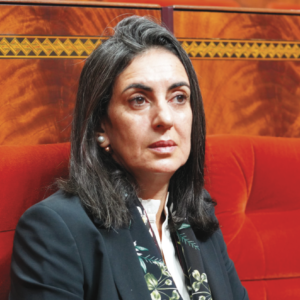
Nadia Fettah Alaoui: An Exceptional Trajectory
Little known to the general public, her appointment to the Ministry of Tourism, Handicrafts and Social Economy was perceived as a surprise in 2019. Especially since she then became the first woman to head this portfolio, immediately marking an entry into politics characterized by competence rather than the traditional partisan career path.
Two years later, following Aziz Akhannouch’s RNI victory in the legislative elections, she was entrusted with a far more strategic portfolio: that of Economy and Finance, once again becoming the first woman in Morocco’s history to head this sovereign ministry, a double first that reflects the confidence placed in her expertise at the highest level of the state.
Beyond her ministerial functions, Nadia Fettah has resolutely committed herself to promoting the place of women within the Moroccan economy. Founder and director of the Club des femmes au Maroc, and a member of the International Network of Women Corporate Directors, she thus extends, outside the governmental framework, a commitment to equal opportunities that has shaped her entire career.
Nadia Fettah indeed embodies a singular trajectory: that of a woman from the business world who, within a few years, became one of the most prominent figures in the Moroccan Executive.
Born in 1971 in Rabat and a graduate of HEC Paris, she began her career as a consultant, then founded a private equity fund, before joining the Saham Group, where she held several senior management positions and chaired the board of directors of Saham Assurances.
This extensive and sustained experience in insurance and financial management earned her, in 2018, the distinction of CEO of the Year at the Africa CEO Forum in Abidjan, an international recognition that underscores the stature of her career.
Her profile as an accomplished technical expert is regularly praised by economic observers, who highlight her proven ability to engage in dialogue with international financial institutions and the business world, a major asset in conducting Morocco’s economic relations with its external partners and a guarantee of credibility for anyone called upon to lead government action.
Today, Fettah Alaoui remains one of the most recognizable faces of the Executive, on the eve of the electoral deadlines that her party approaches with the ambition of confirming its position as leader on the national political chessboard. Building on this record and this technical legitimacy recognized by all, it cannot be ruled out that she could be called to the Premiership, another first in a Morocco where she would already have paved the way for women in the exercise of power.
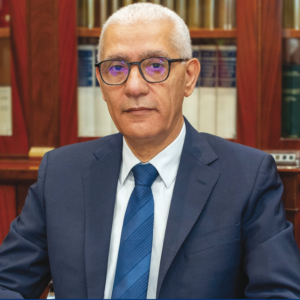
Rachid Talbi Alami: The Authority of Institutional Experience
As president of the House of Representatives, he has already acquired the habit of representing the Sovereign and the Kingdom at official international ceremonies.
This leading figure of the RNI therefore possesses a major asset: proven experience in the highest institutional positions, the result of a political career spanning more than three decades and demonstrating rare consistency within the national political landscape. Born in 1958, Rachid Talbi Alami completed his higher education at Mohammed V University in Rabat, before pursuing a doctorate in the United States.
Upon returning to the country, he worked as a consultant in the management of the finances of local authorities, while founding and managing several investment companies. This dual culture, both technical and entrepreneurial, would durably shape his conception of public management and give him a fine understanding of the Kingdom’s territorial and economic challenges.
His political roots were first established at the local level: elected in the municipal elections in Tetouan in June 2009, he became, a few months later, president of the Tangier-Tetouan Regional Council. In October 2009, he took the lead of the RNI parliamentary group, thereby beginning an uninterrupted parliamentary career, confirmed by his successive re-elections in 2011, 2016 and then 2021, elections that attest to firmly established electoral legitimacy.
Rachid Talbi Alami has accompanied all the major stages that have led to the transformation of the RNI, including the recent transition in its presidency. It was, moreover, to him that the presidency of the proceedings of the El Jadida congress was entrusted in February 2026, the congress that brought Mohamed Chaouki to the head of the party, ensuring with rigor that the statutes were respected during the vote, a mission that illustrates the confidence he enjoys within his political formation as a guarantor of the internal democratic process.
As president of the Chamber, Rachid Talbi Alami regularly asserts himself as a leading political relay for government action, not hesitating to step into the fray during parliamentary controversies to defend, with conviction, the record of the majority, including on reforms considered difficult by part of public opinion.
He readily presents himself as the guarantor of the entire parliamentary institution, beyond the divisions between the majority and the opposition, thereby demonstrating a rare capacity for bringing people together and a rare moral authority. This exceptional institutional experience, combined with an aura recognized across the entire political class, is undoubtedly a major asset should his name be considered for the Premiership.
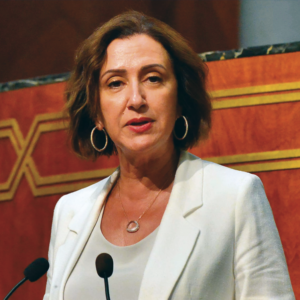
Fatim-Zahra Ammor: The Lady of Achievements
Coming not from the partisan establishment but from the business world, Fatim-Zahra Ammor has, through a demanding career, established herself as one of the most listened-to economic voices within her party, at the head of a pivotal sector of the national economy.
Her appointment, in October 2021, to the Ministry of Tourism, Handicrafts and Social and Solidarity Economy nevertheless came at one of the most perilous junctures: a sector left exhausted after two years of pandemic and border closures.
It was under the impetus of this marketing expert that the Morocco destination regained its luster, with the tourism sector’s socioeconomic indicators breaking record after record. A success hardly surprising for a woman accustomed to the art of overcoming the most considerable challenges. Born in 1967 in Rabat, Fatim-Zahra Ammor is an engineer, a graduate of the École nationale supérieure de techniques avancées de Paris (ENSTA Paris), and holds a certification as a corporate director awarded by Sciences Po Paris.
Her career, spanning more than twenty-five years, began in marketing at Procter & Gamble, an international experience that immediately forged her strategic rigor. She then joined Akwa Group as marketing director and member of the executive committee, while also assuming, from their creation, the leadership of the Timitar Festival of Agadir and the Concert for Tolerance.
In 2014, she was appointed Morocco’s General Commissioner for the 2015 Milan Universal Exhibition, where she successfully led Morocco’s participation in this international event, an early demonstration of her ability to bring together diverse actors around large-scale projects.
Since entering government, Fatim-Zahra Ammor has earned a reputation as an “all-terrain” minister, capable of transforming the Kingdom’s rising profile and the post-Covid catch-up effect into tangible results.
Through her ability to mobilize and bring together all the sector’s professionals, she orchestrated an unprecedented recovery: nearly 20 million tourist arrivals in 2025, generating some 140 billion dirhams in revenues, figures that testify to governance that is both visionary and methodical.
Within the RNI political bureau, she does not confine herself to her portfolio: she is actively involved in major economic policy debates, particularly on the issue of employment. What therefore emerges from this career is a leader with an eloquent record, combining strategic vision and a culture of results.
Her concrete achievements, her demonstrated ability to transform difficulties into opportunities, and her constant commitment to the country’s major economic projects naturally make her a personality whose name could appear among the contenders for the highest governmental responsibilities.
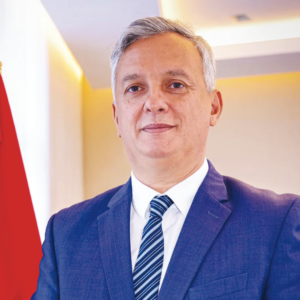
Karim Zidane: The Representative of the Diaspora
Within Morocco’s governmental landscape, his profile stands out decisively: more than thirty years spent in Germany, an entire career forged in the automotive industry, far from the established paths of the senior civil service, before returning to the country in 2024 to serve as Minister Delegate in charge of Investment, Convergence and Evaluation of Public Policies.
Born in 1969 in Souk El Arbaa, Karim Zidane initially pursued studies in physics and chemistry at Ibn Tofail University in Kenitra. Driven by an ambition that took him beyond the borders, he went to Germany to further his education in mechanical engineering. Settled in Munich, he obtained a mechanical engineering degree that opened the doors to the German automotive industry, one of the most demanding in the world.
He built a career there spanning more than twenty years, notably within the BMW Group, in its engine manufacturing subsidiary, acquiring rare technical and managerial expertise forged through contact with one of Europe’s industrial flagships.
This experience abroad, far from distancing him from Morocco, instead strengthened his attachment to the country: he became involved in initiatives promoting the skills of Moroccans established in Germany, actively contributing to building networks for the transfer of know-how between the two nations, already foreshadowing the bridging role he would later play within the government.
He joined the ranks of the RNI in 2017, before being appointed, in 2019, the party’s coordinator in Germany, a position that gradually placed him at the heart of the political formation’s leadership circles.
His appointment, welcomed by many as the rightful recognition of Moroccan expertise from abroad, fully reflects the approach championed and embraced by Aziz Akhannouch: valuing experienced profiles from the private sector in order to strengthen government action through proven expertise in the economic field.
What thus emerges is the portrait of a man with a singular and accomplished career: technical and managerial expertise forged in one of the world’s most competitive industrial environments, a constant commitment to strengthening the link between Morocco and its diaspora, and growing political involvement that demonstrates a genuine appetite for public action.
Drawing on this exceptional trajectory, the man who has developed a taste for political action is preparing to enter the legislative arena as early as next September, and it cannot be ruled out that his name may be put forward as a potential Head of Government in the event of an RNI victory.
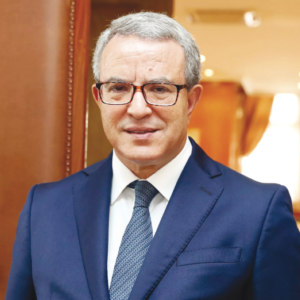
Mohamed Aujjar: Wisdom in the Service of the State
Among the most seasoned figures in his political formation, he today embodies a voice whose authority stems from more than forty years of uninterrupted political engagement, combining activism in favor of human rights, the exercise of ministerial responsibilities, and high-level diplomatic representation, a rare combination that gives his candidacy a singular legitimacy.
Born in 1959 in Targuist, in the province of Al Hoceima, he obtained a law degree from Mohammed I University in Oujda, where he took his first steps as an activist within the National Union of Moroccan Students.
It was in this university environment that he joined the National Rally of Independents, before entering journalism and then, as early as 1992, taking charge of the party’s official media outlets, at a time when the party was under the influence of Ahmed Osman. He also became involved in trade union activity as deputy secretary-general of the National Syndicate of the Moroccan Press, demonstrating early on an ability to combine partisan commitment with institutional standing.
This activist commitment naturally found an extension in the founding, during the same decade, of the Moroccan Organization for Human Rights (OMDH), a foundational commitment that would leave a lasting mark on his public career and build rare credibility on these sensitive issues.
This expertise enabled him, as early as 1998, to obtain his first ministerial portfolio as Minister Delegate for Human Rights within the Youssoufi government, a position he retained in 2002 under the leadership of Driss Jettou.
He was subsequently called upon, in 2011, to serve on the High Authority for Audiovisual Communication (HACA), before being appointed, in April 2014, Ambassador of the Kingdom to the United Nations Human Rights Council in Geneva, a culmination of his diplomatic stature.
His return to government, in April 2017, as Minister of Justice, a strategic position, was unanimously perceived as a sign of the Kingdom’s deliberate openness toward international human rights organizations. He was subsequently entrusted with the chairmanship of the United Nations Independent Investigation Mission on Libya, further establishing his stature on the international stage.
Considered one of the RNI’s historical pillars, his views are regularly sought on the country’s major institutional issues, particularly those concerning security and human rights, on which he consistently and rigorously defends the Kingdom’s record. This combination of historical legitimacy, proven governmental experience and international recognition unquestionably makes him a credible contender for the Premiership.
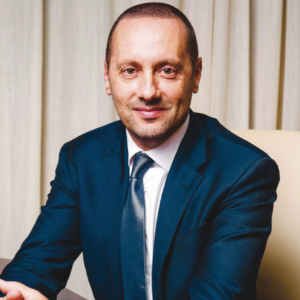
Amine Tahraoui: The Manager at the Bedside of Public Health
Today, he embodies this new generation of executives recruited by Aziz Akhannouch. His accession to the head of the strategic Ministry of Health and Social Protection came as a genuine surprise during the 2024 cabinet reshuffle, given that his managerial profile, shaped far from the medical establishment, differed from that of his predecessors, a singularity which, far from constituting a handicap, proved to be an asset in a sector seeking greater managerial rigor.
A graduate of the National School of Administration (ENA) in Rabat, Amine Tahraoui began his career in investment banking before gaining experience in private-sector organizations. He then served as chief of staff at the Ministry of Agriculture under the supervision of Aziz Akhannouch, before being elevated to the position of Secretary-General of the Headship of Government, a privileged vantage point at the very heart of government action.
His arrival at the head of the Health Department, a sector undergoing profound transformation since the launch of the universalization of social protection, is presented by analysts as a highly coherent choice: the establishment of Territorial Health Groups (GSTs) requires highly specialized expertise in financial management and the steering of large-scale projects, skills that the minister has precisely put to the test in the private sector.
His proven ability to coordinate interministerial action, forged within the Headship of Government itself, constitutes in this regard an additional and decisive asset for successfully implementing these structural reforms.
Since his appointment, Amine Tahraoui has highlighted the scale of the resources mobilized to overhaul the health system, pointing to more than 40 billion dirhams invested in strengthening healthcare provision, as well as the construction of new university hospitals.
He also cites medical coverage extended to 88% of the Moroccan population and the rehabilitation of nearly 1,400 primary healthcare centers, the majority of them located in rural areas, a quantified record that demonstrates his managerial efficiency.
Building on this operational record and this recognized command of the state’s major projects, his name could, in the event of a victory for his political formation, emerge among the most serious contenders for the Headship of Government.