International
How Morocco strengthens its religious soft power in Africa
With the progressive institutionalization of Moroccan Islam’s presence in Africa, the Kingdom is building what could become a “religious Commonwealth.” Its influence is growing in strength, at the expense of actors that are financially much more powerful.

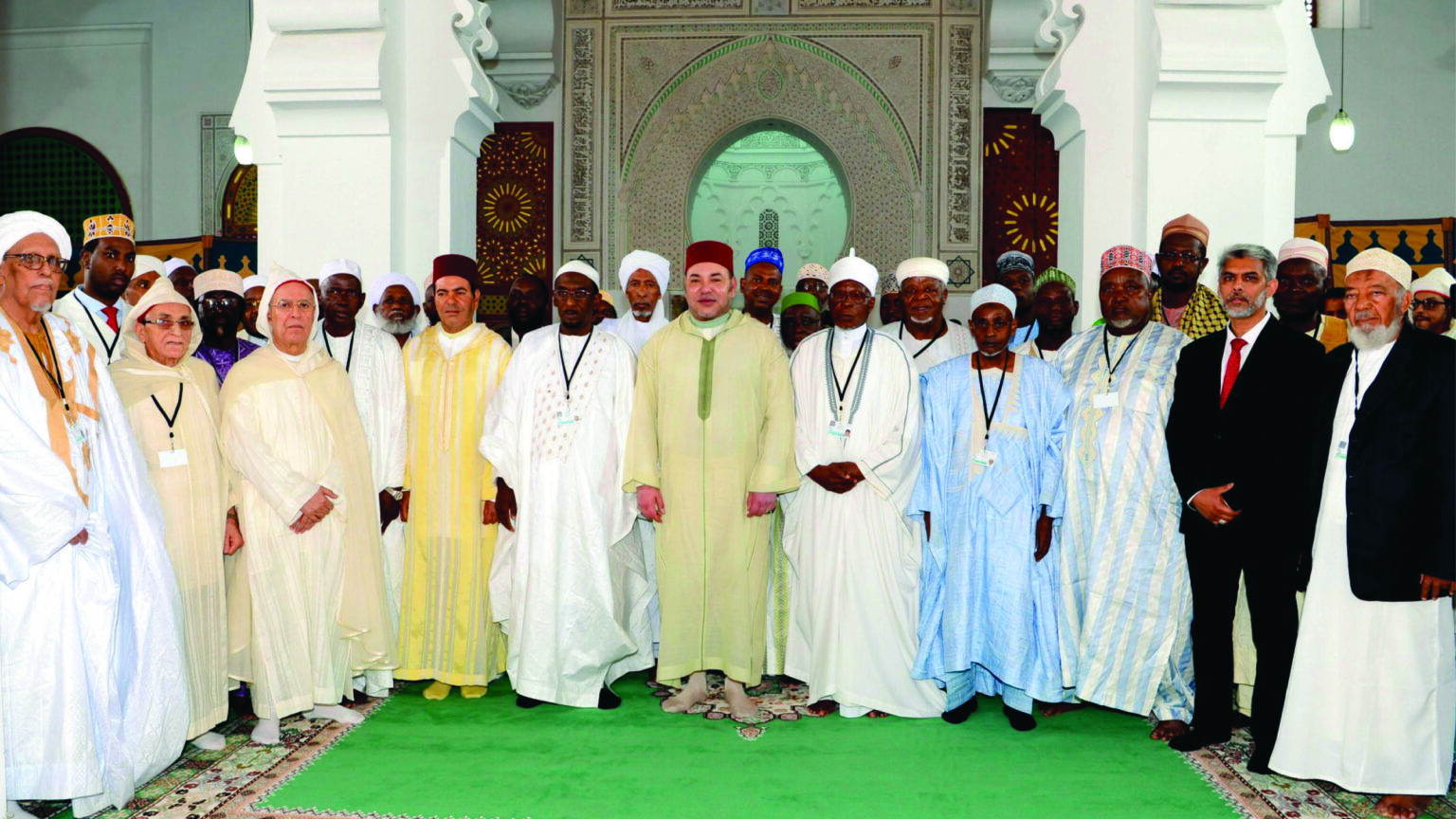
In June 2016, the Sovereign established the Higher Council of the Mohammed VI Foundation of African Ulema, created a few months earlier. Ten years later, the FM6OA for insiders is already present in 48 African countries.
A symbolic presence in some countries, more active and influential in others. For the first time in centuries, the Moroccan religious presence on the continent is institutionalized.
That does not, however, erase the traditional channels, embodied mainly by the Tijaniyya zaouia in some West African countries. Certainly, the Kingdom is patiently building what some observers have called a “religious Commonwealth”.
Of course, this has nothing to do with the British Commonwealth, which was built over decades through the training of legal, military and administrative elites. Nevertheless, the comparison is justified.
To date, Morocco has trained roughly 3,000 imams and other religious cadres, men and women, originating from African countries, mainly from West Africa but also from Central and East Africa.
This is important, given that 30% of the population of sub‑Saharan Africa is Muslim, with a strong concentration in West Africa (between 50 and 98% of the population) and the Horn of Africa (between 11 and 99%).
Another element to consider, also at the institutional level: the scope of the function of Imarat Al‑Mouminine is certainly limited inside the Kingdom.
Nevertheless, its aura and symbolism extend well beyond the borders. Especially since its influence goes back several centuries in history.
Morocco’s religious influence draws on the deep historical ties that bind the Maghreb to West Africa through scholarship, commerce and Sufi brotherhoods. That is what history teaches us.
Today, under the reign of His Majesty Mohammed VI, these links have been institutionalized through modern platforms, notably the Mohammed VI Institute for the training of imams and the FM6OA. At this level, it is no longer a “time‑honored tradition” but a “state strategy”.
“The religious diplomacy of Morocco in Africa reflects its broader soft power strategy, combining religious outreach (influence or religious soft power) with geopolitical ambitions”, notes the British think tank Institute for Strategic Dialogue (ISD), which specializes in extremism, social cohesion and geopolitical influence, in a report published last January.
Morocco seeks to counter extremist ideologies, promote regional stability and build strategic alliances for shared security and development.
“Morocco’s African strategy is both expansive and deliberate; it involves a set of institutional, symbolic and diplomatic initiatives. At its core, this strategy aims to position Morocco as a religious — and therefore political — authority central to the region”, the document reads.
What Morocco offers
Unlike Saudi Wahhabi Salafism or even the political Islam promoted by the Muslim Brotherhood with their slogan “Islam is the solution”, the Moroccan model does not impose itself on a local tradition. It coincides with it. That is what makes it successful.
It is this authentic model that the Kingdom promotes through the FM6OA, which contrasts with other “transnational Islams”, often perceived by target populations as “imported” or even “transgressive”.
What Morocco offers, indeed, is a model built on a pan‑African narrative that values local traditions, respects religious diversity and preserves shared security and spiritual interests.
The Maliki rite adopted by the Kingdom, as in practically all of the Maghreb and West Africa, combines authenticity and legitimacy, since among its foundations the “practice of the people of Medina” occupies an important place, while it remains open to local practices, customs and popular traditions, as long as they are not explicitly contrary to the principles of religion.
All the more so because it privileges the general interest, considered “a fundamental principle that allows legislation in the interest of the community to prevent harm, even in the absence of an explicit text, provided that it aligns with the purposes of the religion”.
Indeed, for African states, particularly those confronting the spread of an extremist religious discourse, religious cooperation with Morocco meets a concrete need.
The Kingdom does not present its model as a rigid scheme — as is the case with Wahhabism — but as “an approach to Islam rooted in African culture, which values spiritual depth, civic responsibility and resistance to violent ideologies”.
The observation is that “religious governance, when aligned with social realities, can consolidate stability rather than weaken it”. The ISD notes in this regard that “what Morocco ‘exports’ is less a doctrine than a method: the ability to reconcile tradition and the demands of modern governance”.
Even in its smallest details, it respects African identity as it is, without seeking to denature it. A perhaps trivial example that perfectly reflects this spirit: the Qur’an copies the Kingdom distributes on various occasions are of the “Warsh” edition, whose orthography is more accessible to non‑Arabic speakers.
All the more so because the training provided at the Mohammed VI Institute combines theological instruction with modules devoted to preaching, social mediation and religious leadership.
Courses in the humanities and social sciences complement the curriculum to prepare recipients to work in varied social contexts.
None of Morocco’s three main “competitors” in Africa offers such a model. The rigorous Salafism of Saudi Arabia, Iran’s sectarian Shiism and its proxies, and the political Islam of the Muslim Brotherhood promoted by Qatar and Turkey remain foreign on African soil. And this is true despite the considerable financial resources deployed to promote them.
More broadly, Morocco’s approach, Business Insider Africa writes, “suggests that stability is cultivated through institutions and time, not imposed through rhetoric”.
Morocco today faces a remarkable window of opportunity. Three major changes currently favor Morocco. Saudi Arabia is scaling back funding for mosque construction and the spread of Wahhabism.
By comparison, Morocco has built or financed only eight mosques since 1964, half of them in the last five years.
The Muslim Brotherhood has taken a hit after the failure of the “Arab Spring”, especially after Washington declared certain branches of the “brotherhood” to be terrorist organizations, and finally the current war in the Middle East tends to limit Iranian influence in the region and, by extension, in Africa.
Thus, the Saudi Wahhabi withdrawal frees a doctrinal space that the Moroccan model
(Maliki‑Sufi‑moderate) is ideally positioned to occupy. The reduction of Saudi funding for mosques and religious institutions abroad could indeed create a vacuum that Morocco could fill in regions where its influence is already established.
Regarding the U.S. decision on the “Muslim Brotherhood”, some analysts believe the Moroccan model of political Islam is seen by the United States as compatible with the international order.
On the contrary, the Kingdom is considered a major actor in the fight against terrorism.
Moreover, given recent developments in the region, Morocco positions itself as a provider and guarantor of “religious security”, especially where demand is increasingly urgent, namely in the post‑2020 Sahel and even in some areas of the Horn of Africa.
This leads several analysts to say that Morocco has a “coherent and expanding architecture of religious influence”.
Even so, at this stage, and despite the presence of the FM6OA in 48 African countries, the Kingdom has not measurably changed the religious ecology in sub‑Saharan Africa, at least not on a scale comparable to the cumulative impact of decades of Saudi, Qatari or Turkish financing.
Except that neither Saudi Arabia nor Turkey, and even less Qatar or Iran, have reached the degree of integration between religion, state and diplomacy that Morocco has developed, under the guidance of the institution of Amir Al‑Mouminine.
Another notable particularity is that the Kingdom, for a little more than a decade, has engaged in solid win‑win economic partnerships. Its religious diplomacy is backed by a broader investment strategy in banks, infrastructure, telecoms, etc., which strengthens its soft power on the continent.
The pillars of the Moroccan model
Simply put, Morocco’s religious architecture rests on four pillars. The Maliki law, whose legal plasticity allows adaptation to local contexts.
While adhering to “the practice of the inhabitants of Medina”, its third foundation and thus its source of legitimacy — which is precisely its great specificity — the Maliki rite attaches particular importance to “the public interest”. A fundamental principle that allows legislation in the interest of the community.
It also takes into account local uses and popular traditions that do not contradict sacred texts. It is not for nothing that this school has been largely adopted in Africa.
The Ashʿarite theology, its second pillar, prevents the literalist excesses typical of Salafism. Meanwhile, Sunni Sufism, the third pillar, is deeply rooted in West Africa through the brotherhoods. It offers popular and historical legitimacy that neither Riyadh nor Tehran, nor the Muslim Brotherhood, can claim.
The Sovereign’s religious authority constitutes the fourth pillar. As Amir Al‑Mouminine, he guarantees unity and interpretive coherence, a function without equivalent in the Sunni world.
This “quadruple” is precisely the dominant religious substrate in West Africa and the Sahel.