Business
Nairobi: CGEM calls for more competitive African cities
Speaking on the sidelines of the Africa Forward Business Forum, Chakib Alj stated in particular that the priority now is to build productive cities grounded in innovation, integration and the development of human capital.

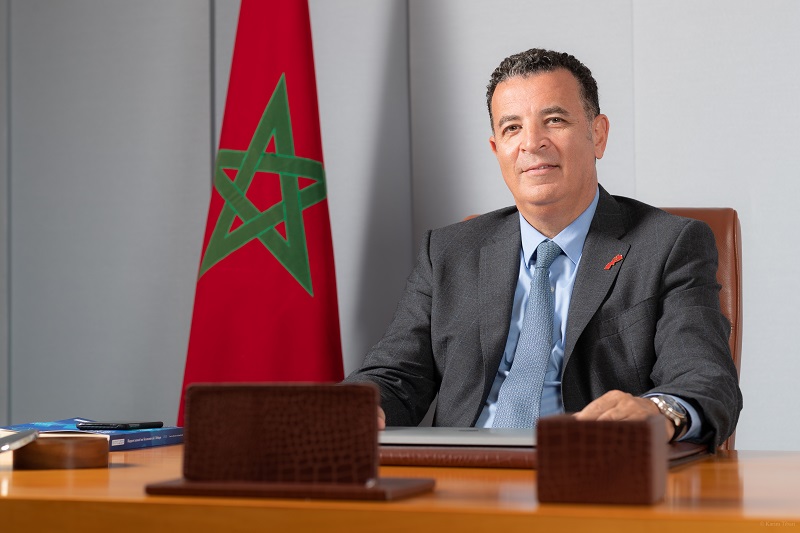
Innovation, digitalisation and human capital are essential levers for building competitive, productive and sustainable African cities, emphasised on Monday in Nairobi the President of the General Confederation of Moroccan Enterprises (CGEM), Chakib Alj.
Speaking during a panel entitled “Productive Cities: Reconciling Urban Growth and Industrial Performance”, organised on the sidelines of the Africa Forward “Inspire & Connect” Business Forum being held in the Kenyan capital, Mr Alj stated that Africa’s rapid urban growth alone cannot guarantee competitiveness or prosperity. Without appropriate planning, he warned, urbanisation also risks generating congestion, informality and increased pressure on infrastructure.
Stressing that the priority is now to build productive cities based on innovation, integration and the development of human capital, the CGEM President noted that economic competitiveness today depends on technology, artificial intelligence, digitalisation, smart logistics and efficient infrastructure. He called on African cities to evolve from centres of consumption into hubs of production, innovation and industrial transformation.
Mr Alj also underlined the need to develop integrated urban ecosystems in which industry, logistics, housing, energy and digital infrastructure are designed in a coordinated manner in order to optimise efficiency and connectivity.
Addressing the issue of human capital, he stated that Africa has a major demographic asset with a largely young population, while noting that this potential must be supported by sustained investment in education, technical training, digital skills and stronger links between universities and businesses.
He also highlighted Morocco’s pioneering experience in integrated industrial ecosystems, citing in particular Bouznika, where industrial development, logistics, connectivity and talent training are approached in a coordinated framework.
Turning to employability, Mr Alj pointed out that several million young Africans enter the labour market each year while formal job creation remains insufficient, stressing the importance of better alignment between training systems and the needs of businesses.
In this regard, he recalled that Morocco currently trains nearly 11,000 engineers per year, notably through increased involvement of industries in the design of specialised training programmes.
For CGEM, the future of African competitiveness will depend less on the size of cities than on their ability to produce talent, innovation and added value, he continued.
CGEM is leading a large delegation of Moroccan business leaders representing several strategic sectors to Nairobi to take part in the Africa Forward Inspire & Connect Forum, organised on the sidelines of the France–Africa Summit.
This participation reflects the commitment of the Moroccan private sector to strengthening economic partnerships both within Africa and with France, while fostering concrete business opportunities, co‑investment and more integrated continental value chains.
The Moroccan delegation is engaging with African and European public and private decision‑makers around key priorities such as industrialisation, innovation, financing and sustainable growth, thus reaffirming the central role of the private sector in building a stronger Euro‑African economic partnership.
The Africa Forward “Inspire & Connect” Business Forum, organised as part of the Africa Forward Summit, highlights the depth of Franco‑African economic partnerships while showcasing projects and initiatives led by African and French private sectors.