Business
CGEM: Mehdi Tazi and Mohamed Bachiri unveil their roadmap
The duo running for the presidency of the General Confederation of Moroccan Enterprises (CGEM) presented, on Monday, a programme structured around five key pillars. Accelerating the transformation of the national economy through the upgrading of businesses lies at the heart of their priorities.

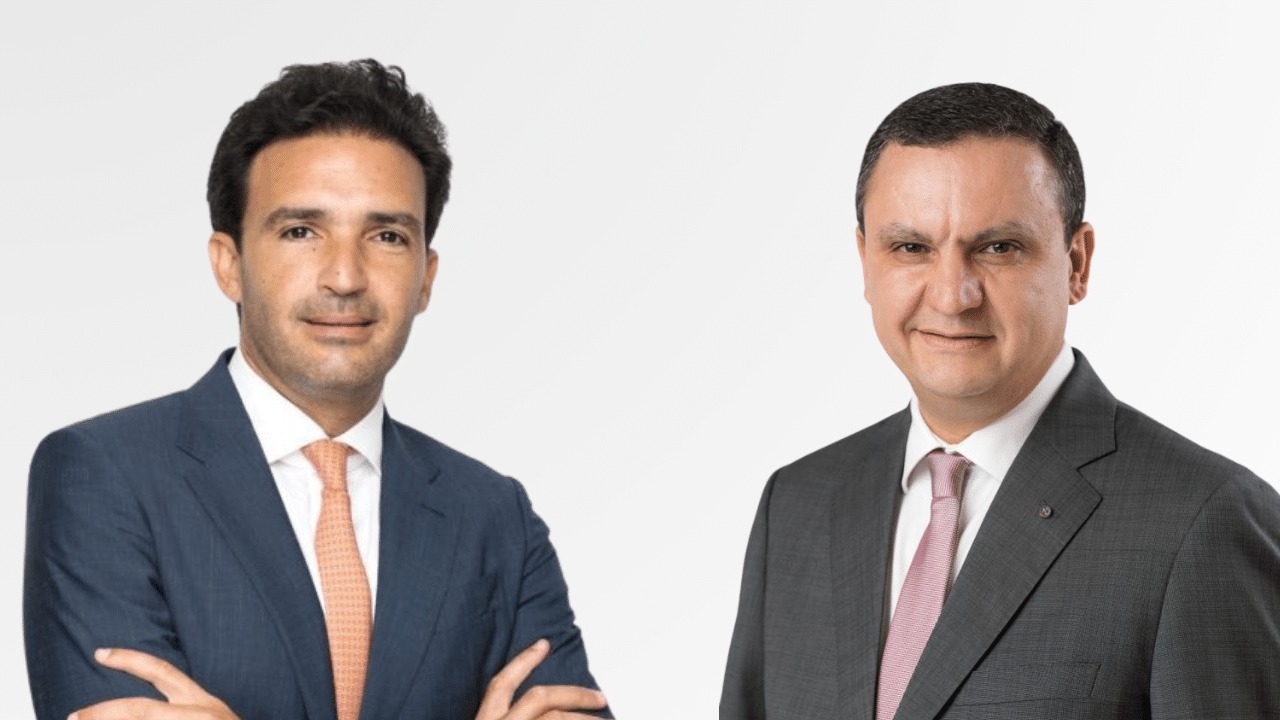
Mehdi Tazi and Mohamed Bachiri, the joint candidates for the presidency of CGEM for the 2026–2029 term, held a press briefing on Monday, 11 May, to present their programme and answer journalists’ questions.
The duo took the opportunity to recall their long‑standing involvement within the Confederation, as well as their thorough understanding of the institution—its files, dynamics, strengths and areas for improvement. With these elements in mind, they worked on the programme they are putting forward for the next three years in service of Moroccan businesses.
Prior to drafting the programme, the two leaders stated that they met with CGEM’s 37 federations and 12 regional branches. These highly enriching exchanges brought together business leaders of all sizes and from all sectors. They made it possible to better understand expectations and, above all, to identify proposals emerging directly from the field and incorporated into the programme presented.
The duo stressed that this programme is not solely their own, but that of the entire Moroccan entrepreneurial ecosystem, which voiced its views during this consultation phase. They also underlined that reaching the desired impact over the next three years will require the mobilisation of all good will.
A favourable economic context for businesses
Regarding the economic context, the two candidates recalled that Morocco is currently experiencing a remarkable phase of acceleration, marked in particular by growth of 4.9% for two consecutive years, record public investment of 380 billion dirhams in 2026, and foreign direct investment reaching 56 billion dirhams in 2025.
They also referred to the 2030 World Cup, considered a historic milestone for the Kingdom and a major opportunity for tourism, investment and Morocco’s international image. Tazi and Bachiri emphasised that the direction set by His Majesty King Mohammed VI is clear, and that the role of the private sector is to rise to this ambition by executing this vision, accelerating delivery and producing results.
They nonetheless noted that this favourable environment also comes with challenges, particularly those linked to geopolitical tensions in the Middle East and the profound transformations associated with artificial intelligence, which is expected to reshape businesses as profoundly as the Internet did thirty years ago. These challenges, however, also represent opportunities that Morocco is fully capable of seizing. In this context, they believe that CGEM must move to a new stage in order to be more mobilised and to have greater impact across all territories and types of businesses.
A programme structured around five pillars
The first pillar focuses on the business environment. It includes, in particular, a genuine administrative simplification drive, shifting towards a model based on specifications and ex‑post controls, as well as reform of the Labour Code and local taxation. This pillar also addresses access to industrial land—especially in high‑pressure zones—and the continuation of efforts to improve bank and alternative financing for micro, small and medium‑sized enterprises (MSMEs).
The second pillar concerns productive sovereignty. It is based on accelerating industrial upgrading, strengthening the local integration rate and “Made in Morocco”, speeding up the energy transition, reducing energy costs, enhancing logistics competitiveness, and reforming vocational training to better align it with business needs.
The third pillar is dedicated to innovation. The programme includes continued active contribution to the Digital Morocco 2030 strategy through the development of digital infrastructure and data centres, the adoption of artificial intelligence and the strengthening of digital skills. It also provides for support to the start‑up ecosystem, accelerated digitalisation of MSMEs, and a more operational role for CGEM through the Morocco Innovation Lab, dedicated to enhancing companies’ technological capabilities.
The fourth pillar focuses on international outreach. This ambition is based on strengthening export competitiveness, work on standards and ESG criteria, enhanced support for MSMEs in international markets, and leveraging the Moroccan diaspora as a source of investment and skills.
Finally, the fifth pillar is devoted to strengthening synergies within CGEM itself. The duo aims to reinforce inter‑federation cooperation, extend this dynamic to other federation groupings, and bring regional commissions closer to central commissions, in order to encourage joint projects and closer ties between companies.
In conclusion, Mehdi Tazi and Mohamed Bachiri stated that this programme is both ambitious and practical because the moment demands it, and because Morocco must maximise the benefits of the historic phase it is currently experiencing.