Kingdom
Sebou Basin: Two hydraulic interconnection projects under study
The Sebou Hydraulic Basin Agency has launched consultations to carry out feasibility studies for two interconnection projects: the first between the Sahla and Bouhouda dams, and the second between the sub-basins of the Ouergha, the Lben River, and the Inaouen River.

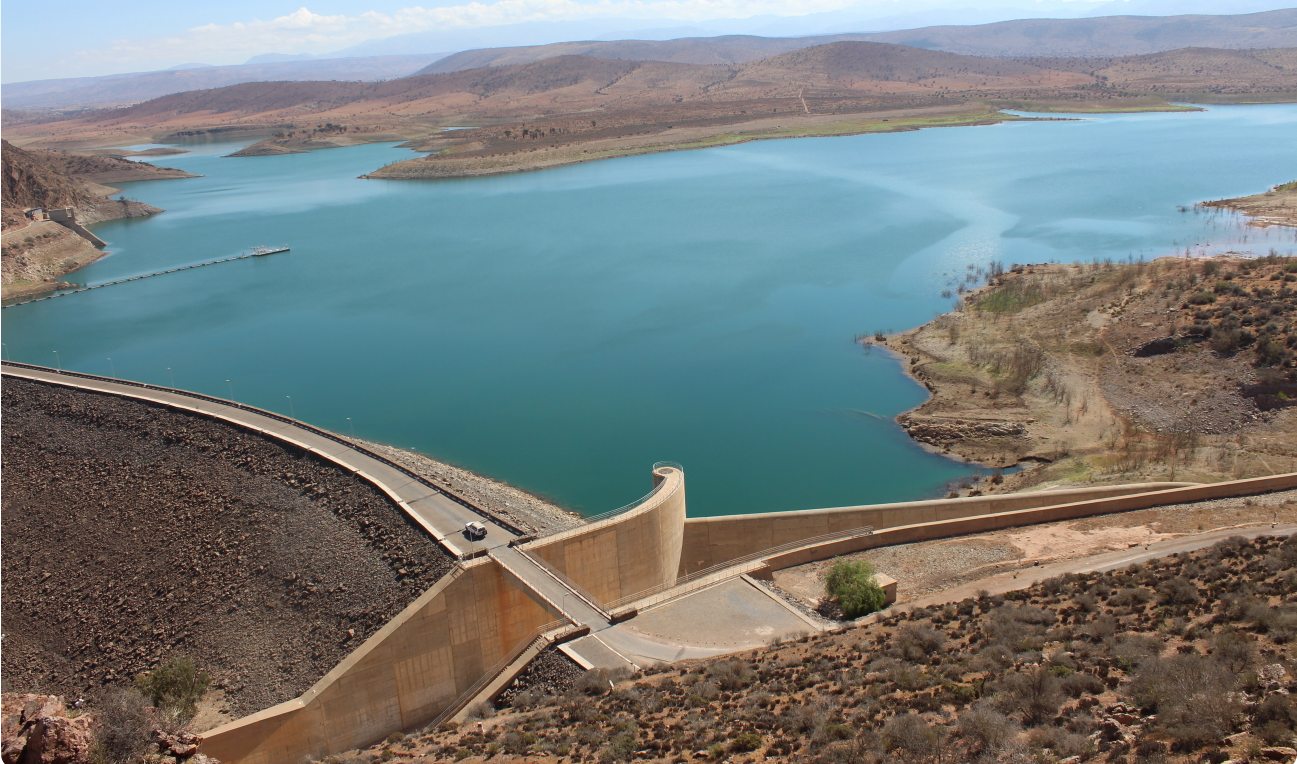
The Sebou Hydraulic Basin Agency has just launched two national tenders to carry out feasibility studies for two hydraulic interconnection projects. The first project concerns the interconnection between the sub-basins of the Ouergha, the Lben River, and the Inaouen River. The commissioned study is intended to assess the potential for mobilizing and transferring water resources between these sub-basins.
It must also analyze the relevance of a hydraulic interconnection aimed at strengthening inflows to the Idriss I Dam, identify and evaluate different technical interconnection options, and verify the technical and economic feasibility of the optimal solution selected.
In the documentation accompanying the tender file, the Agency explains that the Sebou Basin is one of the most strategic hydraulic basins in Morocco due to the importance of its water resources and the diversity of uses it supports, particularly drinking water supply, irrigation, and industrial uses.
The Idriss I Dam, located on the Inaouen River, plays a central role in regulating water resources in this part of the basin. However, the Agency notes that increasing hydrological variability, exacerbated by the effects of climate change, makes it necessary to explore new solutions to strengthen water security and optimize the management of available resources.
In this context, it adds, studying a hydraulic interconnection between the watersheds of the Ouergha, the Lben River, and the Inaouen River could make it possible to mobilize part of the available resources in the Ouergha sub-basin in order to reinforce inflows to the Idriss I Dam.
The second project under study concerns the interconnection of the Sahla and Bouhouda dams. Explaining the rationale behind this project, the Agency indicates that the Sahla Dam has significant storage capacity relative to its annual inflows, while the Bouhouda Dam has inflows significantly higher than its current capacity, resulting in frequent spillovers during wet periods. These volumes are recovered downstream at the Al Wahda Dam but do not directly contribute to optimizing local storage.
The study must therefore assess the hydrological, technical, and economic feasibility of interconnecting the Sahla and Bouhouda dams, taking into account the project to raise the height of Bouhouda.
It should be noted that the cost of the services is estimated at more than one million dirhams for each study. The opening of bids is scheduled for May 6.