Kingdom
Wiring: The Rise in Power of a Historic Industry
Born after Independence, Morocco’s wiring industry has, over the decades, become a heavyweight of the national economy. The energy transition, electric mobility, and network infrastructure are now giving it a new boost for growth.

On February 23, in Berrechid, Morocco’s wiring industry opened a new chapter in its long history: that day, the Moroccan group FBR Câbles inaugurated the Kingdom’s very first optical fiber cable manufacturing plant, offering new prospects for this critical sector of the national economy.
Mobilizing a total investment of 200 million dirhams, this new industrial site, which covers an area of 15,000 m², will raise Morocco’s annual production capacity to 70,000 km of fiber‑optic cables.
The ambition stated by the company’s leaders is to cover 60% of the needs of the Moroccan market, estimated between 120,000 and 130,000 km per year, but also to position themselves beyond national borders, particularly by targeting West African markets.
Through this strategic investment, FBR Câbles aims to capture the growth of the national telecommunications market, a sector in full expansion driven by the accelerated deployment of 4G, 5G, and FTTH. In the background, the Kingdom’s industrial and digital sovereignty is at stake.
Long dependent on imports, the national market now benefits, with the inauguration of the Berrechid site, from a competitive local alternative that meets the highest standards. “The inauguration of this 100% Moroccan optical fiber cable production unit constitutes a strategic milestone for our industrial sovereignty.
It strengthens Made in Morocco and positions the Kingdom as a regional export hub toward Africa,” Ryad Mezzour said during the inauguration ceremony.
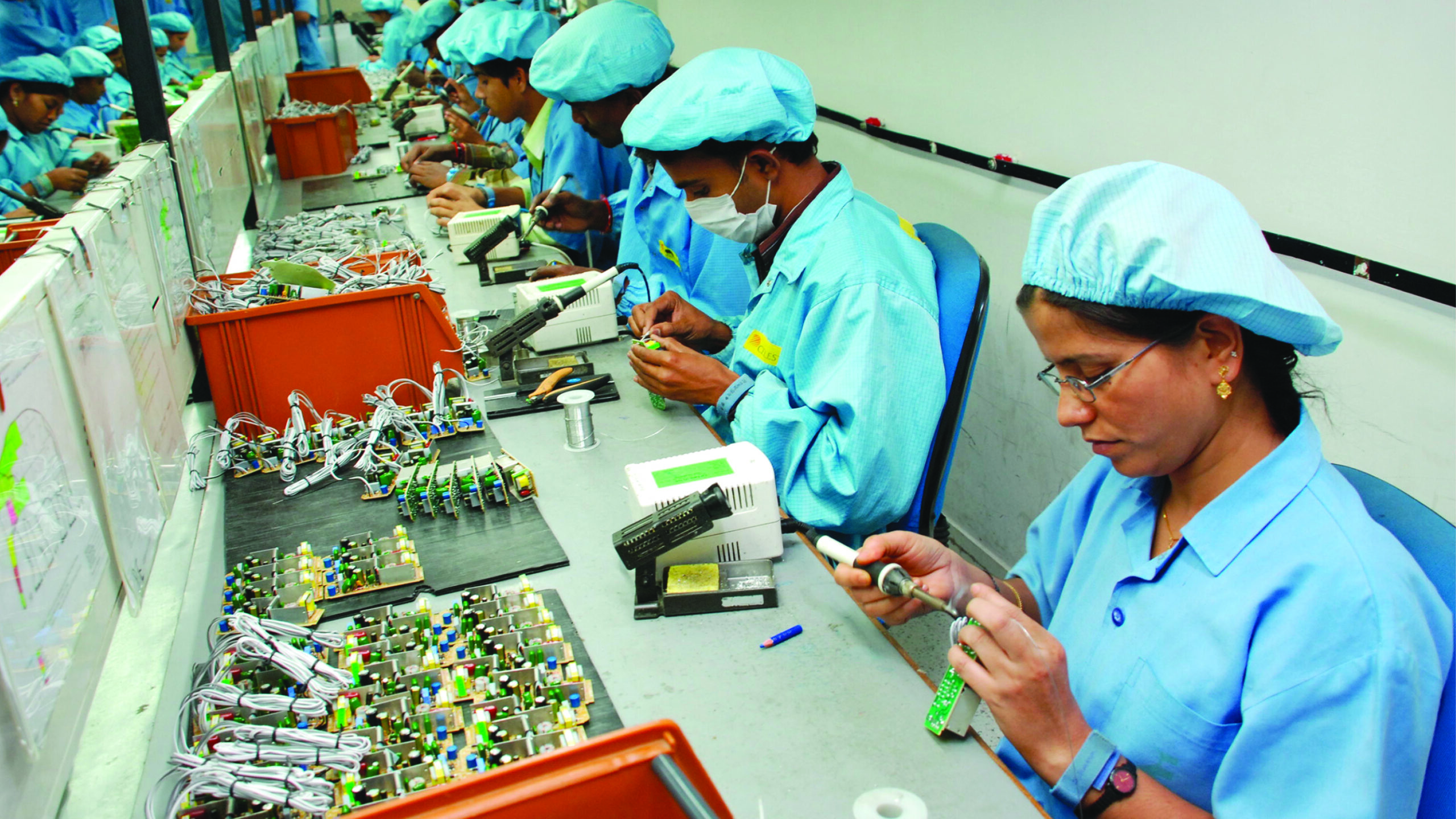
The launch of the Berrechid plant illustrates the growing strength of a historic industry—wiring—considered one of the most prominent industrial segments of the Moroccan economy. As this industrialist recalls, “the wiring sector is highly labor‑intensive.
It employs tens, even hundreds of thousands of people in Morocco. Global leaders have invested heavily in cutting‑edge industrial facilities. And this is nothing new.”
A quick look back indeed helps measure the long path traveled by this industry. In the beginning, in the 1950s and 1960s, wiring was taking its first steps in response to the need to equip the country with electrical infrastructure.
It was with this objective that Câbleries du Maroc was created in 1960, joining the Nexans group (formerly CGE Maroc), which has been operating in the Kingdom since 1947. A first phase of expansion followed in the 1970s with the start of telephone cable production, while the first exports took place in the early 1980s.
Massive presence of global giants
Later, in the late 1990s and early 2000s, the sector took a decidedly industrial turn, first following the structuring of an ambitious automotive ecosystem, then those dedicated to aeronautics and rail.
It was during this period that global wiring leaders set their sights on Morocco, positioning the country as a global export hub.
In Tangier, Kenitra, Casablanca, Fez, and Agadir, the opening of wiring factories multiplied to serve rapidly expanding sectors, particularly the automotive and aerospace industries, major consumers of cables and wiring harnesses of all kinds.
Among these giants are the Japanese companies Yazaki and Sumitomo, the American firms Aptiv (formerly Delphi), TE Connectivity and Lear, the German company Leoni, and Coficab, a member of the Tunisian Elloumi group.
Today, a group like Sumitomo employs nearly 30,000 people in Morocco across its various industrial sites, making it one of the country’s largest private employers.
Moroccan industrial companies are not left behind. Groups such as Câbleries du Maroc, active for nearly 70 years, have managed to hold their own and continue to diversify their production.
As a result, Morocco has joined the ranks of the world’s heavyweight exporters of cables. Take the case of insulated cables. In 2024, the Kingdom exported nearly 70 billion dirhams worth of them, ranking 6th among global exporters of this product according to data from the Observatory of Economic Complexity (OEC).
The main destination countries for Moroccan insulated wire exports in 2024 were Spain (2.46 billion dollars), France (1.13 billion dollars), Germany (927 million dollars), the United Kingdom (655 million dollars), and Slovakia (266 million dollars).
In the case of automotive wiring, exports reached 57.7 billion dirhams in 2025, up 7.7% compared to 2024 and 235% compared to 2015, according to data from the Office des changes. The segment now represents nearly 37% of all exports from the automotive sector.
In the aerospace industry, cable exports increased by 8.3% to approach 10 billion dirhams, representing around 33% of the sector’s total exports.
Strong global demand
As for prospects, they appear very promising. The deployment of renewable energy infrastructure as well as the acceleration of very‑high‑speed connectivity are creating new growth drivers.
“The upward trend in exports will continue. Wiring remains a structurally growing market. Global wiring market projections are generally very positive in the medium and long term, driven in particular by the energy transition, digitalization, and the electrification of the automotive sector,” confirms an industry player.
According to projections, the global wiring market is expected to reach 259 billion dollars in 2026 and 276 billion dollars in 2027, before achieving revenue of 460 billion dollars by 2035, representing an average annual growth rate of 6.59% between 2026 and 2035. The drivers of this growth are numerous.
The electrical cables and wires market is undergoing a major transformation due to infrastructure development and the acceleration of the transition toward smart grids. Nearly 35% of new cable installations are intended for fiber‑optic and high‑speed internet infrastructure, in response to the expansion of 5G.
Furthermore, 28% of demand is now attributable to the integration of renewable energy, while the automotive sector accounts for about 22%, driven by the rise of electric and connected vehicles.
Industrial automation represents more than 18% of global consumption of electrical cables and wires, supported by the growth of smart factories and the adoption of the Internet of Things (IoT). Finally, PVC‑insulated cables dominate with more than 40% market share.
Challenges of raw materials and local integration
The growth drivers are clearly present. But to capitalize on them, Moroccan manufacturers will have to overcome several challenges. The first is linked to the volatility of raw materials used in cables, particularly aluminum and especially copper.
In many types of cables (energy, automotive, telecommunications), copper represents 50 to 70% of the total manufacturing cost. However, since 2025, global prices for this metal have risen sharply, exceeding 12,000 dollars per ton, directly affecting manufacturers’ margins.
The energy transition could intensify this pressure. Some projections suggest that global copper demand could double by 2035, which could keep prices at high levels.
Some manufacturers even mention a risk of shortages in the coming years, with demand far exceeding supply. This is why major industrial groups are investing in copper waste recycling and increasingly testing other metals for certain types of cables, which significantly increases investment in R&D.
There also remains the need to improve local integration. Global giants based in Morocco are being encouraged to bring their own suppliers into the Kingdom and produce locally parts that have until now been imported.
Leaders such as TE Connectivity and Aptiv have thus strengthened their local capabilities to mold precision connectors—complex and expensive components—directly in Tangier or Kenitra.
As for insulating tapes and sheaths, companies such as Coroplast or Tesa are developing local solutions to provide the thermal and mechanical protection for wiring harnesses.
Morocco thus aims to move from a logic of assembly to a logic of integrated manufacturing. The objective has been set: ultimately produce wiring harnesses that are 100% Moroccan.
Railway wiring: Alstom in the driver’s seat
Driven by Morocco’s global success in automotive wiring, the sector is diversifying into the railway industry. Morocco’s industrial landscape includes several leading international companies that operate wiring units dedicated to rail.
Located in Fez, the Cabliance plant is the benchmark in this field. Initially created as a joint venture with Nexans, it has belonged to Alstom since 2016. Employing around 1,300 people, it is one of the group’s few sites worldwide dedicated exclusively to the production of cable harnesses and electrical cabinets for rolling stock.
The plant exports almost all of its production to railway projects around the world, meeting the most demanding technical and quality standards (IRIS certification). The Fez site will also supply cables for the future high‑speed trains purchased by ONCF from Alstom for the operation of the Kenitra–Marrakech high‑speed line, thereby contributing to the structuring of a local railway ecosystem.
The project for a plant by the Korean company Hyundai Rotem to produce RER trains in Benguerir is also expected to act as a catalyst for the wiring industry.