Kingdom
Migration: Amina Bouayach Chairs the African Working Group of RINADH in Yaoundé
The meeting provided an opportunity to take stock of the actions carried out since the establishment of RINADH, to highlight its achievements in training, advocacy and coordination, and to reaffirm the African commitment to strengthening the protection of the rights of migrants and refugees.

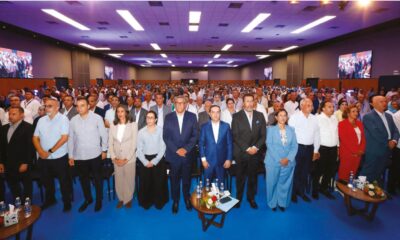
The President of the National Human Rights Council (CNDH), Amina Bouayach, recently chaired a meeting in the Cameroonian capital Yaoundé of the African Working Group on Migration, which falls under the Network of African National Human Rights Institutions (RINADH), with the participation of the presidents, chairs, and heads of national human rights institutions representing 20 African countries.
This meeting, which was attended by members of the Working Group (Morocco, Nigeria, Zimbabwe, Mauritania, the Democratic Republic of Congo, and Kenya), as well as national institutions from Egypt, Togo, Senegal, South Africa, Rwanda, Mauritius, Zambia, Burkina Faso, Equatorial Guinea, Cape Verde, Burundi, Ghana, Cameroon, and Ethiopia, provided an opportunity to take stock of the Group’s overall work since its creation, while highlighting the main achievements recorded in the areas of training, advocacy, institutional coordination, and capacity building.
The meeting also made it possible to review the gains made through the organization of training sessions and exchanges of experience focusing notably on the protection of refugees and the rights of migrants in times of crisis, the social and economic inclusion of migrant workers, as well as active participation in regional and international forums, with the aim of strengthening the reach of the voice of African national institutions in the various bodies concerned with migration issues.
In this context, emphasis was placed on the particular importance of the signing, in Rabat in April 2025, of the cooperation agreement with the United Nations Committee on Migrant Workers, which is considered a pivotal step in the Working Group’s progress.
This agreement established a structured institutional framework for cooperation, information exchange, and coordination of advocacy efforts aimed at encouraging States to ratify the relevant international convention, strengthening monitoring and implementation mechanisms, and translating a common commitment to enhancing the protection of the rights of migrants and members of their families, while consolidating a lasting partnership between African national institutions and the UN system.
The members of the working group, the Presidency of RINADH, and the participating institutions unanimously praised the dynamism and momentum that characterize the Migration Group, as well as the results achieved at the continental and international levels.
The meeting was also an opportunity to renew the call for strengthening the protection of the rights of migrant women and men, as well as refugee women and men, particularly in an international context marked by a rise in discourse hostile to migration-related rights, and to exchange views on ways to promote these rights on the African continent.
In an address on this occasion, Ms. Bouayach expressed the concern of human rights defenders regarding the persistent non-ratification of the International Convention on the Protection of the Rights of All Migrant Workers and Members of Their Families, stating that this situation constitutes a real obstacle to guaranteeing effective and comprehensive protection of migrants’ rights and limits the ability of human rights actors to fully fulfill their missions in this area.
The President of the CNDH emphasized the need to continue advocacy for the universal ratification of this convention and to strengthen legal and institutional protection mechanisms for migrants and refugees, noting that respect for human rights in the migration context is a fundamental pillar of development and stability, and requires a collective commitment from States and relevant institutions.
In this regard, Ms. Bouayach recalled that a number of countries in the Northern Hemisphere have not yet ratified this international convention, which entered into force in 2003, as a binding international legal framework guaranteeing the rights and dignity of migrants, while highlighting its complementarity with other international instruments, notably the Global Compact for Safe, Orderly and Regular Migration (Marrakech Pact).
She called for intensifying African efforts in advocacy and coordination, as well as strengthening the involvement of national human rights institutions in migration issues at the regional and international levels, emphasizing the importance of unifying African positions and developing joint initiatives to influence public policies and integrate a human rights-based approach into the management of migration issues.
Ms. Bouayach also insisted on the central role of national human rights institutions in monitoring the situation of migrants, advocating for the harmonization of national legislation with international standards, strengthening societal awareness of the rights of migrants and refugees, as well as facilitating their access to protection mechanisms and remedies.
At the conclusion of this meeting, held ahead of the annual RINADH gathering, Ms. Bouayach reaffirmed the CNDH’s support for the Group’s efforts and the consolidation of its collective action, with the aim of building an African human rights-based approach in the field of migration and addressing the growing challenges related to it at the continental and international levels.
It is worth recalling that Morocco chairs the African Working Group on Migration, established in Marrakech in 2018, with the objective of institutionalizing work on migration issues within RINADH.