Kingdom
Akhannouch: The Program for Reducing Territorial Disparities helps remedy social disproportions
In response to a central question on “territorial development and the challenges of spatial justice”, the Head of Government indicated that this program is based on supporting rural and mountainous areas during territorial rehabilitation operations and programs.

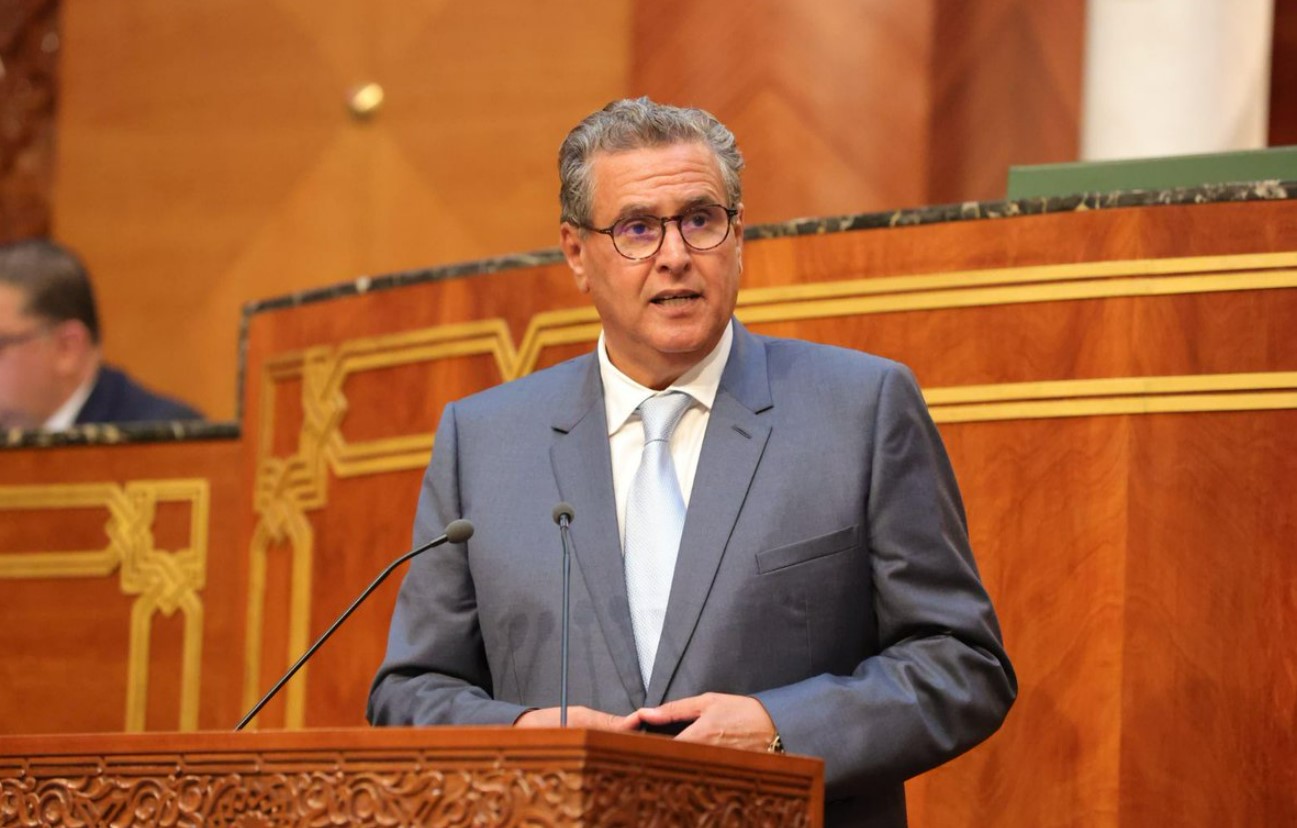
The Program for Reducing Territorial and Social Disparities is not a simple purely technical approach, but constitutes an exemplary governance experience that has clearly contributed to reducing the inequalities accumulated over several decades, affirmed on Tuesday at the House of Councillors the Head of Government, Aziz Akhannouch.
In response to a central question on “territorial development and the challenges of spatial justice”, Mr. Akhannouch indicated that this program is based on supporting rural and mountainous areas during territorial rehabilitation operations and programs, notably through improving social inclusion indicators, diversifying social opportunities, and strengthening rural women’s access to training and employment.
Concerning opening up isolated areas and strengthening tracks and roads, the Head of Government reported the construction and maintenance of 26,509 km of roads and rural tracks, noting that around 223 engineering structures have been built or reconstructed, which has contributed to increasing the number of communes with good access to roads and tracks, rising from 791 communes in 2016 to 1,104 in 2023 (+40%).
As part of the expansion of the drinking water supply network, Mr. Akhannouch highlighted the completion of 32,000 individual and mixed connection operations, fountains, and 725 drinking water systems, in addition to the extension of the network by around 1,000 km, noting that these achievements have made it possible to raise the number of communes benefiting from good access to drinking water from 710 in 2016 to 859 in 2023, an increase of 20%.
He also emphasized that efforts to extend the rural electrification network have made it possible to supply 1,135 douars with electricity and to extend the electrical network by 1,137 km, bringing the number of communes with access to electricity from 627 in 2016 to 831 in 2023 (+32%).
Regarding the rehabilitation of education sector infrastructure, he noted that 4,142 operations of construction and reconstruction of school institutions have been carried out, in addition to the acquisition of 1,508 school buses and the implementation of 139 school equipment operations, which has made it possible to increase the number of communes offering quality educational services from 614 in 2016 to 773 in 2023, a rise of 13%.
As for the health sector, Mr. Akhannouch observed that the program enabled the completion of 987 operations of construction, reconstruction, extension, and rehabilitation of health establishments, in addition to 884 operations of equipping health structures and the acquisition of 820 ambulances, adding that the number of communes benefiting from good access to health services thus rose from 480 in 2016 to 721 in 2023, an increase of 19%.
He concluded that these achievements represent a “true qualitative leap” in the territorial development of the targeted communes, noting that the number of communes with all basic services rose from 502 in 2016 to 743 today, an increase of 48%.