Kingdom
50 Projects That Changed the Sahara (5/5)
For half a century, the Kingdom has been massively investing in its Southern Provinces to equip them with all kinds of infrastructure to provide the population with the conditions for a dignified life. Industry, culture, agriculture, transport, fishing, sports… a multitude of projects have turned the mirage of development into reality. A selection.

41- A new phosphate port in Laayoune
In Laayoune, the new phosphate port will soon be operational. In August 2024, the work was 85% complete. This 5.2 billion dirham (MMDH) complex, whose construction is managed by Phosboucraa, a subsidiary of the OCP group, will have several strategic structures, including a 3.5 km long and 25 m wide access bridge, a 920 m caisson protection breakwater, and a seawater intake structure with a flow rate of 30,000 m³/h. The project also includes dredging operations for the access channel, the turning circle, and the berthing area, with an estimated infrastructure lifespan of 100 years.
The phosphate port is expected, initially, to handle an annual traffic of 5.2 million tonnes, extendable to 8.2 million tonnes during the second phase of its development, thanks to the addition of an extra quay. Once functional, the site will be able to accommodate vessels with a capacity of 100,000 tonnes (Post-Panamax type). Beyond its impact on the regional economy, the port platform will also facilitate the import of raw materials necessary for fertilizer production, as well as the export of finished products, particularly phosphate, fertilizers, and phosphoric acid.
42- The Grand Media Library of Laayoune: The oasis of words
An architectural symbol of a city in effervescence, the Grand Media Library of Laayoune, inaugurated on July 29, 2023, extends over 23,500 m2, with 5,500 m2 built, for an investment of 86 million dirhams. Conceived as a crossroads of knowledge, it transforms the Saharan capital into a cultural hub, accessible to all ages and origins.
At the heart of this temple of books, a 450-seat auditorium hosts conferences, concerts, and screenings, while the video library and multimedia reading room offer a collection of 50,000 works, including rarities in Hassaniya and Tamazight. Dedicated spaces for children, with interactive workshops, neighbor digital research areas connected to the national network. The architecture, inspired by traditional ksours, integrates shaded patios and hanging gardens, fusing modernity and Sahrawi heritage. Since its opening, the media library pulses with activities: nomadic reading clubs, exhibitions on the history of the Sahara, and partnerships with the nascent French Alliance. More than a building, it is a vector of development. Close to the future faculty of medicine, it forms the intellectual ecosystem of Laayoune. In a desert where knowledge is as precious as water, this media library irrigates minds, weaving bonds between generations and cultures. It embodies the Morocco of the Southern Provinces: resilient, open, and ready to shine.
43- Kitesurf Championship: Royal winds and crazy waves
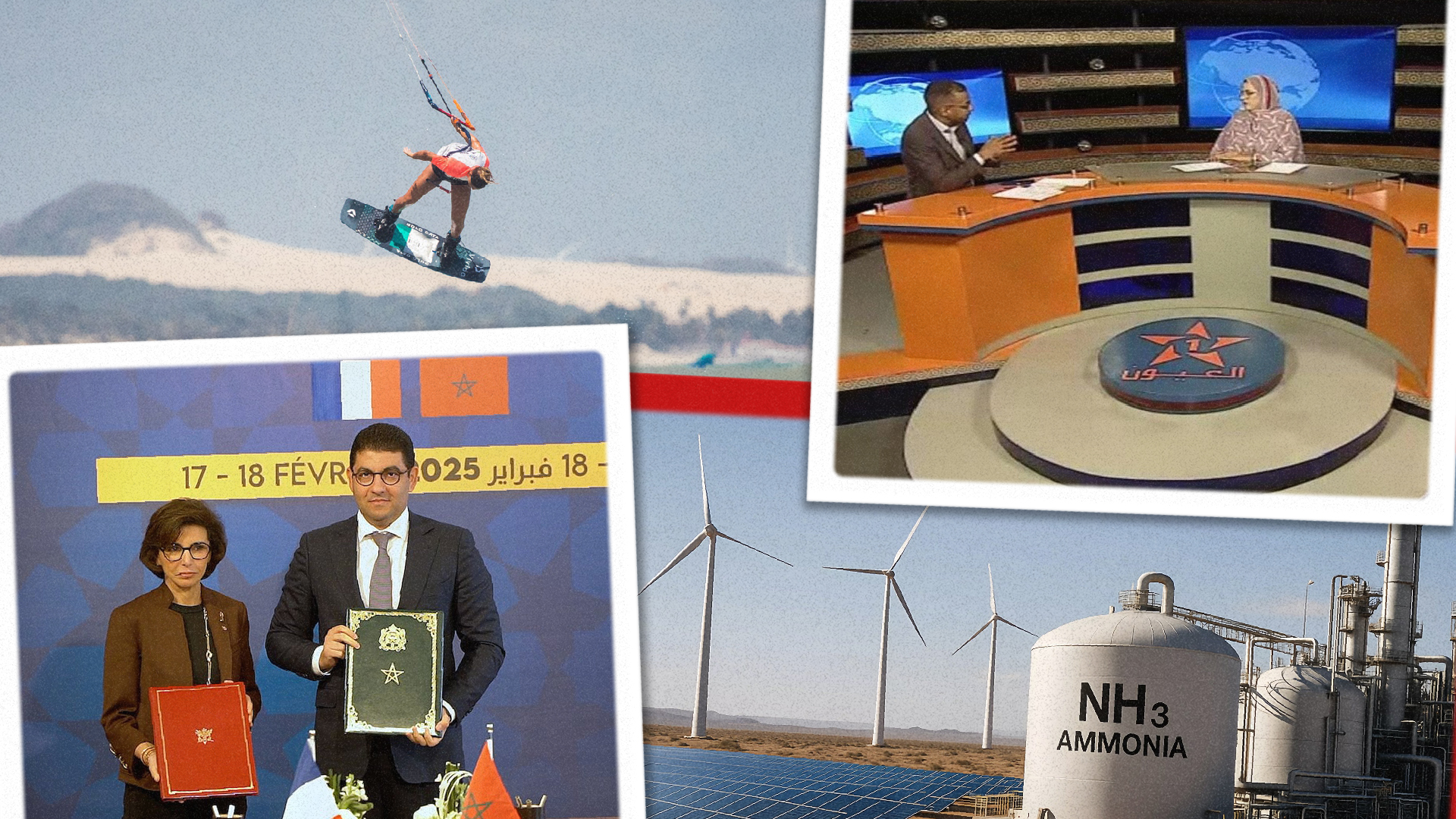
Placed under the High Patronage of HRH Crown Prince Moulay El Hassan, this GKA Kite-Surf World Cup championship, held annually in Dakhla, crowns the world’s best riders on the windy lagoons of the Sahara. The 15th edition, held from October 6 to 12, saw French rider Capucine Delannoy triumph, against 150 competitors from 25 nations.
On Dragon Beach, perfect waves and constant trade winds create a paradise for freestyle and wave riding. Intense events: stratospheric jumps, aquatic figures, judged by international experts. The audience, 20,000 spectators, vibrates to the sounds of DJ sets and Saharan food trucks. Beyond sport, it is an economic lever: full hotels, local jobs, tourist promotion. In 2025, eco-workshops for lagoon protection marked the event. Dakhla, “African capital of kitesurfing”, attracts stars like Airton Cozzolino. This championship symbolizes Moroccan youth: bold, innovative. It inspires sailing schools and female vocations, proving that the Sahara is not just a desert, but an ocean of free winds.
44- Foum El Oued, where the ocean dances with the dunes
20 km from Laayoune, the Foum El Oued Corniche stretches along a 7 km Blue Flag beach, a coastal jewel where golden sand meets the Atlantic Ocean. Upgraded in 2024 by the Urban Agency, it offers pedestrian walkways, picnic areas, and surf spots, attracting families and adventurers. Paved with salt-resistant slabs, lined with palm trees, the corniche invites strolling: views of the dunes, traditional pirogue fishing, hypnotic sunsets. A legendary surf spot, Foum El Oued hosts competitions and schools, with waves rolling over reefs. Eco-friendly, it integrates protected areas for sea turtles. In 2025, Sahrawi music festivals animate the evenings. Ideal for campers, with dedicated services, it is an authentic haven of peace. Foum El Oued, where desert and sea merge, embodies the Saharan renewal: accessible, preserved, and vibrant with local life.
45- Laayoune Power Plant: From fuel to green hydrogen
The Laayoune thermal power plant will become the first of its kind in Africa to operate entirely on green hydrogen. The project is currently underway. To this end, American GE Vernova, ONEE, and Nareva signed a memorandum of understanding in January 2024 to decarbonize the plant, which is powered by three high-performance GE Vernova 6B gas turbines. The 99-megawatt (MW) thermal power plant, currently fueled by heavy fuel oil, will use green hydrogen to power GE Vernova’s 6B gas turbines. Concretely, under this agreement, GE Vernova will help the Laayoune power plant provide electricity from 100% green hydrogen produced at Nareva’s Laayoune wind farm. In a first phase, a study was launched and is expected to be completed in early 2026, to explore a holistic solution integrating the entire production value chain to provide sufficient quantities of green hydrogen to power the gas turbine during peak consumption periods. It must be said that the American partner already has proven experience in the field, having already converted about thirty 6B gas turbines to hydrogen over the past two decades. In any case, this pilot project is expected to be extended to other thermal power plants in the Kingdom.
46- A test center to decarbonize maritime transport
The project was inaugurated last July in the vicinity of Dakhla. The test center for the decarbonization of maritime transport, developed by Airseas over an area of 80 hectares, required an investment of 50 million dirhams, creating 30 permanent jobs. The center has, according to its promoters, advanced facilities to test and optimize its device, the “Seawing”, which consists of an automated 1,000 m² wing, designed to reduce ship fuel consumption by 20%. The site includes a 2,400 m² hangar, with mechanical and electronic workshops, as well as a control center simulating navigation conditions. This system uses AI automated piloting to optimize the trajectory and maximize efficiency. Its installation is quick and adaptable to various types of ships. It uses wind power to tow cargo ships, reduce carbon emissions, and lower fuel consumption. For the French company, launched in 2016 by former Airbus aeronautical engineers, the Dakhla-Oued Eddahab region was chosen due to its favorable climatic conditions and its vocation as a receptacle for renewable energy-related projects.
47- Pioneering region for green ammonia
The integrated green ammonia production project in Guelmim-Oued Noun is the most advanced. The Chbika 1 project, which was the subject of an agreement signed between Morocco and the French company TE H2 with its partners, the two Danish companies Copenhagen Infrastructure Partners (CIP) and A.P. Møller Capital, plans for an installed capacity of 1 GW in renewable energy and an annual production of nearly 200,000 tonnes of green ammonia destined for export to the European market. Beyond the production of green hydrogen (H2V) and its derivatives, the project promises to reshape the economy of the entire region. It is also a pilot project for this nascent industry in our country and around the world. The project itself involves installing the entire value chain. Thus, TE H2 and CIP will be responsible for developing renewable energy production, solar and wind upstream, and green hydrogen and its derivatives downstream. For its part, A.P. Møller Capital will develop the port and associated infrastructure. In early September, finalizing its preliminary phase, the project was preparing to enter its advanced study phase, or the FEED phase, which will be sanctioned by the signing of the advanced study agreement, followed by the signing of the framework investment agreement.
48- Alliance française: A wind of Francophonie blows over Laayoune
The Alliance française of Laayoune establishes itself as a cultural bridge between Morocco and France, announced by Minister Rachida Dati during her visit to the Saharan capital last February. This center, operational since April, occupies a modern space in the city center, dedicated to language and artistic exchanges. French courses for all levels, theater workshops, and screenings of auteur films structure its offering, with an emphasis on Sahrawi-French immersion. Open house days in April 2025 attracted 500 participants, mixing nomadic children and expatriates. Partnerships with the large local media library enrich the programs: Francophone libraries, debate clubs on desert ecology.
The Alliance promotes mobility: scholarships for internships in France and joint festivals like “Voices of the Sahara”. During this year, a photo exhibition on female artisans traveled to Paris, amplifying Sahrawi voices. A symbol of bilateral cooperation, it combats the cultural isolation of the Southern Provinces. Here, French becomes a tool for empowerment, connecting Laayoune to a global network. In the wind of the Sahara, the Alliance française blows a wind of modernity, weaving lasting friendships.
49- Laayoune TV: Voice of the connected desert
A regional channel of the SNRT group, TV Laayoune has been broadcasting since 2009 across the entire Moroccan Sahara, reaching 2 million households via Hotbird satellite and DTT. Generalist, it embodies the voice of the South, blending local news, Hassani culture, and entertainment. Flagship programs: “Maa Naha” on nomadic traditions, reports on the Moussem of Tan-Tan, and debates on sustainable development. Moreover, its live coverage of the Kitesurf Championship in Dakhla boosted its national audience. The high-tech studios in Laayoune produce documentary series on lagoon fishing and craftsmanship, in dialectal Arabic and Hassaniya. TV Laayoune promotes inclusion: quotas for Sahrawi journalists, training via ISMAC. It also broadcasts in French for tourists, covering events like the inauguration of the Media Library. A digital pioneer, its YouTube channel gets 5 million annual views. In a connected desert, TV Laayoune unites tribes and cities, telling the story of a dynamic Sahara, proud of its Moroccan identity.
50- Guelmim: Drinking water projects galore
Sustainable drinking water supply in the Guelmim-Oued Noun region is a central concern. Several projects have already been implemented and others are underway, such as the exploitation of new boreholes near Oued Sayad in the province of Guelmim, to add an additional flow of 100 liters per second, at a cost of 70 million dirhams (MDH). The same for Tan-Tan, requiring a budget of 13.6 million dirhams. More importantly, a desalination plant in Sidi Ifni, with a capacity of 100 liters per second, was launched as part of the national drinking water supply program. Another strategic project is underway in the Plage Blanche area, with the future 230 liters per second desalination plant planned for 2027, requiring one billion dirhams. The extension of the Sahb El Harcha station, which supplies the cities of Tan-Tan and El Ouateya, in service since 2013, completes these initiatives. In parallel, sustainable management actions, including small dams, boreholes, and combating waste and illegal use, contribute to strengthening regional water security.