Influences
Mohamed Saâd Berrada: “Move faster in reform, but ensure quality”
For his first school year, the Minister of National Education, Preschool, and Sports reveals the new initiatives as well as his vision of an educational system undergoing profound change.

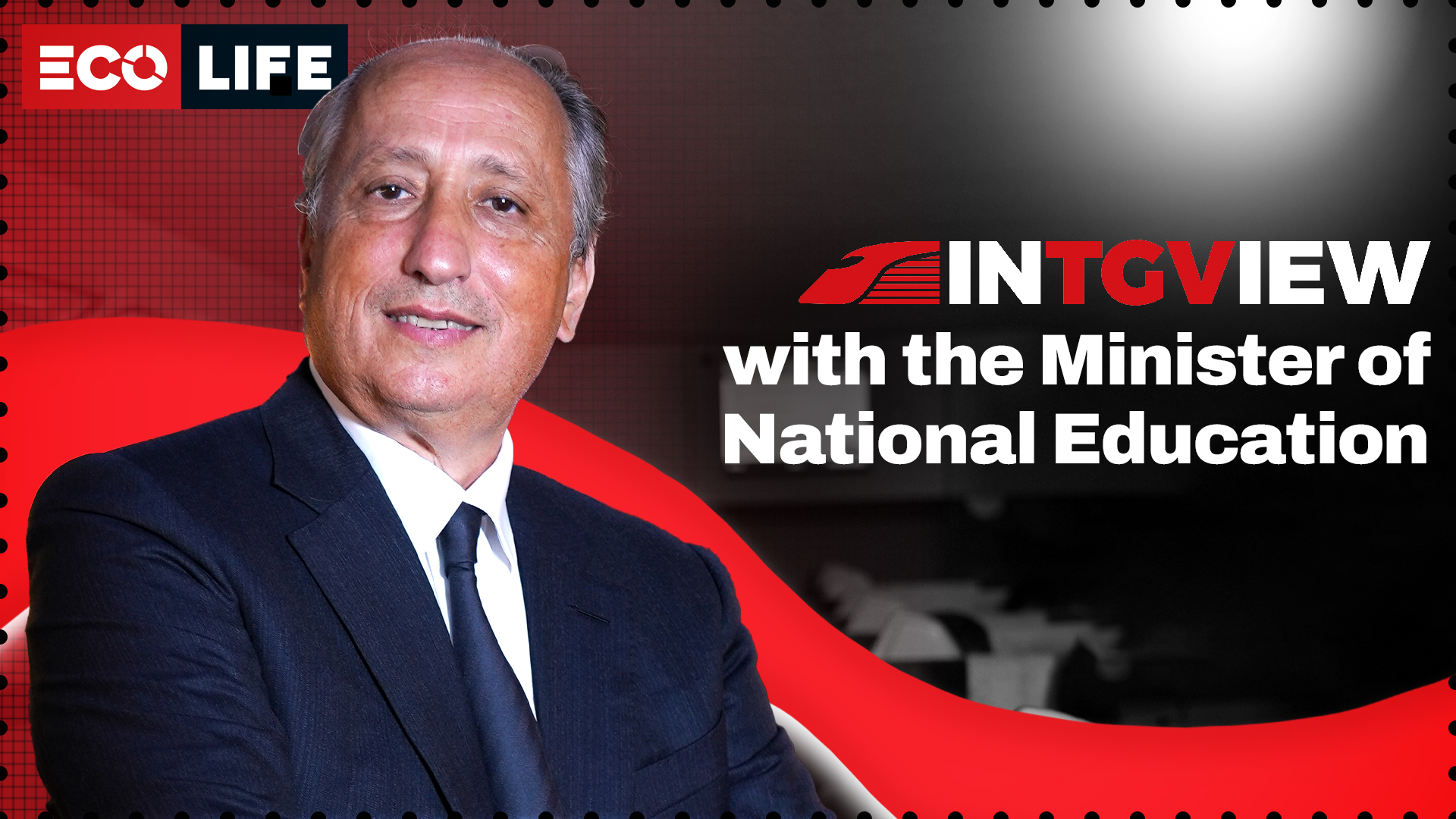
Médiouna, El Hajeb, Errachidia, Ouarzazate, and many other stops… Mohamed Saâd Berrada and his teams undertake a true marathon this 2025-2026 school year to meet regional stakeholders involved in this crucial reform of National Education.
Since he took over at the end of 2024, the Minister of National Education has been accelerating efforts to complete this transformation of the public school system. Pioneer schools, generalized preschool, enhanced teacher status, low-cost textbooks… so many projects aiming to reinvent the educational system. On his way to Tangier, he kindly accepted to be a guest on the show La Vie Éco aboard Al Boraq. A rail interview to explain a reform on the right track. Summary.
In October 2024, you took the reins of the Ministry of National Education, Preschool, and Sports. This 2025-2026 school year is therefore the first one you fully experience as minister. What are, in your opinion, the main challenges and new developments?
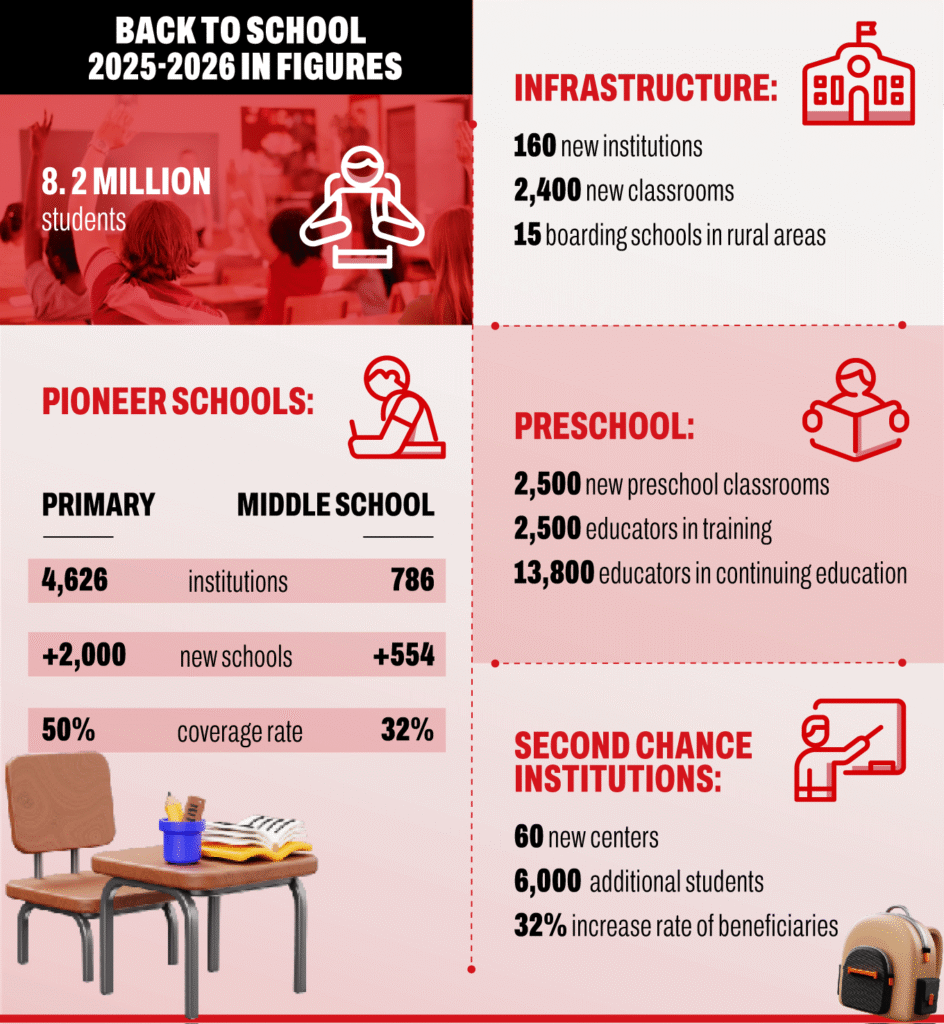
It is indeed a very important school year for me. It fits within the framework of the major educational reform desired by His Majesty the King, which constitutes a priority for the future of our children and our country. This year, we are taking a new step with the addition of 2,000 pioneer primary schools, bringing their total to 4,626, or 55% of primary schools in Morocco.
We are also opening 554 pioneer middle schools, thus initiating the first generalization at this level. On the preschool front, we are creating 2,500 new classes, staffed by as many educators, with the aim of generalizing quality preschool accessible to all.
You mentioned pioneer schools. What is the next stage of this project and how to ensure that this spirit of innovation endures?
The principle of a pioneer school is first based on an eight-week remediation phase intended to bring students up to standard. If this mission is fulfilled, we will then be able to enrich the educational offer: languages, complementary subjects, extracurricular activities… The goal is to go beyond catch-up logic to foster the overall development of children.
How do you proceed to designate the institutions that will become pioneer schools?
What must be understood is that one of the major problems of our system, yesterday as today, is that about two-thirds of students in class were unable to keep up with the pace. This creates immense frustration among these children, and that is precisely what we want to correct.
The reform aims to reduce this divide and offer every student the means to succeed. Of course, such change requires time and patience to be properly implemented. Another essential pillar of this reform concerns teachers.
In recent years, we have seen a gradual improvement in their material situation and working conditions, and this must continue because they are the key actors of school success.
Speaking of which, let’s talk about teachers. What concrete progress has been made to improve their situation?
We have undertaken a significant revalorization. The salaries of primary school teachers, professors, principals, and inspectors have been increased, with a considerable budgetary effort: more than 20 billion dirhams injected this year into the payroll, and nearly 10 billion additional planned.
This material recognition was essential. You cannot demand quality teaching without giving teachers the means to work in good conditions.
School textbooks remain a sensitive subject each school year. How do you reconcile cost, availability, and quality?
We took into account the report of the Competition Council and reconsidered the system. The textbooks of pioneer schools are now published by the ministry, ensuring intellectual property. We then worked in consultation with printers and publishers to guarantee the best quality-price ratio.
This year, we even introduced a new tender procedure based on the principle of reverse auctions to reduce costs and guarantee both price accessibility for families and the availability of textbooks. The result: textbooks available at only 4, 11, or 16 dirhams. This is a major progress, and we will learn lessons from this experience to further improve the system next year.
Can we say that all the ingredients have been gathered for a successful school year?
We have done everything so that students and teachers have, from day one, everything necessary: textbooks, educational materials, equipment. We even established regional toll-free numbers to quickly report any shortage and fix it without delay.
The challenge is also to ensure a simultaneous school start, without the delays of several weeks as before. Additionally, special effort is made to support families: besides direct social aid, households receive an allowance of 200 dirhams per child in primary and middle school and 300 dirhams in high school. This is essential support for the most vulnerable parents.
Preschool is a sector you knew even before becoming minister. Now that it is being generalized, how do you assess the Moroccan model and what challenges remain for this sector?
I remember images that deeply moved me in 2010 when I discovered preschool through the associative sector: children in Sidi Moumen sometimes spending their days in precarious conditions, waiting in unsuitable spaces for their parents to come back from work, children sitting around large tables without real educational activity. This was not worthy of a preschool curriculum.
The goal from the start was therefore to offer them an appropriate framework. The preschool experience carried out in partnership with associations is quite a unique model, recognized worldwide. Thanks to associations, we were able to achieve this goal by finding reasonable solutions where the ministry alone could not ensure sufficient coverage.
Today, we have reached about 80% generalization rate. It is a real success. The goal is now clear: reach 100% by 2028.
Once generalization is achieved, what will be the next project?
The challenge is quality. Like any process, after access, we must move to evaluation and improvement. That means strengthening ongoing training for educators, improving processes, reviewing and enriching curricula and content, and also modernizing tools and infrastructure.
The idea is to ensure the same quality of teaching everywhere, regardless of the environment or the association running the project. We must move from an access logic to a quality logic.
Practically, what levers will you prioritize to ensure this quality?
Associations have great flexibility, which allows innovation and quick adaptation. So we can imagine many improvements with them. It is in this flexibility that part of future success lies. Allow me also to broaden the view.
The High Commission for Planning recently published a report on multidimensional poverty, which fell from 11.9% in 2014 to 6.7% in 2024. 70% of this improvement is due to education, compared to only 6% for health. This progress is because education has reached the most remote rural areas at preschool, primary, middle, and high school levels.
This is what significantly reduced multidimensional poverty. But beware, strong disparities remain between regions and municipalities. These gaps are again linked to the quality question. That is why quality is now the watchword of our educational system.
There is also a gap between public and private schools. You, who built your career in the private sector, how do you see the relationship between these two sectors?
The private sector remains an indispensable complement to the public one. It is true that in some aspects it appears more efficient today. But it must be recalled that it was not always so: in the 1970s, the public school was better ranked, and I hope it will regain this position.
For now, survey results, notably from the Higher Council of Education in 2019, show that the private sector still outperforms the public. The challenge is therefore to upgrade the public system so that the complementarity is real based on a high standard.
Is anything planned to strengthen private sector regulation?
There is, of course, the new law relating to school education, which now regulates several aspects, including the relationship between parents and schools. A contract links both parties and cannot be modified during the year, whether on price, conditions, or the services offered.
Everything is written black on white, and schools are required to respect it. Regular inspections also ensure this monitoring to prevent parents from being disadvantaged. But it is not only about respecting administrative rules: private schools also have an obligation to ensure a high level of quality. Because, ultimately, what parent would choose to enroll their child in a school that is not performing and pay for it…!
Your department has invested heavily in foreign language learning from primary school. Where do we stand today? Are there enough trained teachers? And more broadly, how is teacher training?
You know that today, French is an integral part of the school curriculum from primary school, and English is now generalized in middle school, with a coverage rate approaching 100%.
We have also implemented very effective digital tools accessible to both teachers and students. They are available in the multimedia rooms of schools but also on phone and tablet, with access codes given to students. All this greatly contributes to language acquisition.
Regarding teacher training more broadly, the course is now more demanding. A future teacher follows a bachelor’s degree and an internship, but access to training is increasingly selective: now it is necessary to obtain a distinction at the baccalaureate and bachelor’s degree to enter the training stream.
The goal is clear: raise the academic level, offer more attractive pay, and provide stronger training. We want to break with the image of teaching as once considered a last resort career choice.
Today, demand is high, reflecting a positive evolution in the profession’s attractiveness. We also work on ongoing training. Each year, about 40,000 teachers benefit, with a clear goal: ensure that students really acquire new skills. This is one of the major projects highlighted in the government’s achievements.
Morocco has just secured its ticket to the 2026 World Cup, confirming its standing in football. We also recall past successes in athletics. But outside these two disciplines, results struggle to follow. How to address this?
We now have pathways like sport-studies, with 15,000 students this year 2026, showing remarkable results both academically and athletically. These young people represent real seeds of champions.
In a few years, we have gone from a few hundred students to more than 15,000 in sport-studies, and school championships are very active in all major cities of the Kingdom.
We have over 56 school championships nationwide. Now, this pushes us to become more efficient to develop talents in sport.
They must still be supported and supervised, and that is where federations must take over. The state can train and launch talents, but their flourishing depends on the federations’ work of follow-up and structuring. We support them, especially to improve governance, but it is also up to their members to choose competent leaders capable of carrying this ambition.
This also leads us to talk about sports infrastructures Morocco is building to host major sports events. How to ensure they benefit not only international events but also mass and school sports?
Indeed, Morocco is investing massively in the construction and modernization of its sports infrastructures, preparing for CAN 2025 and the World Cup 2030. But the challenge goes far beyond organizing these major competitions: it is about making these facilities true catalysts for mass sports and school sports.
For them to be sustainable and profitable, they must be not only maintained but also transformed into spaces democratizing sports practice, capable of creating links between high-level sport and sport for all.
During the last national team match, we saw that demand for tickets far exceeded supply, even though prices were higher than usual. This reassures us about the relevance of the economic model that can be developed. Provided, of course, that competent professionals manage it.
Portrait. From Engineering to Education
Mohamed Saâd Berrada embodies this generation of Moroccans born in the 1960s who, after excellent studies abroad, return home to carve their own path in the business world.
Born in Azrou and raised in Meknès, he then settled in Rabat, where his father, Ssi Abdeslam, one of the first agronomy engineers trained in France before independence, held high-ranking positions at the Ministry of Agriculture before leading it in 1972 under the Ahmed Osman government.
Second of five siblings, Saâd did not yet imagine he would follow, in his own way, the family footsteps in public service and national engagement.
After earning his Bac C in 1978, Saâd flew to Paris to take preparatory classes before joining the prestigious École des Ponts & Chaussées, from which he graduated in 1984.
He also earned a management degree from Paris-Sorbonne University.
Back in Morocco, he explored banking, industry, real estate before launching his first major business: Michoc, the confectionery he founded with his brother Hassan in 1997, quickly becoming a Moroccan success story.
Versatile engineer, Berrada diversified his activities in the agri-food sector with Safi Lait and also in pharmaceuticals. He served as a board member of large groups and also carried out enormous associative work alongside his wife, heading the NGO Oum El Ghait, which has become a reference in early childhood and preschool.
Saâd Berrada entered politics with the fresh wind brought by the RNI in 2016, with the arrival of a longtime friend, Aziz Akhannouch.
Member of the RNI political bureau, Saâd Berrada supports organizational aspects of the party, notably the election commission, as well as the parallel structure of independentist engineers.
On October 10, 2024, his name appears as the new Minister of National Education in the Akhannouch II government. A nomination he sees above all as a duty.