Influences
Amazigh Language: Signing of Three Agreements Between the SGG, IRCAM, and the Department of Digital Transition
The three agreements aim to provide new momentum for the integration of the Amazigh language into the national legal system, by strengthening institutional cooperation among the various concerned parties.

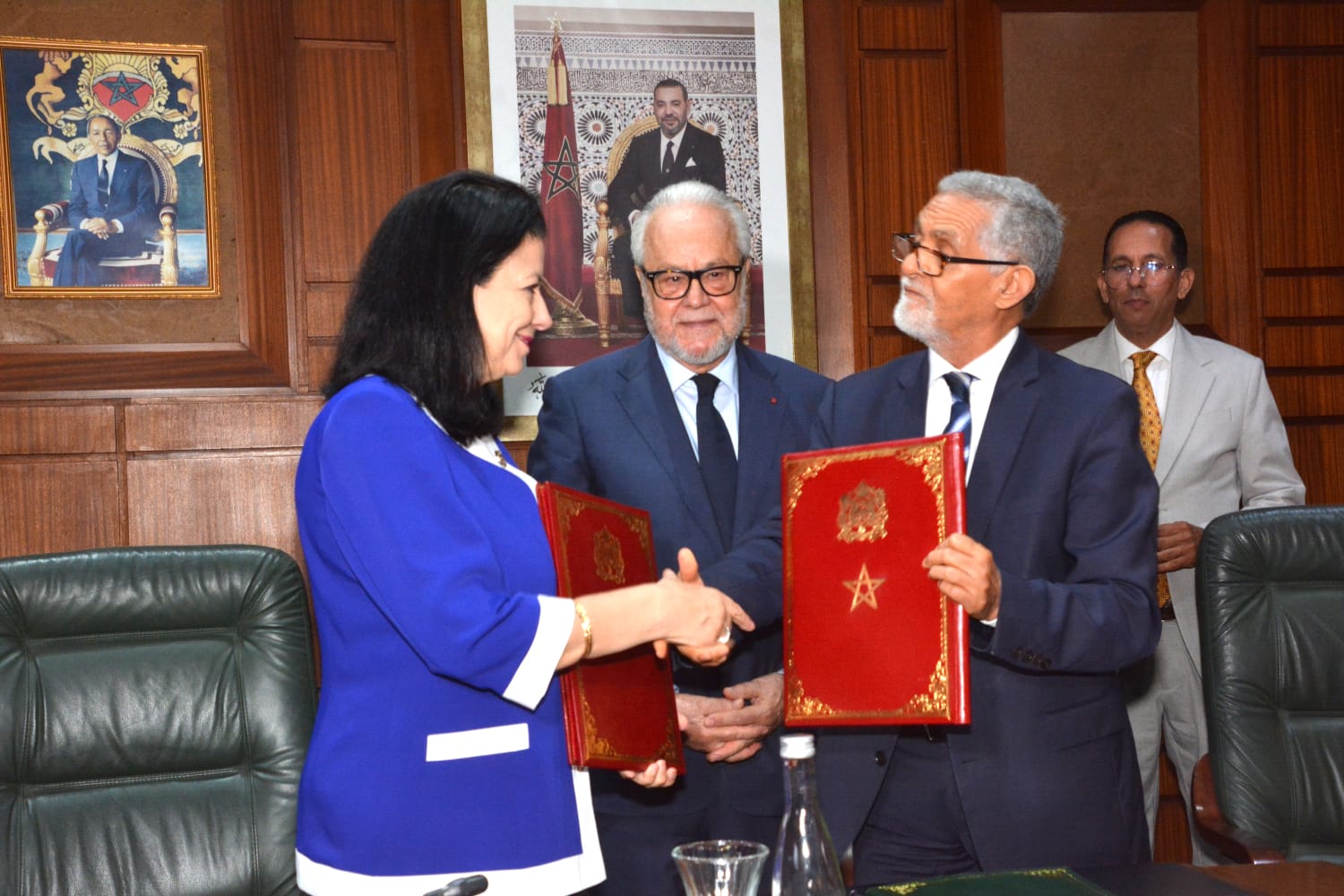
The Secretary General of the Government, Mohamed Hajoui, emphasized on Tuesday in Rabat the importance of collective and organized action based on a participatory approach to disseminate legislative and regulatory texts of a general nature in the Amazigh language.
Speaking at the opening of a study day organized by the General Secretariat of the Government (SGG) under the theme “Integrating the Amazigh Language into Legislation: Opportunities, Potential, and Challenges,” Mr. Hajoui noted that the numerous and diverse legislative and regulatory texts “concern all ministerial departments.”
He added that this event, initiated in partnership with the Delegate Ministry to the Head of Government in charge of Digital Transition and Administrative Reform and the Royal Institute of Amazigh Culture (IRCAM), aligns with the efforts of public administrations to implement Royal directives that consistently emphasize promoting the Amazigh language as a shared national responsibility.
On this occasion, three partnership and cooperation agreements were signed. These aim to consolidate initiatives undertaken by the SGG, including regular training sessions in this field for its staff, recruiting Amazigh language experts, and launching the study, revision, and finalization of legal translations for a set of laws submitted by IRCAM.
These agreements are designed to “give strong momentum to the implementation of this major national project,” he continued, stressing the need for practical measures to enshrine the official status of the Amazigh language and promote its effective use in administrative, legislative, and regulatory spheres. This includes initiatives to accelerate the translation of legal texts into Amazigh.
The three partnership agreements signed during this event aim to provide new impetus for integrating the Amazigh language into the national legal system. This will be achieved by strengthening institutional cooperation between concerned parties, establishing effective operational mechanisms, and coordinating efforts to draft and translate legal texts into Amazigh.
The first partnership agreement, signed between the SGG and the Delegate Ministry in charge of Digital Transition and Administrative Reform, focuses on executing the government program related to implementing the official status of Amazigh in administration, legislation, and regulation.
Under this agreement, support will be provided to dedicated programs and projects, including the production and translation of fundamental legislative and regulatory texts into Amazigh. Additionally, it involves creating a reference legal and administrative dictionary in Amazigh and recruiting assistants to enhance reception, guidance, and advisory services in the language.
The second agreement, signed between the SGG and IRCAM, aims to gradually integrate Amazigh in accordance with existing legislative and regulatory texts. It seeks to strengthen cooperative relations between the two parties and implement bilateral commitments regarding the official status of Amazigh, particularly in translation, training, documentation, publications, and awareness-raising.
The third partnership agreement, signed between the Delegate Ministry in charge of Digital Transition and Administrative Reform and IRCAM, targets the implementation of the government program’s component on promoting Amazigh. This includes developing legal translation into the language, supporting public administrations, institutions, local authorities, and civil society, and enhancing the Amazigh language skills of human resources working in legal and administrative fields.
Speaking at the event, the Delegate Minister in charge of Digital Transition and Administrative Reform, Amal El Fallah Seghrouchni, highlighted her department’s role in “implementing this vital national project.” This involves launching, executing, and supporting a series of structured initiatives to integrate Amazigh into public administration and services.
She noted that the project to activate the use of the Amazigh language in public services, launched in close coordination with IRCAM, is an opportunity to commend the ministry’s serious and responsible commitment to this strategic initiative. This involves establishing a participatory approach to foster the gradual and effective integration of this national language into public services.
Ms. Seghrouchni also emphasized that integrating the Amazigh language into the legislative system represents one of the major challenges, as it requires institutional efforts to develop legal drafting tools in Amazigh, ensure high-quality translation, and promote legal training in this field. Such steps aim to guarantee linguistic equity and equal access to law and knowledge.
The minister called on participants to propose practical and achievable recommendations that would strengthen the presence of Amazigh in national legislation.
For his part, IRCAM’s President, Ahmed Boukous, stated that the Institute, as a “reference hub in the field of translation to and from Amazigh,” is committed to providing expertise and guidance for projects implementing the official status of the Amazigh language. This includes contributing to the selection and training of necessary personnel and enhancing the capacities of those responsible for integrating the language into administrative departments.
Mr. Boukous urged stakeholders, institutions, and researchers to adopt a constructive approach to improve the efficiency of the national legal system, ensure compliance with laws and procedures related to Amazigh’s official status, and thereby advance linguistic and legal justice.
Two debate sessions structured this study day: the first addressed institutional visions for integrating Amazigh into legislation, while the second focused on academic perspectives on the same topic. Both included contributions from institutional and academic actors, researchers, and representatives of relevant bodies.
The study day served as an opportunity to review progress in implementing the official status of Amazigh and to highlight the stages and mechanisms for integrating the language into the national legal system. Discussions also covered the legal and linguistic challenges of drafting texts in the Kingdom’s two official languages, Arabic and Amazigh, and exchanged insights on international best practices in this field.