Powers
Mohamed Aujjar: “The RNI delivers results… Others live in denial”
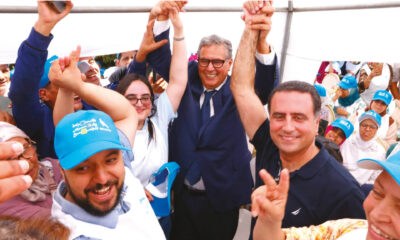
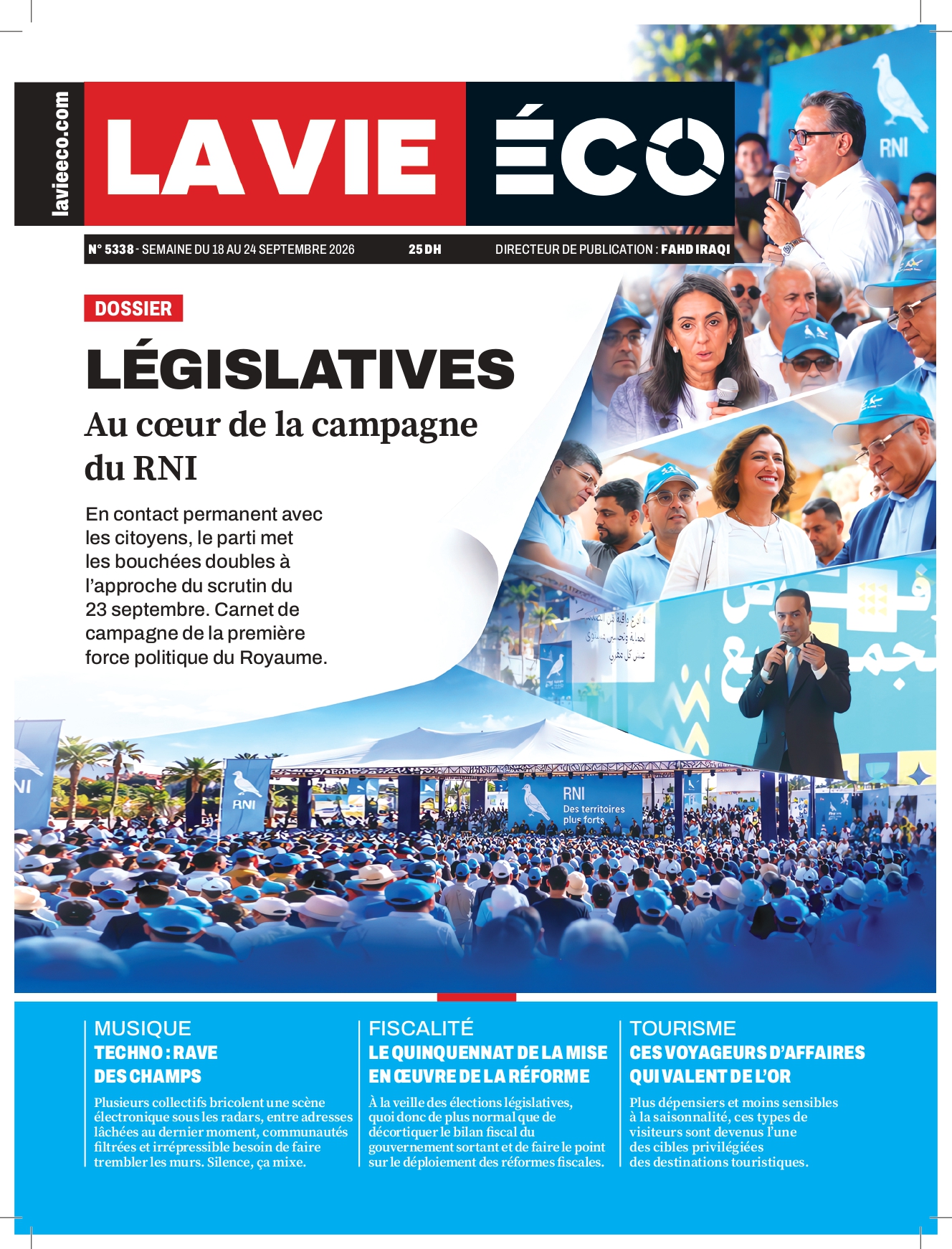
An emblematic leader of the National Rally of Independents (RNI), he is known for his frankness and sharp analyses. As his party’s national tour reaches the Oriental region, he shares with us his reading of governmental achievements at both the national and local levels, as well as the evolution of his party’s governance and his ambitions for the next election.

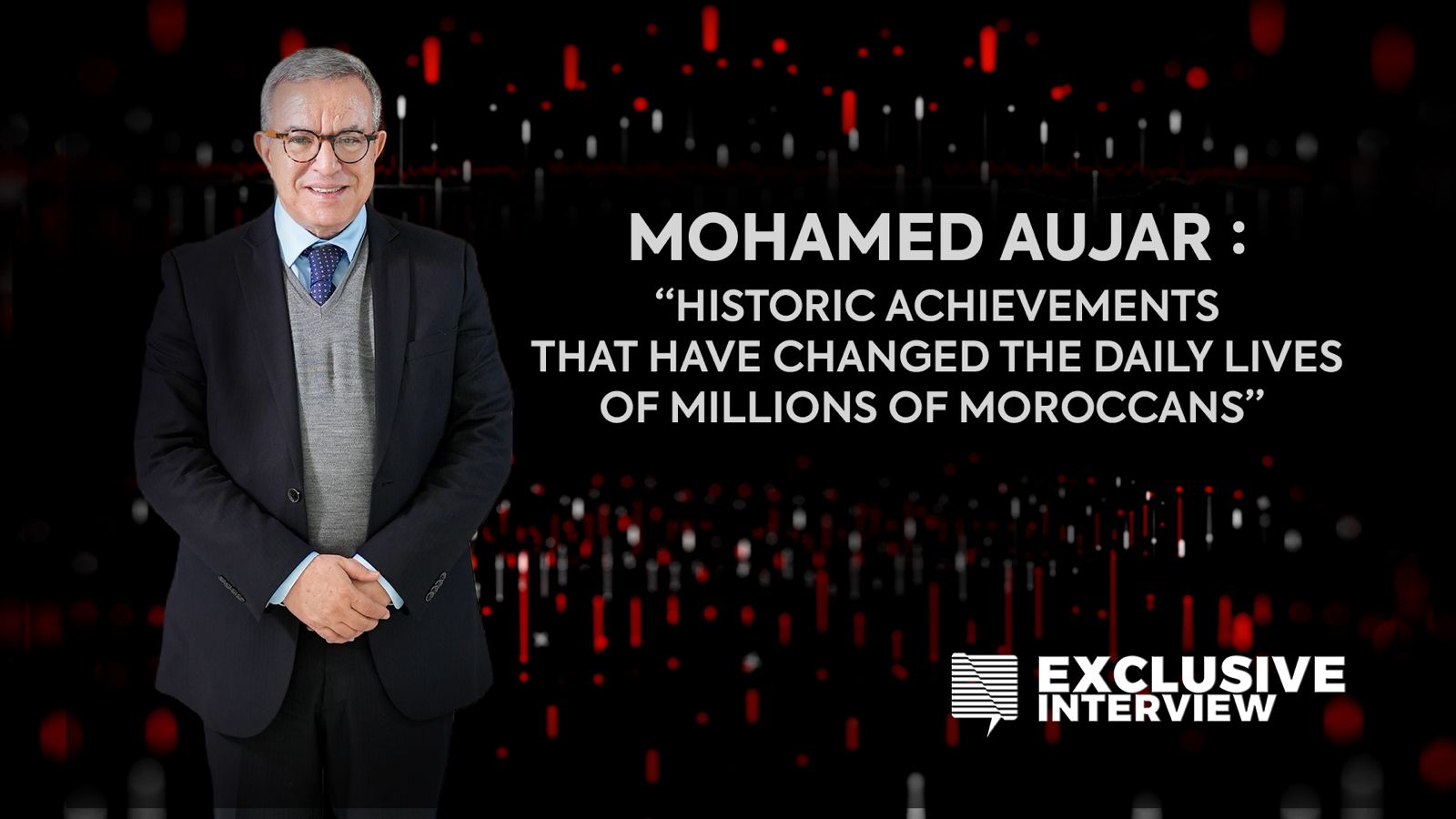
A well-known and recognized political figure, Mohamed Aujjar has devoted recent years to ensuring transition and succession within the National Rally of Independents.
With neither a ministerial portfolio nor a parliamentary seat, the member of the party’s political bureau—of which he is one of the emblematic figures—rejoices in seeing a new generation take up the torch and assume governmental, legislative, and municipal responsibilities.
Above all, the party’s sage is delighted to see his party, under the leadership of President Aziz Akhannouch, deliver an unprecedented governmental record that has helped change the lives of millions of Moroccans. From Nador, where “The Path of Achievements” has pitched its tent, he details the progress made by a Kingdom that is changing scale.
“The Path of Achievements” is arriving in the Oriental region, the penultimate stop of this national tour. What assessment do you make of this initiative ?
This RNI tour across the different regions of the Kingdom stems from a new approach to political action. In 2021, voters voted for a program that embodies a number of commitments made by the party and its allies. For us, it is therefore imperative to return to the people in an exercise of transparency and accountability to communicate what we have achieved and what has not been achieved, explaining the reasons.
Such an exercise is in line with the moralization of political life. It is, in fact, about the Head of Government, ministers, and party officials being accountable to citizens by detailing measures, constraints, and forthcoming actions.
People are coming in large numbers. Is this an indicator of the party’s mobilizing strength?
It is enormous enthusiasm that we feel in all regions. People come in droves, listen to the party leadership, and leave carrying constructive messages. Unfortunately, the hall and the logistics planned do not allow us to accommodate everyone who expresses the desire to participate.
But beforehand, debates are organized in the various provinces, notably through “Niqach Al Ahrar,” in which ministers and party leaders take part. And before that, preparation sessions are held where people gather.
Everyone wants to make their voice heard—the voice of their village and their city—and everyone wants to convey the issues they consider priorities. It is our role as a political party to provide this institutional space for all these contributions, much to the displeasure of our detractors.
Will this work of listening and meeting continue after the end of this regional tour ?
It is a permanent effort that has never ceased. And of course, it will continue before, during, and after elections. Because politics is institutional work to defend ideas and values, to communicate and to listen. Fundamentally, what is proximity politics? It is being close to people, discussing with them, and responding to their concerns.
We do not reduce politics to the sole electoral operation or to access to certain elective positions or ministerial portfolios. If belonging to a party were limited to that, what would the tens of thousands of activists who do not hold positions of responsibility do? The RNI is more than that.
It is a major party in which activists assume different roles: volunteering, humanitarian action, social work, and so on—all in service of their country, each in their own field. To involve these different social categories in the management of public affairs, we work through our parallel organizations—those of women, engineers, lawyers, and others.
Their members address the concerns of their sectors: they reflect on reforms, their design, and their implementation. In our various meetings, there were many academics and doctors, as well as farmers, unemployed people, and young people. This is because the party is the mirror of Morocco, the mirror of our society.
Yet political parties still struggle to mobilize so many people; disengagement remains palpable?
There is no democracy without parties. That is obvious. Especially since our Constitution has elevated the democratic choice to the level of national constants. One cannot therefore afford to criticize parties day in and day out. On the contrary, one must join them.
Morocco has enough parties with different political choices, a diversity of philosophical and ideological orientations in which everyone can find their place. Young people, executives, women—all are called upon to join the parties whose political line corresponds to their expectations and to contribute to their construction.
In the latest reform of electoral laws, the issue is precisely to integrate more young people and women. What is the RNI doing in this regard ?
We did not wait for the next elections to do so. Today, young people—men and women alike—are effectively contributing to decision-making within our party, as well as to public action. Nearly half of our political bureau is made up of young people.
We currently have more than 3,000 young elected officials; we have young parliamentarians, mayors, and even young ministers. The contribution and participation of young people, male or female, is a reality and not merely rhetoric within the RNI.
We will maintain this momentum: our party governance respects people’s intelligence, opens space to all competencies so they can express themselves and have the opportunity to turn their proposals and strategies into programs.
Within the RNI, it is about constantly broadening our horizon: in the upcoming 2026 milestones, we will have more opportunities to communicate with Moroccans and to reach out to them. I can already tell you that Moroccans appreciate this enormous effort.
Do you think Moroccans are satisfied with the achievements of the government led by the RNI ?
The achievements of the government led by Aziz Akhannouch are numerous, even historic. First, it was able to stop the hemorrhage produced by a heavy legacy of mismanagement and to initiate a new dynamic. One only needs to look at the indicators of the High Commission for Planning to realize the importance of the gains made—whether in terms of growth, investment, or consumption.
With all modesty and without any populism or self-promotion, it must be acknowledged that the results achieved are quite impressive, especially in a context marked by a succession of exogenous crises. Public investment, which has almost doubled in a few years, constitutes a powerful lever for job creation and strengthens renewed confidence among investors, both national and international, in the Kingdom.
A confidence based on stability and the country’s economic capacities… There is also this Royal project of the social state, both historic and strategic, which the government has been able to deploy, resulting in tangible and measurable advances in the daily lives of millions of Moroccans. For the first time, citizens feel that the government, in application of the orientations of His Majesty the King, is taking the social dimension with great seriousness.
In what sense? What are briefly the main achievements ?
The most underprivileged Moroccans now benefit from direct social support that has a real impact on their lives. The deep reforms undertaken in the Moroccan education system are clearly perceptible through the pioneer schools that demonstrate a profound transformation both in infrastructure and in the educational environment and equipment.
Add to this the colossal effort deployed in the health sector: each region is now equipped with a medical school and a university hospital center, while hospital establishments are undergoing vast modernization and upgrading operations. The government has made a historic effort in terms of wage increases: nearly 47 billion dirhams committed within the framework of social dialogue.
This is a record amount, never seen under any government, knowing that I have participated in several governments and many cycles of social dialogue. Tax reform has also helped ease the burden, resulting in a real improvement in employees’ net incomes.
These are all gains and achievements that place Morocco on a renewed development trajectory as envisioned by the royal vision and that this government has been able to deploy with unprecedented speed and efficiency.
For some, the impact of government action remains minimal; it is often the subject of criticism…
Criticism, when constructive, contributes to strengthening democracy, improving public action, and the quality of services rendered to citizens. We accept criticism, whether it comes from citizens, the parliamentary opposition, public opinion, as long as it aims to improve and not to denigrate or destroy.
Criticizing to improve, yes. Criticizing to destroy or to build popularity on systematic denial, no. Unfortunately, some believe that producing discourse is enough to gain popularity. They settle into permanent criticism, attacking those who work to build.
You do not build a country by permanently denying its successes. Some populist discourses sometimes give the impression of hostility and hatred toward success. Our ambition is quite the opposite: to encourage younger generations to believe in success, to draw inspiration from it, and to pursue it.
A student, once they have obtained their diploma, must feel capable of launching a project, in their village or their city. If they are interested in politics, they must know that nothing would prevent them from becoming a mayor, a member of parliament, or a minister.
A young person who plays football must be aware that one day they can join the national team. Such is our ambition: we commit to it, we work toward it, we strive by all means to achieve it, because Moroccans deserve the best.
Will these achievements and this optimism be enough to convince voters to renew their trust in the RNI in the next elections ?
Moroccans are intelligent. People know very well how to distinguish between those who devote their lives to building this country, contributing to its development and success, and those who believe that politics consists of criticizing on social networks, destroying, and speaking recklessly.
I am optimistic based on the results of grassroots work in deep Morocco: when we talk with people in their homes, in mosques, in cafés, in their workplaces, in the fields, we encounter a demanding and proactive citizen who questions us daily to correct and improve what needs to be improved. But citizens also perceive that public authorities are adopting a pragmatic approach.
They see concrete changes in their daily lives: their elderly mother or their widowed neighbor regularly receive social assistance; local clinics have been modernized; waiting times in hospitals have shortened; and where there was no doctor before, university structures are now present in every province and every region. Those who did not benefit from medical coverage now have access to it.
Do you think Moroccans will turn out in large numbers for the next legislative elections ?
I am optimistic about participation, and I believe above all that the National Rally of Independents will be the leading political force. We are democrats; our party is democratic.
We submit to the verdict of the ballot box, and we always place the interest of our country and Moroccan society above everything else. If Moroccans renew their trust in us, we will be happy and we will remain faithful to our vocation of serving our country and citizens.
Because we work by all means to translate into reality the great project of His Majesty the King to advance democracy, strengthen the country’s development, and ensure a dignified life for all Moroccans in all regions and provinces.
What about achievements in the Oriental region ?
At each stop of “The Path of Achievements,” the spotlight is placed on progress made and challenges to be addressed in the host region of this RNI gathering. Mohamed Aujjar details for us the situation in the Oriental region.
“It must be acknowledged that the Oriental region is experiencing a difficult economic situation, due to the definitive closure of borders as a result of the irresponsible policy of the authorities of the neighboring country to the East, in addition to the general context marked by successive years of drought and international crises.
Nevertheless, the government has invested efforts to restore hope among the population: particular attention has been given to addressing the issue of water and to supporting livestock breeders in this territory, which includes modern farms as well as subsistence agriculture.
Thanks to the efforts made, one can indeed feel a certain dynamic taking hold, which is also reflected in the development of exports. This shows that despite objective constraints, and thanks to actions carried out by the Executive, hope has returned.
This regional dynamic must be strengthened through the Nador West Med port, which, supported by other infrastructures, should give a boost to the region’s economy. Thanks to the action undertaken by the government, significant investments by major companies operating in different fields are being directed toward the Oriental region.
A dynamism also reflected in the growing interest shown by the Moroccan community originating from the region and living abroad, whose members express their desire to return and invest in their region.
These facts encourage us to continue the efforts undertaken by translating them into public policies. And we are determined, in line with royal orientations, to ensure that there is not a two-speed Morocco, to translate the ambition that this region can play a central role in the overall economic development of the Kingdom”.