Kingdom
What has become of the Neo‑Democrats Party…
At its central headquarters, prominently located on Boulevard de Paris in Casablanca, there is not much activity. But on the eve of the upcoming electoral deadlines, the situation may be different. Founded in 2014, the Neo‑Democrats Party is counting on greater mobilization of its ranks.

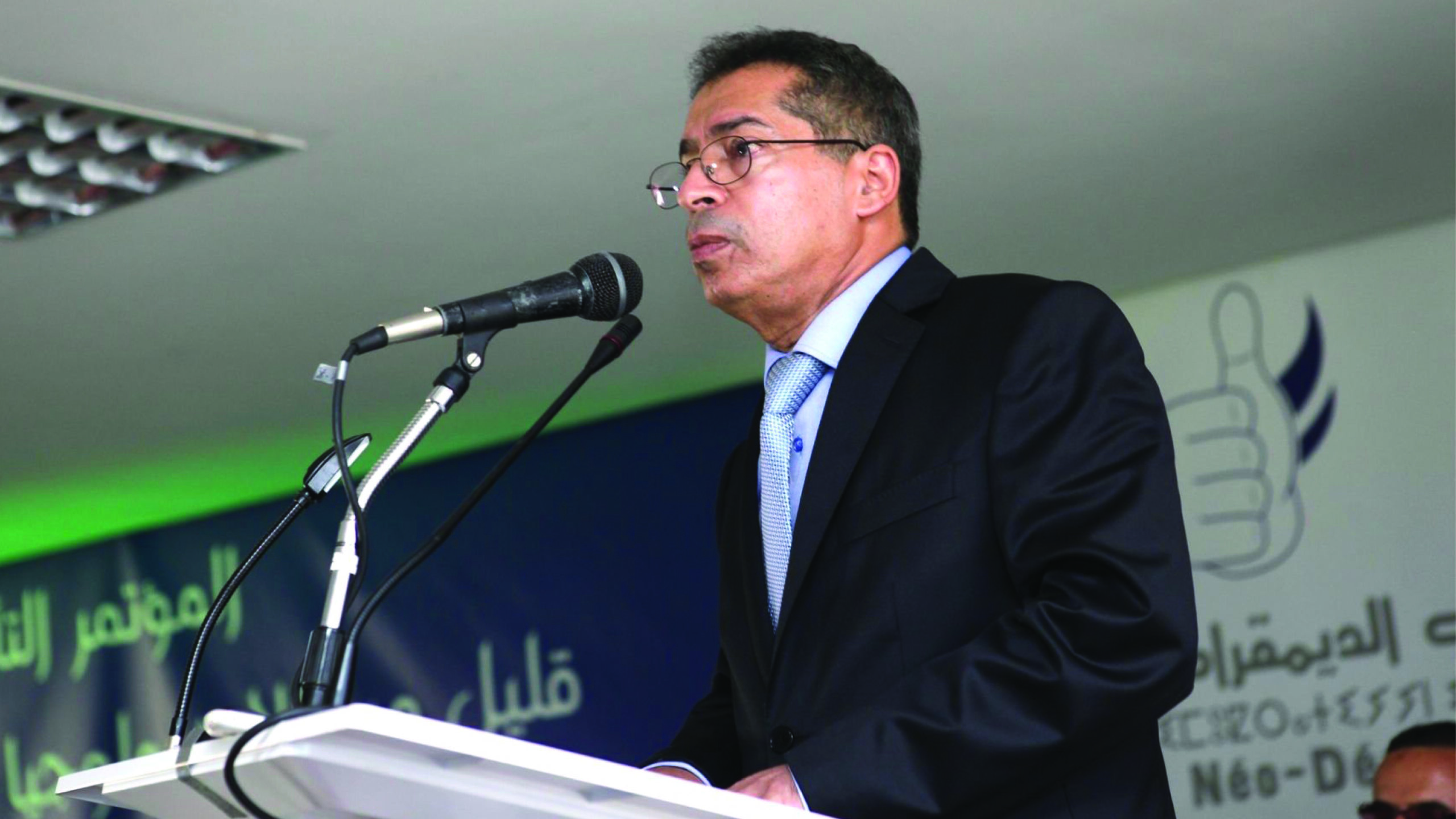
It has been quite a while since one has heard little or nothing about the Neo‑Democrats Party—practically since the electoral deadlines of September 2021. Still, for those who believed that the party founded in 2014 had run its course, the friends of Mohamed Darif continue to move forward, albeit discreetly.
Particularly at the regional level, where the party claims general coverage across all regions of the Kingdom. In fact, as recently as February 1, 2026, the “Thumb” party created a new provincial coordination unit in the city of El‑L’Kliâ, in the province of Inezgane‑Aït Melloul in the Souss‑Massa region.
First bet: to make themselves known first…
The objective, according to Neo‑Democrats, is to “strengthen the party’s regional—and consequently national—anchoring.” This is a tried‑and‑tested approach for some components of Morocco’s political scene, but it seems to struggle to translate into concrete results for the party of the academic Darif.
Nevertheless, this “new organizational dynamic,” focused on developing local and provincial branches, confirms—according to this member of the political bureau—that “although we are not very visible in the media, our bet is to continue working on the ground, at both the regional and local levels, and to ensure that our activists are closer to the population.”
For our interlocutor, the party’s approach—which from its birth saw itself as standing outside the left‑right divide, but rather positioned within a framework opposing modernism to conservatism—remains marked by the “seal of proximity,” they insist. The problem, since its creation, is that the party has still not managed “to break through and occupy more ground.
It is simply a matter of lacking sufficient resources to do so,” summarizes the member of the party leadership.
Yet at the beginning, the ambition of Darif’s associates, the founder, was quite different. At the time, they believed that a lack of resources did not prevent them from “building a major political party.”
Driven by a generation of young people aged between 40 and 50—an overwhelming majority of whom were professionals without prior political experience but seasoned in associative activism—the Neo‑Democrats aimed to “weigh on the Moroccan political chessboard by being the first party to be recognized after the adoption of the 2011 Constitution.”
From the outset, they faced a double challenge: promoting the new party on the national stage and participating in various electoral contests as a means of communication.
The beginnings were far from easy for the leadership of the Neo‑Democrats. Indeed, barely six months after the creation of the “Thumb” party, what was then called the emergence of a self‑proclaimed “reformist current” took shape.
According to reports, it was largely composed of “activists” who, attracted by the new party, had previously belonged to other political parties in the country. Some observers saw this simply as the expression of dissatisfaction among those who, after joining Mohamed Darif’s party, hoped to occupy leading positions within the Neo‑Democrats.
This protest movement, it should be recalled, aimed to remove the founder. In vain. Like others who, from the earliest signs of the leader’s “determination,” as one activist puts it, eventually “slammed the door.”
Barely two years after its birth, the party led by political scientist Darif—who is also a specialist in the functioning of the political sphere and its operational dynamics against a backdrop of historical developments, with particular emphasis on movements related to political Islam—entered the scene with a “more than appreciable theoretical foundation,” according to this analyst.
First tests below expectations
However, “knowledge—although important—of the workings of politics ran up against the realities on the ground,” adds our observer. This reality was reflected in the results the party achieved in the various elections it contested.
From the outset, it entered the race for voters’ support in the 2015 local elections and the 2016 legislative elections. The results were, to say the least, mixed.
The same scenario was repeated in 2021, although the party managed to send some of its members to certain territorial councils—around ten councilors during the local elections. However, none of its candidates in the 2016 legislative elections managed to secure a seat. Still, it did manage to improve “in terms of visibility” following the 2021 elections.
Even if the scenario were to repeat itself in the race for parliamentary seats, Professor Darif’s party currently claims around one hundred municipal councilors, some of whom hold the positions of vice‑president in territorial councils, notably in Tan‑Tan and Ben Slimane. Within the party ranks, it is believed that “this presence is quite significant, but we intend to redouble our efforts for the next electoral deadlines.”
It should also be noted that a few weeks ago, Darif convened a meeting of the commission in charge of elections. The meeting, we are told, resulted in the creation of additional sub‑commissions that will look into, among other things, the well‑known “tazkiyates” (party endorsements). The challenge today is to succeed in making new progress in the upcoming electoral contests.
This applies both to the 2026 legislative elections and to other electoral deadlines. “The organizational momentum launched at the regional level should contribute to this,” party members say.
A founding slogan, a daily reality!
“Few slogans, more efficiency and effectiveness.” This was a slogan that received a rather mixed reception from the partisan forces of Morocco’s political scene. Some saw it as a form of provocation directed at the so‑called traditional parties. Among the activists of the newly formed party in 2014, the aim was to chart a new course in political action.
The party founded by Darif sought a position outside the traditional left‑right divide. This was in line with trends seen elsewhere in the world. However, the results in the various elections did not meet expectations—at least when compared with the ambitions held at the party’s birth.