Kingdom
Social dialogue: The total cost of measures to support purchasing power will reach 49.7 billion dirhams by early 2027
Presenting an overview of the measures implemented, Younes Sekkouri stated that the guaranteed minimum interprofessional wage (SMIG) has risen from 14.81 dirhams per hour at the start of the government’s term to 17.9 dirhams currently, with net wages thus increasing from approximately 2,800 to 3,400 dirhams.

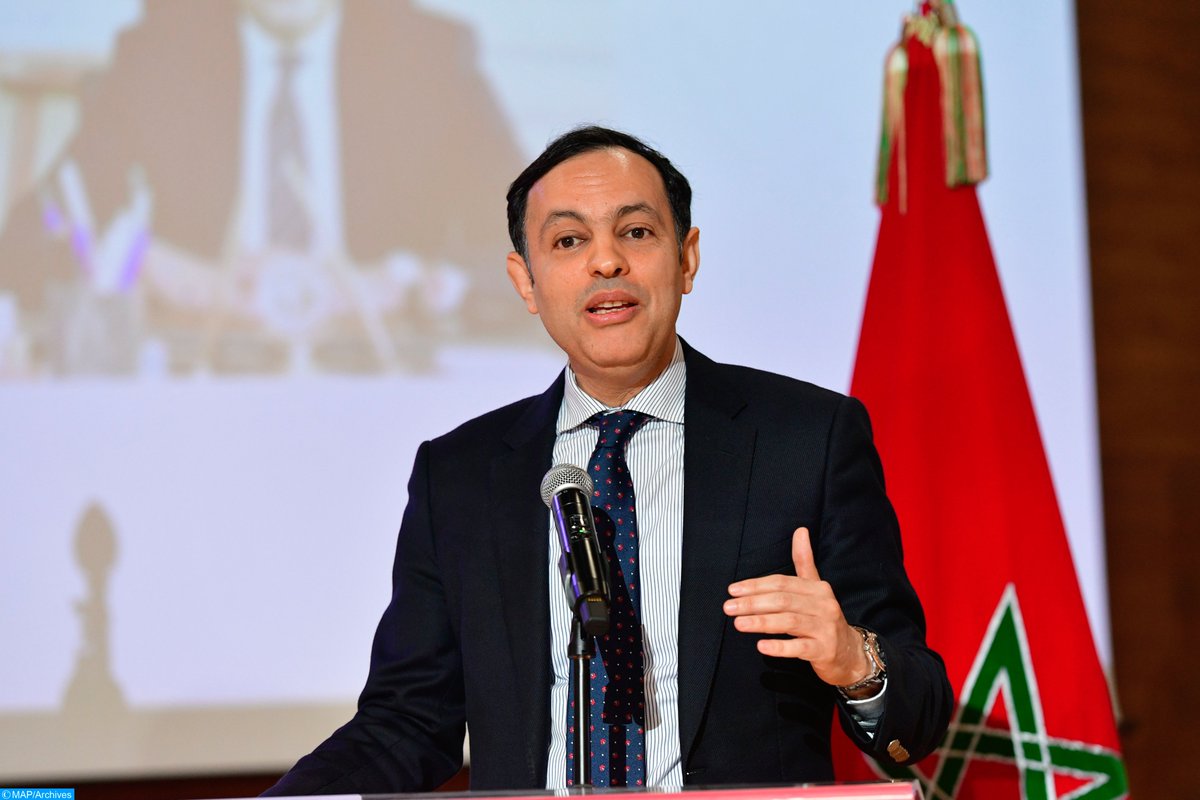
The overall cost of the measures taken within the framework of social dialogue will reach 49.7 billion dirhams (MAD 49.7 bn) by the end of 2026 and early 2027, announced on Monday the Minister of Economic Inclusion, Small Business, Employment and Skills, Younes Sekkouri. He noted that this significant financial effort is directly aimed at supporting purchasing power and combating social disparities.
Before talking about budgets, expenditures, or agreements, social dialogue is first and foremost about establishing a relationship of trust between several institutions—the government, the social partners, and employer organizations, including representatives of the agricultural sector—the minister emphasized in response to oral questions in the House of Representatives on recent developments in social dialogue.
Presenting an overview of the measures implemented, Mr. Sekkouri stated that the guaranteed interprofessional minimum wage (SMIG) has increased from 14.81 dirhams per hour at the start of the government’s mandate to 17.9 dirhams currently, with net wages thus rising from approximately 2,800 to 3,400 dirhams.
The minimum wage in agricultural activities (SMAG), for its part, has increased from less than 1,900 to 2,400 dirhams as of this month of April, he added.
At the beginning of its term, the Executive faced strong demands for a general wage increase, which was not possible in 2023, the minister specified, noting that “when the opportunity arose, a significant share of the state budget was allocated to a general salary increase of 1,000 dirhams … under difficult economic circumstances.”
As part of sectoral social dialogue, the government official highlighted that salary increases were decided for certain sectors, including education, noting that about 325,000 civil servants benefited from increases ranging from 1,500 dirhams at the start of their careers to 5,000 dirhams at the end of their professional paths.
He further asserted that these measures also benefited the private sector, notably through revisions to income tax, resulting in an average increase of around 400 dirhams in employees’ income, in addition to reforms affecting pensions and old‑age allowances.
In this context, the minister indicated that the number of contribution days required to qualify for an old‑age pension has been reduced from 3,240 to 1,320 days, with the possibility of recovering contributions if this condition is not met.
He also mentioned new measures in favor of private security guards, who work under difficult conditions and for durations that can reach up to 12 hours per day, specifying that an amendment to Article 193 of the Labor Code will be submitted to the next Government Council in order to remedy this injustice.