Kingdom
Mines: Five Promising Projects Under Development
Across the Kingdom, from north to south, mining companies are exploring, surveying, and drilling Morocco’s subsurface in search of silver, copper, zinc, lead, tin, antimony, and any other mineral of interest for the needs of the energy transition. Here is a roundup of the most promising projects.

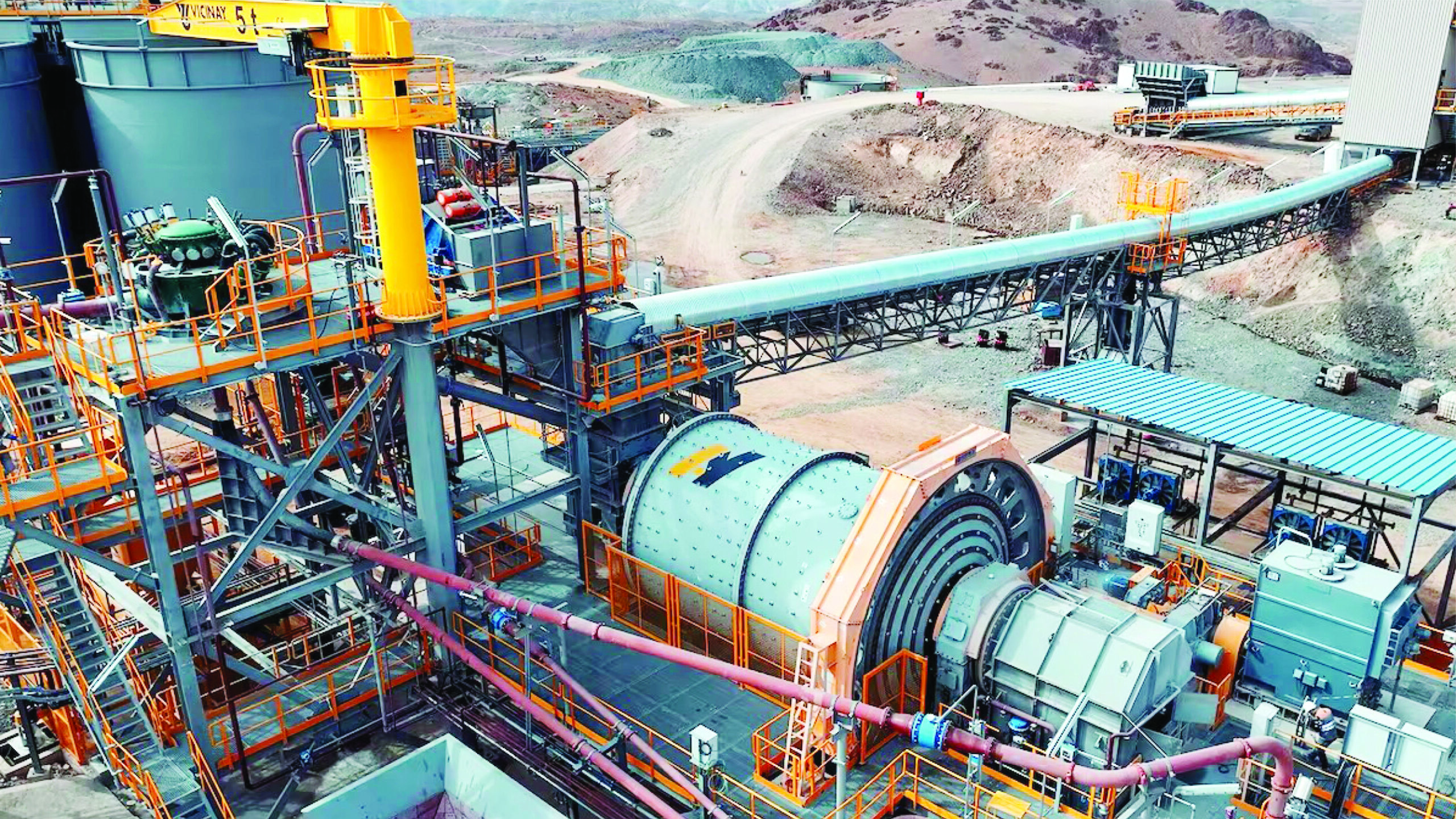
From the Anti-Atlas to the Middle Atlas, via Drâa-Tafilalet, mining projects are multiplying in a climate conducive to investment. Some are already well advanced, while others remain prospects yet to be confirmed. An overview.
Silver at Boumadine
Among the most promising projects is Boumadine. Located in the Drâa-Tafilalet region, it is now one of Morocco’s largest non-phosphate mining projects.
Owned and developed by the Canadian company Aya Gold & Silver, which is already successfully developing the Zgounder silver mine, the Boumadine project consists of a high-grade polymetallic deposit rich in silver, but also in gold, zinc, and lead, with local occurrences of copper.
The concession covers 339 km² within a mining district that is still largely underexplored. The latest estimates report remarkable resources of around 5 million tonnes, with high silver and gold grades, positioning Boumadine as a high-potential asset on a regional scale.
Following an intensive drilling program, the project is expected to be in the pre-development phase in 2026, with an economic assessment launched in late 2025, paving the way for construction of a processing plant as early as 2028. If it materializes, this project would further strengthen Morocco’s position as the undisputed leader in silver production in the region.
Copper at Agadir Melloul
Another promising project is Agadir Melloul, in Taroudant Province, developed by the British company Critical Mineral Resources (CMR) in a joint venture with Morocco’s Coppernicus Mining.
Initial estimates put the copper resource at around 150,000 to 200,000 tonnes. Drilling carried out during the second half of 2025 delivered new results described as “very encouraging.”
Indeed, according to the company, the geological configuration of the discovered deposits paves the way for low-cost mine development, notably through open-pit extraction.
Critical Mineral Resources is now targeting a first resource estimate in the first half of 2026, which should be followed by feasibility studies and the environmental assessments required for production by around 2027. A processing unit with a capacity of up to 1,000 tonnes per day is planned.
Tin at Achmmach
The Achmmach mining project, near Meknes, involves the exploitation of a major tin deposit considered among the largest in the world. Its resources are estimated at 39.1 million tonnes of ore with an average grade of 0.55% tin—about 213,000 tonnes of contained tin, a key component in solder used for electronic circuit boards.
Originally owned by Atlantic Tin, the project was transferred at the end of 2025 into the fold of the Chinese group Xingye Yinxin Mining, marking a new phase focused on deepening technical studies and securing financing to launch production, with commercial start-up estimates as early as 2026–2027.
This strategic project uses efficient underground mining methods, relying on mechanized caving. It is expected to help meet growing global demand for tin for electronics and 5G.
Antimony at Moulay Bouazza
The Australian company Zeus is developing an antimony mine project near Moulay Bouazza, in Khénifra Province. Antimony is a crucial component for the energy transition, particularly for photovoltaic solar panels and wind turbines.
Named the “Casablanca Antimony Project,” it is considered one of the few high-grade antimony exploration projects in the world. The project spans six exploration permits covering a total area of 79 km².
It includes numerous artisanal mining sites, both old and recent, and makes it possible to extract high-grade rock samples, some reaching 46.52% antimony.
If the project comes to fruition, Morocco would position itself as a key supplier of antimony—a critical metal—meeting rising demand from the energy-transition and defense sectors, in a context of very tight global supply, where China, the world’s leading producer, is imposing export restrictions.
Copper at Timarighine
The Timarighine mine stands out as one of the most promising emerging copper projects in southeast Morocco. Located in Zagora Province, in the heart of the eastern Anti-Atlas, the project is being developed by Morocco Strategic Minerals, which holds permits covering about 64 km² in a high mineral-potential area.
The project is distinguished by very high-grade copper mineralization, with surface samples reaching up to 16.16%. After a successful initial exploration phase (trenching, sampling, and mapping), an initial drilling program was launched in mid-2025.
At this stage, Timarighine remains in an advanced exploration phase. But the expected results, if they confirm the potential, would pave the way for further project development with a view to bringing it into production.