Kingdom
Decentralization: Gradually, Government Ministries Shift to a Regional Model
Health, Justice, Investment, Finance… The government is progressively ceding its prerogatives. “Regional ministries” are being established with ever-expanding powers and responsibilities.

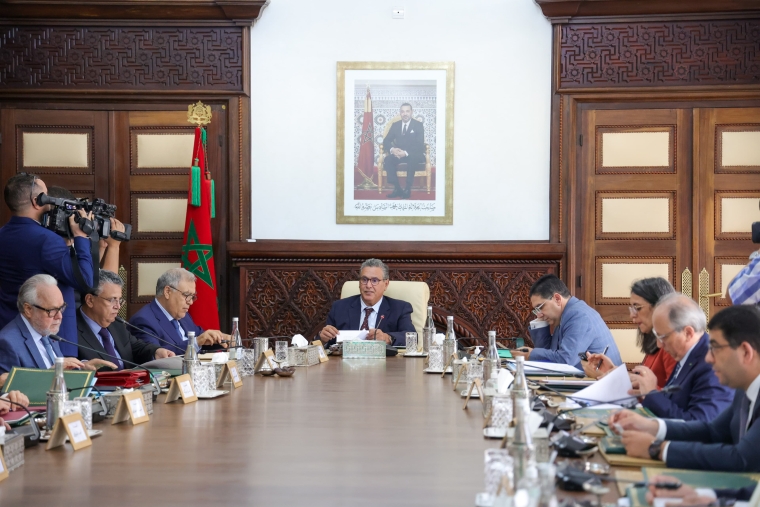
The Minister of Justice recently issued a circular to directors of the central administration, regional directors of Justice, and heads of court registries and public prosecutor’s offices.
The circular urges them to “mobilize the necessary material and logistical resources to support the work of regional directorates, including delegating signing authority to their directors and deputies in areas such as administrative and financial management, public procurement, and human resources management.”
The circular details and clarifies the roles and organization of the ministry’s decentralized services, following the earlier announcement of the establishment of regional directorates across judicial districts under each Court of Appeal, in accordance with Decree No. 2348.24 published in September of last year.
Concretely, these measures empower regional Justice directors and their deputies to “sign and endorse, on behalf of the Minister of Justice, documents related to expenditures, revenue collection orders linked to the execution of delegated budgets, and the special Treasury account titled ‘Special Fund for Court Support.’”
The decentralized services of the ministry are also tasked with “managing regional mobility for civil servants working within judicial districts, reviewing and processing transfer requests in coordination with the central administration, and taking administrative measures to address unjustified absences, in collaboration with direct administrative supervisors and the central administration.”
Beyond this seemingly routine regulatory act lies a profound shift in public administration. Days earlier, the General Tax Directorate initiated steps to collect local taxes.
A draft law had just been adopted to this effect, establishing—for the first time—the role of provincial and regional communal tax collectors. Simultaneously, the Ministry of the Interior is developing a draft code for territorial taxation and a simplification of local tax structures.
Shortly before this, during the last Council of Ministers on May 12, the Sovereign appointed the first director of the GST (Territorial Health Groups), who will oversee the pilot-phase deployment of this new regional entity in the Tangier-Tetouan-Al Hoceima region.
Territorial Health Groups represent a new model for organizing healthcare facilities and managing health policy at the regional level.
This marks the culmination of a deep-rooted reform process within the healthcare system. It also follows lengthy negotiations with unions under sectoral social dialogue, which reassured healthcare staff about career progression after securing guarantees on the centrality of their salaries and retaining their status as state civil servants. The same approach has been adopted at the Ministry of Justice…
It’s worth noting that, unlike the two previous governments, which failed to navigate this transition in Education, the Aziz Akhannouch-led administration took care to first defuse the inherited social pressure points from prior governments before launching reforms on new foundations.
A First Milestone Reached
Here, too, after prolonged protests and contentious negotiations between unions, representatives of the teaching body, and the government, a new statute has been adopted to meet the expectations of civil servants and educational professionals in the Education sector.
The core of regionalization—represented by the AREF (Regional Academies of Education and Training)—has also seen its authority reinforced. Like Health and Justice, Education is not only a priority for reforms launched by the current government but also carries a unique social dimension: abruptly implementing administrative deconcentration in one stroke is highly challenging.
This is a lengthy and arduous process. In other departments, the process is more technical and legal in nature. Examples include local taxation, the new legal framework for Regional Investment Centers (CRI), and higher education.
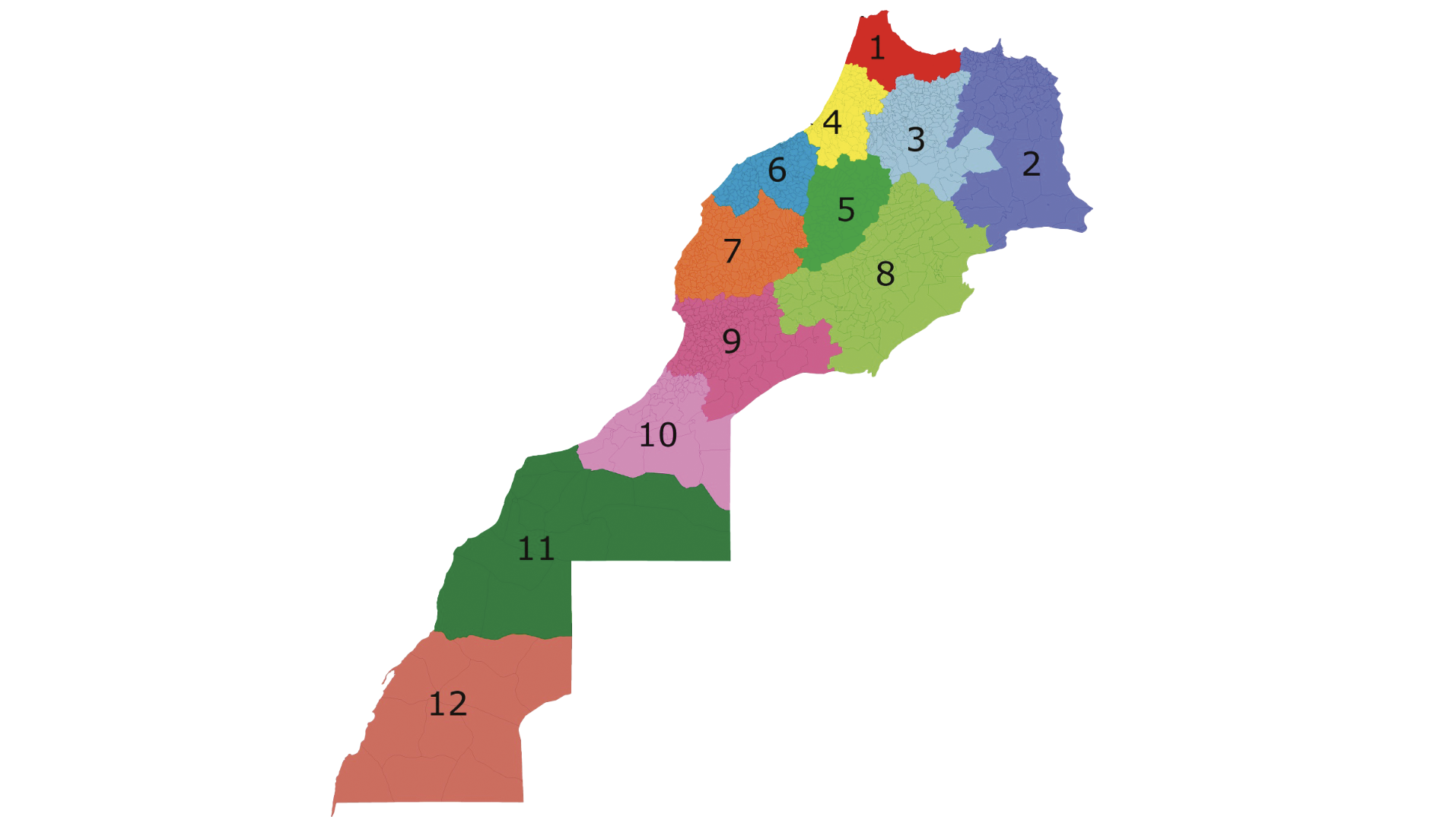
On the same day the first GST (Territorial Health Groups) director was appointed, the Sovereign also named three governors tasked with regional internal affairs in the wilayas of Rabat-Salé-Kénitra, Tangier-Tetouan-Al Hoceima, and Marrakech-Safi.
This move aligns with efforts to strengthen local governance. Similarly, the reorganization of CRIs—now under the oversight of the Head of Government via the Ministry Delegate for Investment, Policy Convergence, and Public Policy Evaluation—has expanded their local authority in investment matters.
The government has also sought to advance another step outlined in the 2018 charter: consolidating external services from multiple ministries under a single regional directorate. The agenda for the December 18, 2024, Council of Government included three draft decrees.
The first decree concerns the creation of a Regional Delegation for Tourism, Handicrafts, Social and Solidarity Economy, Youth, Culture, and Communication, defining its roles and organizational structure.
The second decree aimed to establish a Regional Delegation for Commerce, Industrial and Extractive Production, and Economic Integration, outlining its responsibilities and framework. A third decree focuses on creating a Regional Delegation for Infrastructure, Water, Transport, and Logistics.
While these three texts have yet to be adopted, the intent is clear. The effective implementation of administrative deconcentration remains a challenge, requiring greater resources and coordination—but it is not impossible. It is important to emphasize that regionalization and administrative deconcentration, though complementary, are deeply interconnected.
The success of advanced regionalization partly depends on the effectiveness of administrative deconcentration, particularly in ensuring coherent territorial management. This explains why the government prefers a gradual, step-by-step approach.
In Parallel, the Autonomy Plan
Should we link this to the accelerated evolution of the Sahara issue toward a definitive resolution of this artificial dispute? While the two processes are not formally connected, nothing precludes the possibility that when the Autonomy Plan is deployed in the Southern regions, other regions may benefit from greater autonomy in managing their affairs under advanced regionalization.
It is worth noting, in this context, that the regionalization reform was launched less than three years after Morocco presented the Moroccan Initiative for Negotiating an Autonomy Statute for the Sahara Region to the UN in April 2007.
The Consultative Commission on Regionalization (CCR) was established by the Sovereign on January 3, 2010, to propose a comprehensive framework for advanced regionalization. As stated in the speech delivered on that occasion: “Our national ambition is to transition from an incipient regionalization to an advanced regionalization—democratic in essence and dedicated to development.”