Kingdom
2026 Legislative Elections: The Tone of a Campaign
Times are changing, and the ideological divide of ten years ago is becoming a debate around the program. Two parties stand out from the rest. One defends the achievements, maintains its course; the other changes trajectory. The idea of a two-party system is gaining ground.

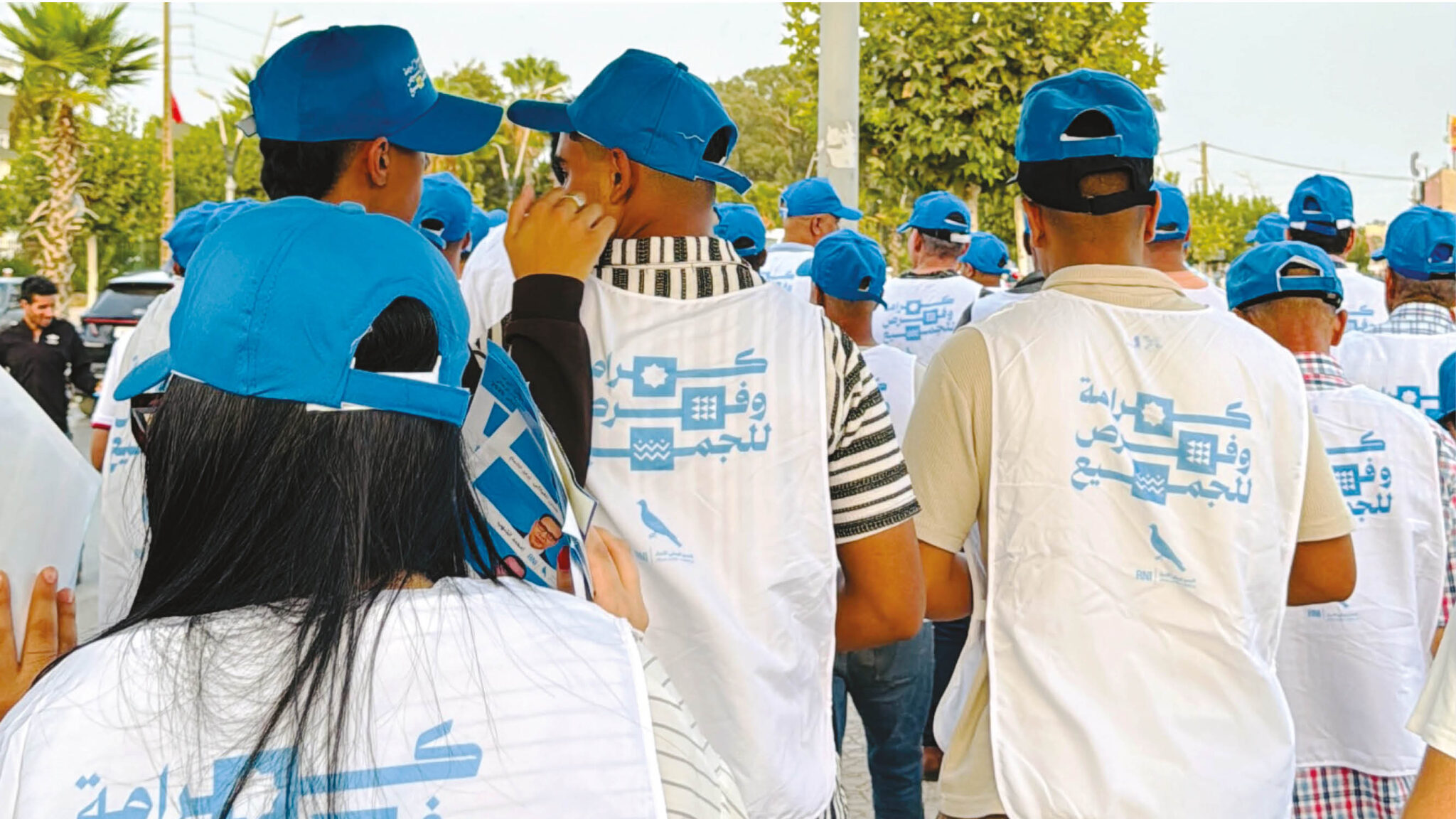
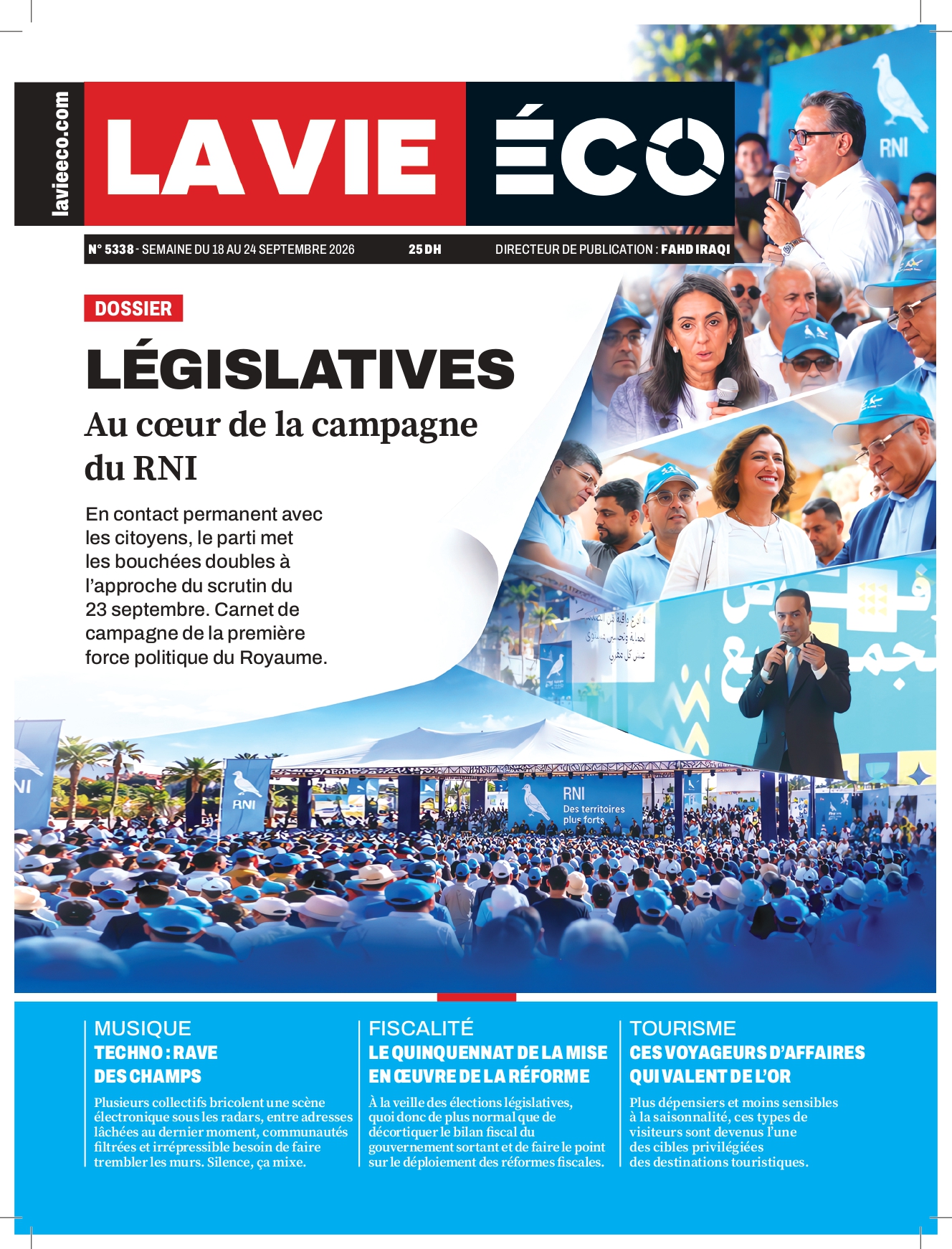
At the end of the first six days, the electoral campaign is in full swing. Undoubtedly, with the exception of the Istiqlal in Laâyoune, the other formations have not yet organized, as of this date, their largest electoral rallies.
At this stage, certain elements of analysis can already be identified.
The first observation is that the RNI is, by far, leading the most structured and professional campaign.
This is an observation that escapes no one. Its message is both clear and simple: “We have been at the head of the government, we have achieved convincing results, now we need to continue.”
Unlike the other two members of the outgoing majority, which have marked a break – more pronounced for the PAM than for the Istiqlal – the RNI has, above all, a considerable advantage: the government’s achievements to highlight.
Its campaign discourse therefore rests not only on promises, but on achievements to improve and build upon.
Above all, the party enters the electoral campaign with a well-oiled machine, a team experienced in fieldwork, and a leadership staff – the president and members of the political bureau – accustomed to meeting citizens and comfortable with grassroots communication.
It is also the formation around which a large part of the campaign is organized.
It is imitated, contradicted, criticized and attacked. In one way or another, the RNI therefore benefits from tremendous visibility.
By contrast, the PJD is undoubtedly the party that most clearly transforms the campaign into political confrontation. Instead of measures and a program, it distributes criticism, invective and accusations left and right.
The Islamist party is not campaigning to return to government, even if only as a supporting formation; rather, it seeks to turn the election into a trial of the outgoing majority, more specifically the RNI and its former president, Aziz Akhannouch.
For his part, Driss Lachguar, head of the USFP, chose, during his first rally, to directly attack the outgoing majority as well as the leader of the PJD. He has continued along the same line.
Less Ideology, More Concrete Issues
To put it briefly, the RNI, PAM and Istiqlal tend to transform politics into management and results. The USFP and PPS are trying to reintroduce the question of redistribution and social justice.
The PJD, for its part, is struggling to reintroduce political and moral conflict. But, in the absence of a pronounced ideological divide, as was the case in 2016, for example, it is the Istiqlal that has skillfully moved into this niche traditionally considered the Islamists’ political territory.
Two themes stand out in the party’s program and electoral campaign: values, the family, and national sovereignty – food, energy, industrial…
For the Istiqlal, the defense of values is part of a context of national sovereignty, unlike the Islamists, whose ideological umbrella extends beyond borders.
The 2026 campaign is therefore much less ideological than that of 2016, and even that of 2021. It is above all a campaign focused on the record, purchasing power, employment, public services…
The cross-cutting theme is, indeed, the standard of living. Employment, wages (SMIG, IR), prices, healthcare, education, housing, social protection and territorial disparities are the themes that recur most often in the parties’ campaigns, primarily those of the outgoing majority.
On the sixth day of the electoral campaign, another observation catches our attention.
The competition now pits the two parties of the outgoing government coalition against each other: the RNI and the PAM. The historic opposition parties are struggling to impose their themes in a media space, but also on the ground, dominated by the confrontation between these two formations.
Five years ago, writes Abdellatif Agnouch, a political scientist and retired academic, known for his reference works on Morocco’s political history, power and institutions, “the RNI innovated politically in the development of programs, in the type of electoral promises, and even in the way of implementing them…
And now, today, the PAM is following in its footsteps… It, in turn, is renewing the way it presents its political offers, moving away from generalities, empty terms and issues unrelated to citizens’ concerns…
Opposite them, the rest of the parties, which no longer believe in their own discourse, content themselves with hoping to win a few seats in order to play the role of the opposition, or that of blackmail…”
Constitutional Evolution
Starting from this, the political scientist asks, through this reflection shared on social networks: “What if the Moroccan political system gradually evolved toward a two-party system or partisan polarization, as is the case in Great Britain, the United States or other countries?”
A configuration in which two main major parties stand out, around which smaller formations revolve, with the possibility of tipping the balance to one side or the other at each new electoral deadline, depending on the economic and political balance of forces at the time.
Institutionally, this year’s electoral campaign also presents an unprecedented element. The 2026 elections, in fact, bring a new development to the electoral and political environment of Article 47 of the Constitution.
These are the first elections in which two parties are competing for first place, but where the electoral ambition is this time carried by members of the political bureau.
Aziz Akhannouch and Fouzi Lekjaa are, so to speak, the real leaders of this electoral campaign. “This is an electoral precedent that inevitably entails constitutional consequences,” notes an observer of the political scene.
This means, the same analyst continues, that within the framework of Article 47, the practice whereby the Sovereign appoints the leader of the party that comes first in the elections as head of government is highly likely to be “abolished.”
And he recalls that “this article was drafted for a classic partisan situation in which the number-one figure in the party was the leader of the political organization and the electoral locomotive that led it to victory.”
The other novelty of 2026 is that the campaign has become hybrid. In 2016, the campaign was still essentially “physical.”
In 2021, it was heavily digital, particularly with the RNI, in a Covid context where rallies were limited.
In 2026, digital and field campaigning no longer replace one another; they operate together. Political parties now simultaneously alternate between popular rallies, short videos, excerpts from speeches, social media posts, relays through local candidates and targeted advertising.
For many observers, Facebook, TikTok and Instagram, for example, have become central elements of electoral competition, alongside traditional rallies. Times are changing.
Ultimately, the 2026 campaign, which is more digitalized, also marks a “relative depoliticization” of the electoral stakes.
This comes at the expense of a grassroots and management-oriented competition, in which quantified promises and the record tend to supersede major ideological debates.
The Red Lines Not to Be Crossed
At the beginning of this campaign, the judiciary intervened at least twice and made a point of making this public. In Kénitra, the public prosecutor’s office announced the opening of an investigation into remarks concerning the financing of the electoral campaign with drug money.
A few days later, in Casablanca, a new investigation into allegations of telephone spying. Two electoral speeches are not simply words spoken in the heat of the electoral campaign, but dangerous acts that damage Morocco’s image.
The first refers to the financing of elections with drug money. These remarks deal a fatal blow to the integrity of the constitutional institutions and to the entire electoral process. The second alludes to organized spying on candidates.
This allegation, in the context of electoral campaigns, aligns, in the current context, with toxic external agendas. These two speeches in particular are dangerous because they constitute an attack on the reputation of the Kingdom, the effects of which continue well beyond the elections. Morocco’s adversaries could ask for nothing better.