Business
Government–unions: Toward a new agreement before the end of the term?
In a difficult economic climate, the executive branch and the social partners are negotiating one final agreement for this term of office. All signs suggest they will succeed. It would be a fitting, high-point conclusion to the government’s mandate.

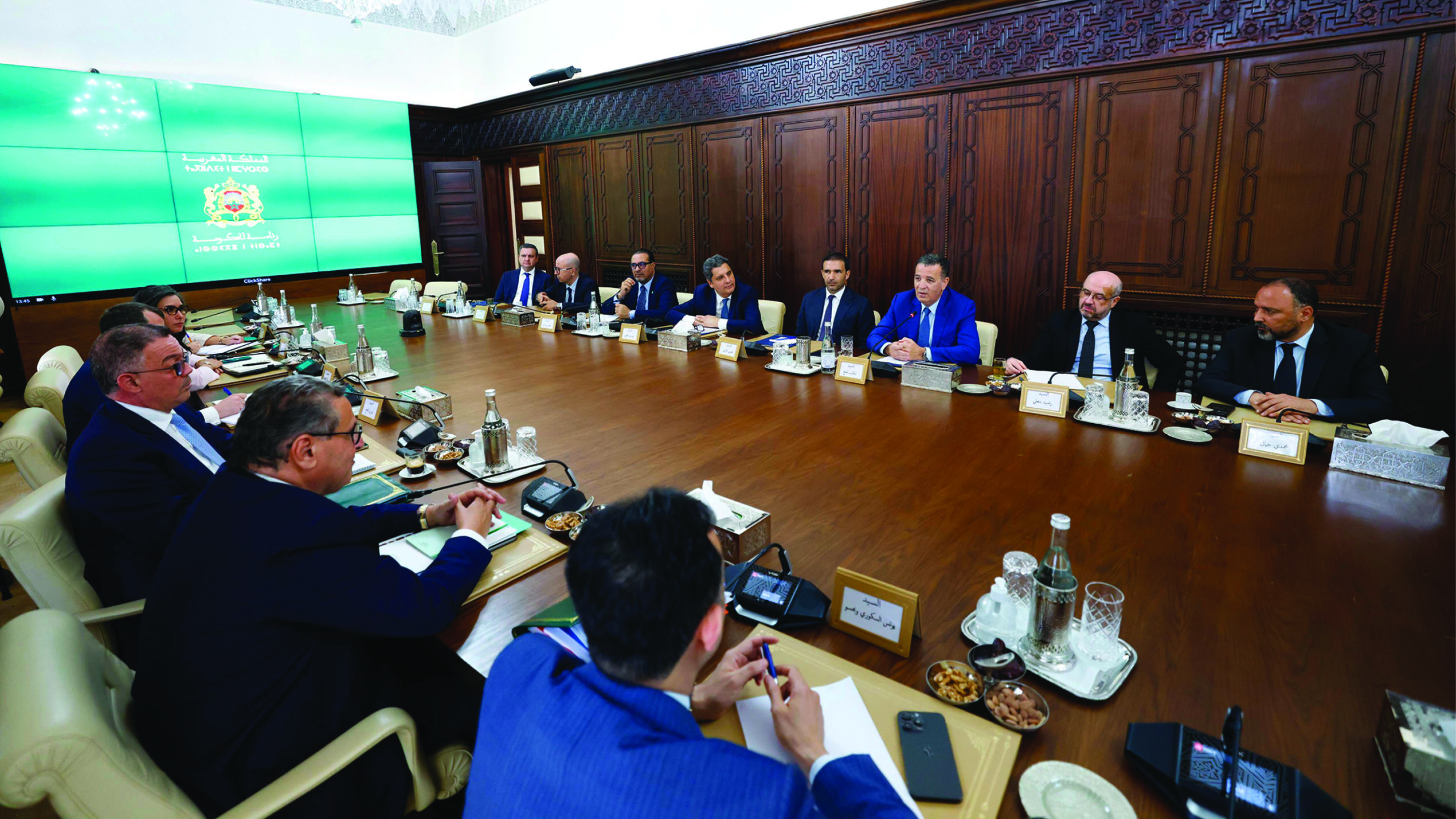
A new round of social negotiations was launched on Friday, April 17. The head of government met with the three most representative trade unions—UMT, CDT, and UGTM—as well as the CGEM and Comader as representatives of employers. This meeting marked the official start of negotiations that are expected to lead to the third and final social agreement of Aziz Akhannouch’s term in office.
The agenda was not officially communicated, but the economic context is already weighing heavily on the discussions. While the unprecedented wage increases granted to civil servants, along with the equally unparalleled increases in the minimum wage (SMIG) and agricultural minimum wage (SMAG) during this term, make any new wage hike unlikely, improving the incomes of employees and civil servants remains one of the unions’ core demands.
However, when presenting his record, the outgoing president of the CGEM, Chakib Alj—after highlighting a historic 30% increase in the SMIG over six years during his tenure—made it clear that a further increase was off the table, at least under the current economic conditions.
As a result, and unlike the other two union confederations that remained vague about their expectations, the UMT, for example, is fully aware of the constraints. The union led by Miloudi Moukharik is therefore proposing the activation of other levers beyond direct wage increases—namely, a revision of income tax (IR), an increase in family allowances, higher retirement pensions, the continuation of VAT reform, and even reform of the internal consumption tax (TIC), among other measures.
For his part, the new head of the CDT, Khalid Alami Houir, stated after last Friday’s meeting with the head of government that if a decision were made to enhance citizens’ purchasing power, it would likely be through tax measures, implemented starting in January of next year as part of the upcoming Finance Bill.
That said, one point is already considered settled: a partial amendment of the Labour Code. The head of government announced this in the communiqué issued after the meeting. The change concerns the situation of approximately 400,000 employees working in security and guarding agencies and companies.
Security guards will now be able to work eight-hour shifts instead of the current twelve, like other employees. Another point that will likely form part of the expected agreement in the coming days is the revision of Law 60-17 on continuing vocational training. The draft bill is expected to enter the legislative process shortly and will most likely be adopted before the end of the current parliamentary session. The CGEM has repeatedly stressed the importance of this reform to unblock the current mechanism.
One figure illustrates the problem: it is “a system in which all companies contribute and only 1% benefit,” the CGEM insists. In the draft bill to be presented soon to the Government Council, the entire governance of this mechanism—currently largely dominated by public authorities—will be overhauled.
According to some sources, its management may even be transferred to a joint-stock company (SA). In this way, employers would secure one of their two main demands since the launch of the social dialogue under the Akhannouch government.
Between Government and Trade Unions
The second long-standing demand is the adoption of the organic law governing the right to strike.
The outgoing president of the CGEM stated a few days ago that the employers’ organization actively contributed to the adoption of this law, both during social dialogue negotiations and through its parliamentary group in the House of Councillors.
However, full implementation of the new law remains contingent on the adoption of two implementing decrees—one concerning the strike committee and the other regulating minimum service levels.
Unsurprisingly, pension reform remains one of the central items on the social agenda for both the government and the social partners. The technical committee has completed its work, and the issue will likely be discussed, although a comprehensive reform does not appear imminent.
Another matter, already mentioned above, is the amendment of the Labour Code. The case of security guards illustrates that the social partners have opted for a partial approach to reform. Once again, a comprehensive overhaul of the 2004 Labour Code is not considered urgent. Nevertheless, given the profound transformations underway in the world of work, certain targeted adjustments have become urgent.
In short, the stakes of this round of negotiations now lie squarely between the government and the trade unions. The unions are keen to take advantage of a difficult economic climate and the approaching legislative elections to secure financial gains that would help improve the purchasing power of workers and households.
For the government, achieving a final social agreement at the end of its term—on top of an already extensive list of social achievements—would sound like a triumphant finale to its mandate.
For the national economy, this would mean a further boost to domestic consumption, with a clear impact on economic activity, investment, and government revenues, particularly VAT and internal consumption tax (TIC).
From a fiscal standpoint, the reform undertaken by the government—especially within the framework of social dialogue—has shown that it is entirely possible to improve revenues while easing the tax burden.
Between 2020 and 2025, income tax revenues increased by 9.4% in absolute terms, according to Treasury figures, even as the government implemented significant tax relief measures benefiting employees, civil servants, and retirees.
The same figures show that VAT, which to some extent reflects household consumption levels and has itself been revised, continues to dominate tax revenues. This is further evidence of the impact of social dialogue, which by the end of the current year will have injected nearly 50 billion dirhams in purchasing power into the national economy.
Collective Agreements: The Relay
While sectoral dialogue in the public sector has proven effective in several so-called “socially sensitive” areas, collective agreements play an equivalent role in the private sector.
Recent years provide clear evidence of this. For example, last Monday, Renault Morocco’s management and employee representatives reached what was described as a historic agreement, including a position-based minimum wage, a general salary increase, and various allowances. The group had already stood out by signing a collective agreement with the UMT and CDT in December 2025.
This mechanism, governed by Article 104 of the Labour Code, gained strong momentum at the beginning of last year, with more than a dozen collective agreements signed during the first half of the year.
In 2025, the government adopted a proactive approach aimed at turning collective bargaining into a lever for economic stability. This mechanism aligns with the regularity-based methodology promoted by the executive branch. Rather than intervening only in times of crisis, a schedule of periodic meetings has now been established.