International
U.S.-Brokered Accord: Prospects for Peace in the DRC and Rwanda
A U.S.-brokered peace agreement was signed between Rwanda and the Democratic Republic of Congo to address ongoing violence, but skepticism remains regarding its effectiveness in achieving lasting peace amid deep-rooted tensions. Critics warn that without addressing fundamental issues, the accord may merely serve as a temporary solution.

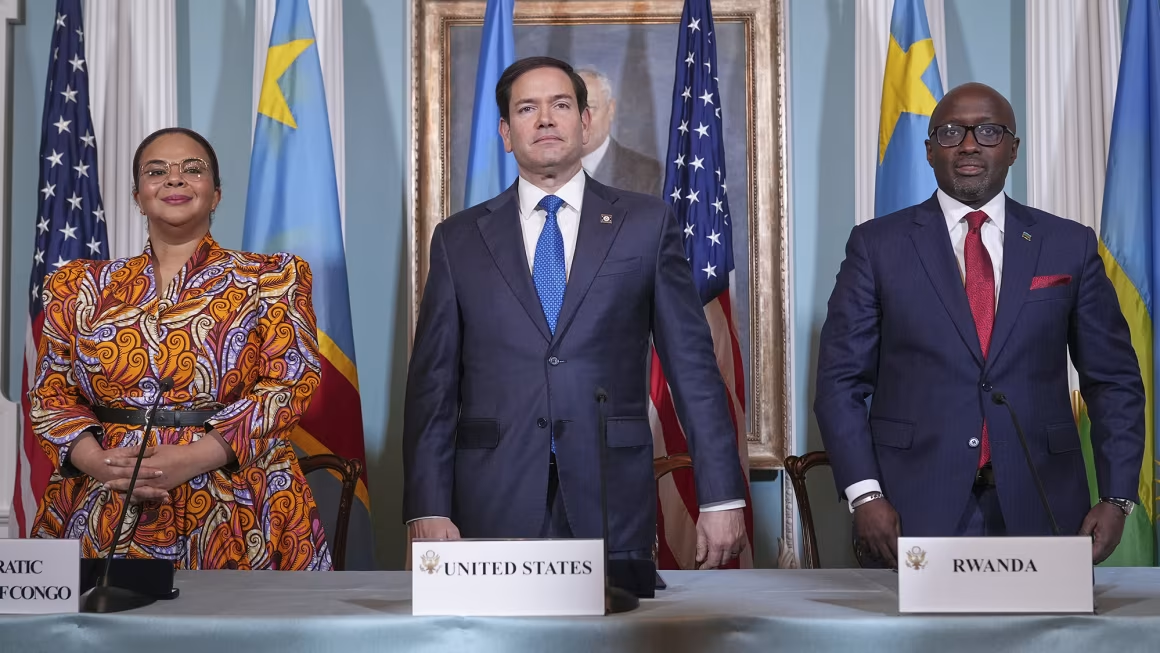
A peace agreement facilitated by the White House was signed in Washington D.C. between officials from Rwanda and the Democratic Republic of Congo (DRC) in an effort to quell the ongoing violence in the eastern DRC, where a militia allegedly supported by Rwanda holds significant territory. Despite being hailed as a significant achievement by President Donald Trump, skepticism surrounds the accord’s potential to bring lasting peace, particularly as the militia has yet to agree to disarm.
Trump expressed optimism about the peace prospects, while downplaying the possibility of receiving accolades for his role in the negotiations. The signing of the agreement took place amidst a backdrop of severe violence, with over 7,000 fatalities and a million people displaced due to recent hostilities involving the M23 militia, a group with ties to Rwanda that claims to represent the interests of Rwandan-origin Congolese.
The conflict is deeply rooted in historical grievances stemming from colonial-era border disputes and the aftermath of the 1994 Rwandan genocide. Accusations that Rwanda is backing the M23 militia contribute to tensions between the neighboring nations. The recently signed peace treaty outlines principles regarding territorial integrity, disarmament, and humanitarian access, while also seeking to enhance economic cooperation focused on the DRC’s rich mineral resources. However, the rebel coalition M23 has stated it did not participate in the process and is pursuing separate negotiations in Qatar.
Previous peace agreements have repeatedly failed, raising concerns that this latest effort may also be short-lived, especially if it does not address underlying issues, including the unequal distribution of the DRC’s mineral wealth. Observers argue that true peace requires addressing institutional weaknesses and ensuring accountability, as well as including broader representation in any future dialogues. Critics have described the agreement as vague and biased towards Rwanda, fearing it might legitimize past aggressions while sidelining the Congolese perspective. The overall sentiment remains that without comprehensive reforms and genuine commitment, peace in the region will remain elusive.
Source: CNN WORLD