Influences
The Transformation of Medical Training
Morocco has seen the emergence in recent years of a new medical training ecosystem: private medical faculties and universities. An alternative that divides as much as it intrigues, balancing the need for doctors, democratization of access to education, and concerns about quality.

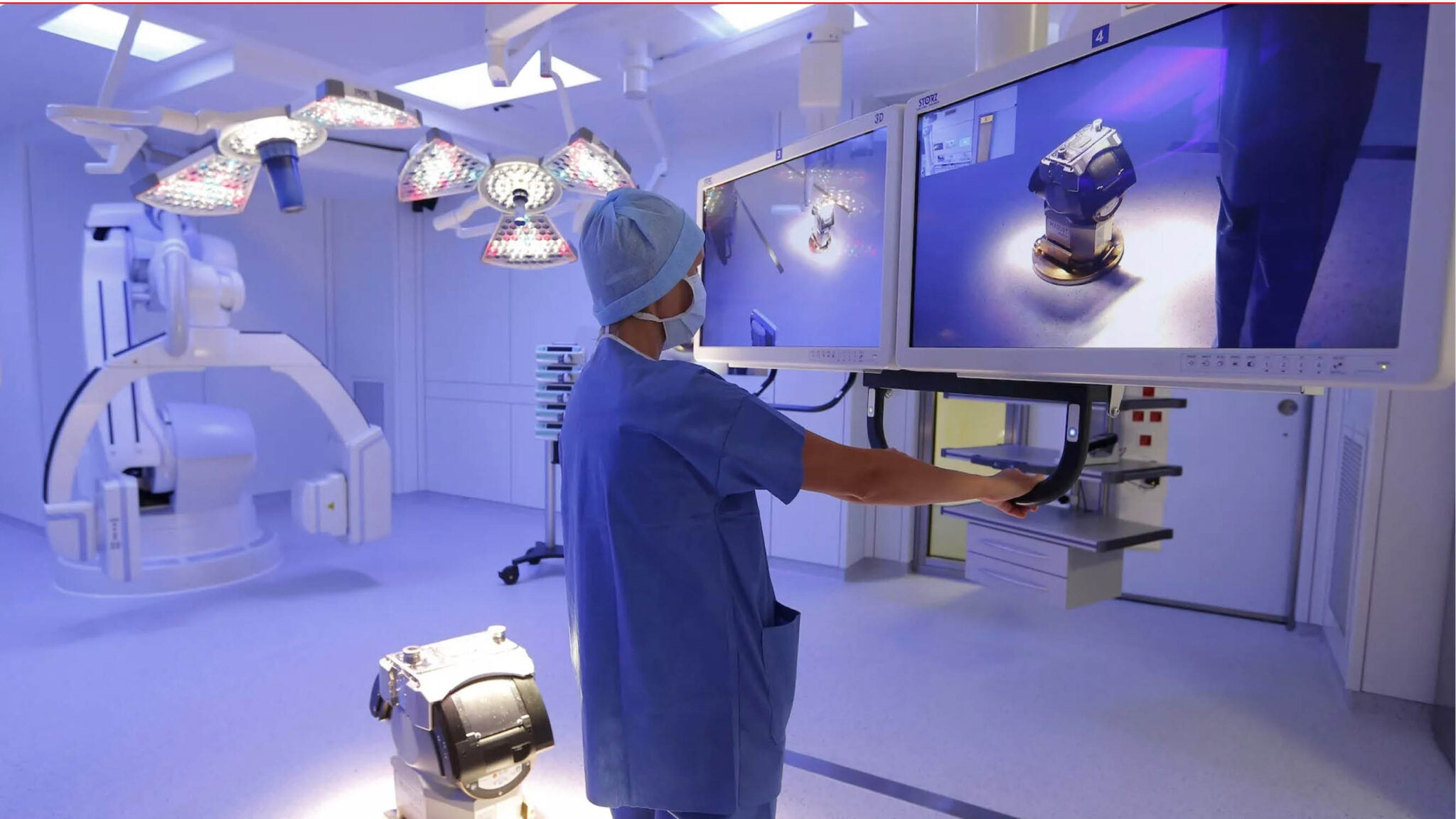
Long dominated by the public sector, medical training in Morocco is undergoing deep change. Over the past decade, a dynamic network of private faculties has established itself in higher education, with brand-new campuses, integrated university hospitals, and practice-oriented teaching methods.
Far from initial stereotypes, these institutions are becoming key pillars in training tomorrow’s doctors. Population pressure, doctor shortages (about 7.3 doctors per 10,000 inhabitants, well below WHO recommendations), and young people’s aspiration for excellence have accelerated private university growth.
From Casablanca to Agadir, via Rabat, Fès, Marrakech, and Benguerir, Morocco now has seven private universities dedicated to medicine and health sciences. In 2024, they welcome nearly 3,000 students, a steadily growing number.
Each major city is developing a health hub often linked to a state-of-the-art university hospital. These faculties complement the often-saturated public offer, focusing on quality supervision, clinical proximity, and innovative pedagogy.
Flagship of the sector, the University
At the forefront is the Mohammed VI University of Health Sciences (UM6SS), expanding with two new campuses set to open in Marrakech and Agadir in the 2025-2026 academic year. This strategic expansion anchors private medical teaching in major southern regions.
These new campuses host three flagship institutions: the Mohammed VI Faculty of Medicine (FM6M), the Mohammed VI Graduate School of Health Sciences Engineering (ESM6ISS), and the Mohammed VI Faculty of Nursing and Health Professions (FM6SIPS).
The goal: to deploy medical, paramedical, and engineering training close to regional needs.
UM6SS: Two New Poles in 2025
FM6SIPS strengthens nursing and medical professional pathways, with campus-specific programs tailored to territorial needs. In Marrakech: anesthesia-resuscitation, operating room, versatile care.
Agadir adds radiology techniques. Both cities will have university hospitals by 2027, completing the promise of integrated training.
Everywhere, the same ambition takes shape: to train immediately operational professionals. UM6SS Casablanca is now one of the largest private training centers in the Maghreb. Founded in 2014 by the Sheikh Khalifa Foundation, it has over 3,300 students, almost half in medicine.
It is linked to two university hospitals (Sheikh Khalifa and Mohammed VI), where students do internships from the first year. UM6SS is also present in Dakhla with faculties for medicine, nursing, health professions, and a higher school of health sciences engineering.
Designed as a crossroad of African knowledge, the African Academy aims to host up to 3,000 students from across the continent. Eventually, the setup will be complemented by the Mohammed VI University Hospital Complex.
In Rabat, the International Abulcasis University of Health Sciences (UIASS) follows a hybrid model: privately funded but tasked with public service missions. Attached to the Cheikh Zaïd Hospital, it offers a diverse portfolio (medicine, pharmacy, dentistry, nursing, biomedical engineering), training around 300 students yearly.
UIASS claims a pedagogy based on practical learning, immersed directly in hospital structures of the Foundation.
In Marrakech, the private faculty of medicine of Marrakech Private University (UPM) has trained small cohorts—around 60 students yearly—since 2018. The campus has a state-of-the-art simulation center, linked to a private university hospital.
Similarly, in Agadir, the Private University of Health and Sciences (UPSSA) owns its university hospital and offers a six-year track oriented towards clinical practice from year one.
Casablanca hosts the Faculty of Medicine of the International University of Casablanca (UIC), known for rigorous academics and applied medical research, with simulation labs.
In Rabat, the International University of Rabat (UIR), known for engineering, is also active in health sciences, with a 450-bed university hospital and ambitious development plans.
In Fès, Euromed University hosts a multidisciplinary health hub: medicine, pharmacy, biomedical science, biotechnology, agro-food, and protein engineering—an integrated offering reflecting a broad vision of health at the crossroads of life sciences and technology.
In Benguerir, the Faculty of Medicine at Mohammed VI Polytechnic University (UM6P) is an innovative model launched two years ago, training about 100 students focused on Learning by Doing, simulation, and multidisciplinary projects. Its ambition is to build a Smart Health Care City aligned with major public health, biotechnology, and regenerative medicine challenges.
High Cost, Supported Scholarships
While private training offers quality support, it remains mainly accessible to privileged social segments: yearly costs range between 120,000 and 150,000 dirhams, a significant barrier even for excellent students.
To address this, some institutions provide financial aid. At UM6P, nearly 70% of students receive scholarships, while others pay scaled fees based on family income.
Formerly marginalized, these faculties are now state-recognized and integrated into the national higher education system, with accredited diplomas. Admission thresholds usually range from 14.18 to 14.40 out of 20, reflecting high academic standards.
Once viewed skeptically, private medical faculties now wear white coats in the big leagues. Selective, modern, and increasingly accessible due to scholarships, they offer a credible—and often envied—alternative to the public route.
With high-tech campuses, integrated hospitals, and immersive pedagogy, these institutions are training a generation of doctors well attuned to their era.