Influences
The Opposition in Disarray
On this front, it feels like we’re witnessing clashes of egos. The political arena is devolving into a spectacle of domestic squabbles. Recent developments prove this point. Insights.

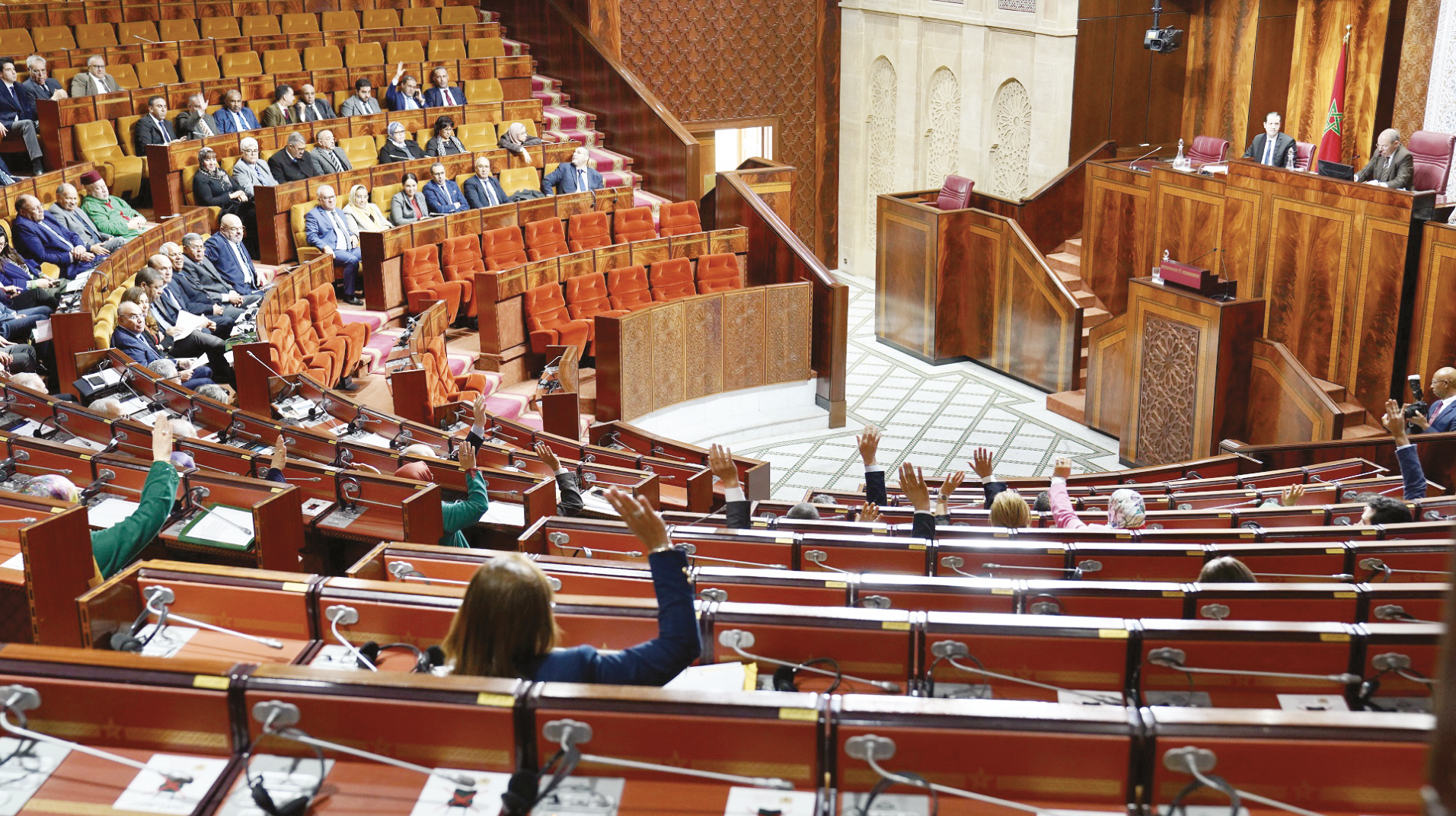
The penultimate legislative year is drawing to a close, and relations between opposition parties have deteriorated entirely. This, in fact, will define the legacy of the current legislature’s four-year term. While tensions have long characterized relations between the USFP and the PJD, particularly since 2016, the ‘novelty’ now lies in the escalating rifts between the Rose Party and its former left-wing ally, the PPS led by Nabil Benabdellah.
Instead of substantive debates to give political action meaning, we now witness endless ‘verbal jousting’—escalating into outright brawls where no holds are barred. Personalized attacks dominate the spotlight.
Indeed, in recent weeks, the political scene—particularly within the opposition—has devolved into what resembles ‘domestic squabbles’ among its factions. Hardly a day passes without crossfire between opposition groups.
This is especially true between two ‘flagship’ leftist parties that, despite sharing decades of political trials and tribulations, are now locked in unprecedented tensions, according to observers. The root lies in the ill-fated ‘motion of censure’ project.
First, the dispute centered on who would ‘draft’ the text. Then, it shifted to ‘who would present it.’ Finally, everything collapsed when the Socialist Union decided to ‘suspend’ all coordination with the three other opposition factions: the PPS, the MP, and the PJD.
A Matter of Posturing…
Amidst ‘opposition within the opposition,’ tensions might have subsided, but the sensitivities of each faction kept the fire burning. Observers have even labeled the situation as ‘clashes of egos.’
The USFP blamed the failure of the attempted motion on the MP and PPS, accusing them of trying to ‘hijack’ a project it considered its own. During an appearance on 2M’s Maa Erramdani, the Rose Party’s First Secretary launched sharp criticisms, notably ‘lambasting’ other factions for scapegoating his party.
Their reactions were predictable. The MP, through its Secretary-General Mohamed Ouzzine, claimed the USFP had ‘lost its political compass,’ while the PJD outright accused it of ‘selling out its reversal.’
But the prize for vitriol goes to the PPS. Feeling targeted, its Secretary-General Nabil Benabdellah used the 6th session of his party’s central committee to directly attack the USFP’s leadership. His vehemence peaked with the now-infamous line: ‘If they come looking for us, they’ll find us. Starting with me!’
Debate has vanished, replaced by petty ‘spats’—conducted in the most confrontational and personal terms. Party leaders’ televised appearances have showcased this dynamic, airing their grievances to the public.
Even party meetings, particularly those of the Rose Party and the Book Party (PJD), devolved into platforms for potshots. During a national tour ahead of October’s major congress, Driss Lachguar (USFP) deliberately ‘provoked’ his critics, especially Benabdellah.
The latter greenlit his ‘lieutenants’ to retaliate, as evidenced by press columns. Mohamed Ouzzine (MP) likewise seized every opportunity to stay in the fray, even insinuating—like Benabdellah—that the USFP was ‘colluding’ with the ruling majority. On this front, it’s worth recalling that the Book and Rose parties are lightyears from their last joint statement in… December 2023.
In war as in peace, opposition factions now tear into each other publicly, often through social media—the new battleground.
Meanwhile, the PJD’s Secretary-General, amplified by his allies, persists in preaching and insulting all who reject his ‘regressive’ vision of Moroccan society. The latest ‘storks’ episode* joins a long serial of repetitive excesses, swiftly condemned by civil society.
The MP, for its part, struggles to position itself as an ‘indispensable, distinguished opposition force’—despite its internal strife. This includes dissidents led by Mohamed El Fadili, who filed paperwork with the Interior Ministry to form a new party: yet another split among the Amghar’s heirs. Ouzzine dismisses it as ‘baseless.’
All this paints a picture of a ‘fractured opposition front.’ Its factions—tasked with articulating policy ‘proposals’—are instead mired in battles of posturing.
The Majority Focuses on Organization
Unlike the infighting plaguing opposition parties, the majority coalition remains ‘fully occupied.’ Their focus lies in governance, united by a shared determination to cohesively complete the current mandate. Yet they also prioritize their core mission: actively politically engaging citizens.
Last weekend exemplified this. The RNI (National Rally of Independents), true to its ethos of maintaining constant contact with Moroccans—especially youth—gathered dozens of young people in Agadir as part of a new initiative set to expand to other cities across the Kingdom.
The same weekend, the Istiqlal Party’s Secretary-General, Nizar Baraka, welcomed the inaugural cohort of ten ‘graduates’ from the party’s Youth Academy. A leadership member described this move as aiming to ‘prepare the next generation.’
As for the PAM (Authenticity and Modernity Party), it continues building momentum from its recent national congress, emphasizing renewal while addressing the aspirations of younger demographics. That weekend, the Tractor Party also hosted its Summer University.