Influences
Sports Diplomacy: Morocco Strengthens its African Soft Power
In just over a month, the Kingdom has pulled off two masterstrokes. In December, it was chosen to host the FIFA Africa regional office, and on Monday, January 27th, it finalized a headquarters agreement with the African Clubs Association, establishing itself as the Mecca of football on the continent.

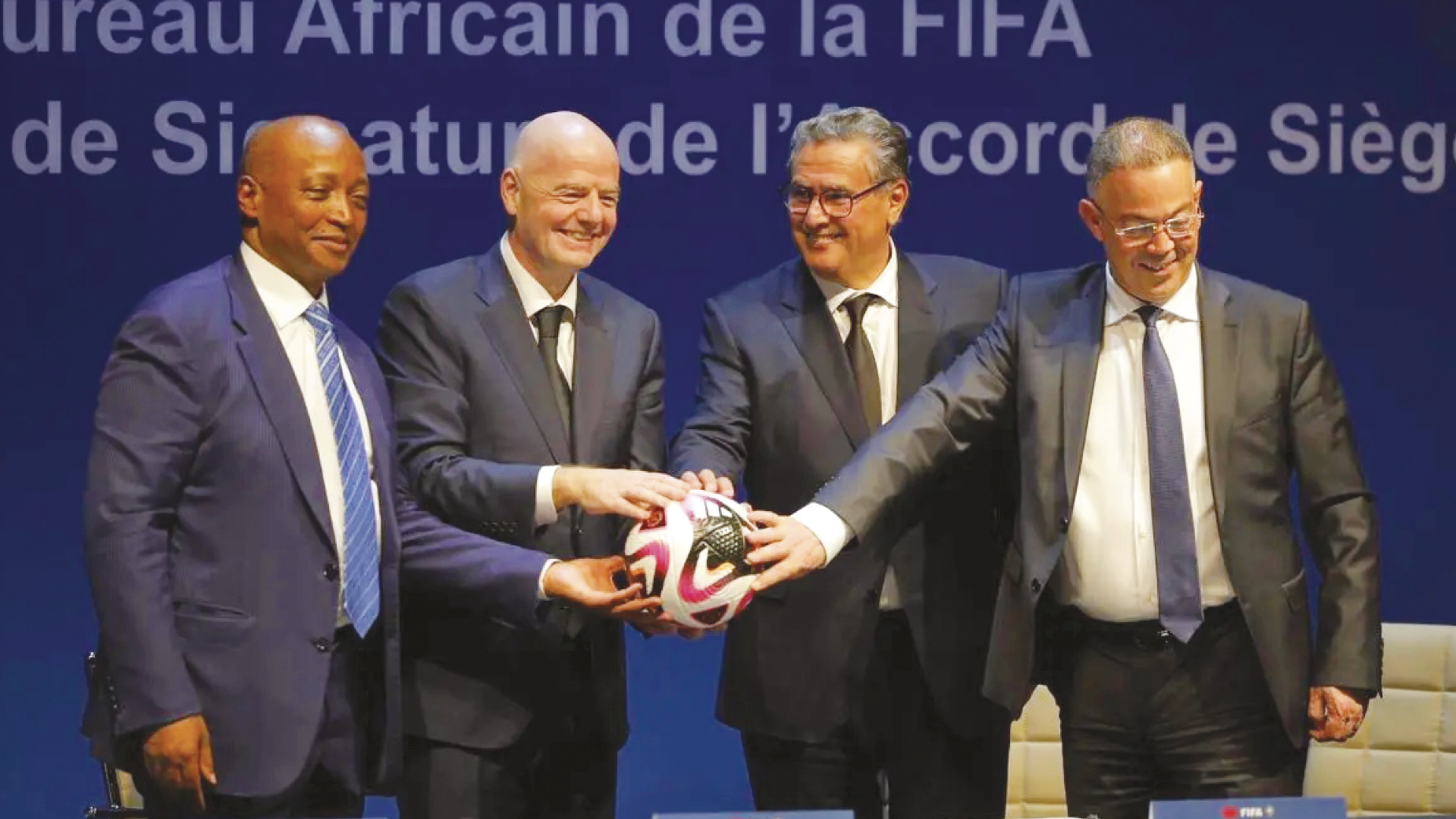
In the wake of hosting the draw for the 2025 Africa Cup of Nations, held last Monday in Rabat, an agreement was signed at the Mohammed VI Football Complex in Salé for the official establishment of the headquarters of the African Football Clubs Association (ACA) in the Kingdom. The president of the FRMF, Fouzi Lekjaa, described this event as both “a historic moment for Africa” and the start of “a true revolution in club football” that this entity is expected to create.
Certainly, what is sure, and this was also mentioned, is that the signing of this agreement “will only reinforce the Kingdom’s place in Africa.” This is in reality what Morocco has been working on for at least a decade: strengthening its soft power in Africa. And football is undoubtedly one of the most effective instruments of this sports diplomacy. The Kingdom has understood this for years.
As a reminder, as far back as 2015, Morocco had already signed sports partnerships with Tanzania and Rwanda, committing to finance the construction of several stadiums. And that is just one example. In reality, since then, the Royal Moroccan Football Federation has concluded partnerships with 44 African federations, primarily from Sub-Saharan Africa.
These are, it should be recalled, two-year renewable contracts, “adjusted according to local realities, including support for the construction of sports infrastructure, training for staff, hosting training camps for national teams, referee training, and organizing friendly matches.” This multitude of bilateral partnerships later took on an institutional dimension.
Thus, today, the Confederation of African Football (CAF), which was behind the initiative to create the ACA a year ago “in order to unify African clubs, strengthen cooperation, meet various challenges, and seek innovative solutions to develop African football,” has chosen Morocco to host its headquarters.
This choice only confirms the Kingdom’s position as a force for regional and continental integration, which also holds true for several other domains beyond sports. Even when it announced its official candidacy to co-host the 2030 World Cup, it was in the heart of Africa, in Rwanda, that it chose to do so in March 2023. This was to signify that hosting this global event is not just for Morocco, but for all of Africa.
Consecration by FIFA
This is what earned it the honor, still in the realm of football, of hosting FIFA’s regional representation. As we all followed, the memorandum of agreement for the construction of the regional headquarters of the International Federation of Association Football in Africa was signed on Monday, December 16th in Marrakech. It is to be located near the Mohammed VI Football Center.
The signing ceremony took place in the presence of the Head of Government, Aziz Akhannouch, the president of the FRMF, Fouzi Lekjaa, as well as the president of FIFA, Gianni Infantino, and the president of CAF, Patrice Motsepe. The FIFA regional headquarters in Morocco will serve as a hub for the development of football in Africa, supporting national federations and promoting initiatives to improve the level of football on the continent.
This will allow Morocco to play a central role in the training of referees, coaches, and young African talents. The Kingdom will also be able to facilitate the organization of regional competitions and development programs funded by FIFA.
It is undeniable; Morocco is strengthening its soft power by becoming a nerve center for African football. This contributes to improving the country’s image on the international stage and also confirms its role as a bridge between Africa, Europe, and the Arab world, aligning its sporting leadership with its geopolitical ambitions.
Thanks to its performance at the Qatar World Cup in 2022, but also a long history of African and global triumphs in different sporting disciplines, modern infrastructure, active sports diplomacy, and a capacity to organize international events, Morocco now positions itself as a key player in the world of sports on a continental scale.
This strengthens not only national pride but also, and above all, the image of Morocco as a dynamic, modern country, rooted in Africa and open to the world.
An Association and its Objectives
The objectives of the African Clubs Association, created in November 2023, are:
• Protect and promote the interests of African football clubs,
• Ensure that African football clubs are commercially profitable and globally competitive,
• Ensure respect for referees, match commissioners, and VAR operators, and guarantee the independence and credibility of these professions,
• Establish partnerships with sponsors, the private sector, and governments to build stadiums that comply with CAF and FIFA standards, as well as other football infrastructure and facilities in each of the 54 CAF member associations,
• Develop talents from African youth, academies for boys and girls, and improve the quality of African club football to make it world-class.