Business
Renault Morocco: A Renewed Industrial Ambition
The industrial partnership with the group has continued to grow in scale over the years. To the point that its Moroccan industrial base now occupies a key position in its global strategy. And the best is yet to come, according to its president, François Provost.

If Morocco has become a major automotive production hub, it owes it, in large part, to its exceptional partnership with the Renault Group.
The French group was indeed the first major manufacturer to take the Moroccan bet, deciding to invest heavily in a world-class automobile production plant.
That was on September 1, 2007. On that day, in the presence of His Majesty King Mohammed VI, Carlos Ghosn and Driss Jettou, then respectively president of Renault and Prime Minister, signed a letter of intent providing for the establishment of an industrial complex in the Tangier region, marking a major turning point in the Kingdom’s industrial trajectory.
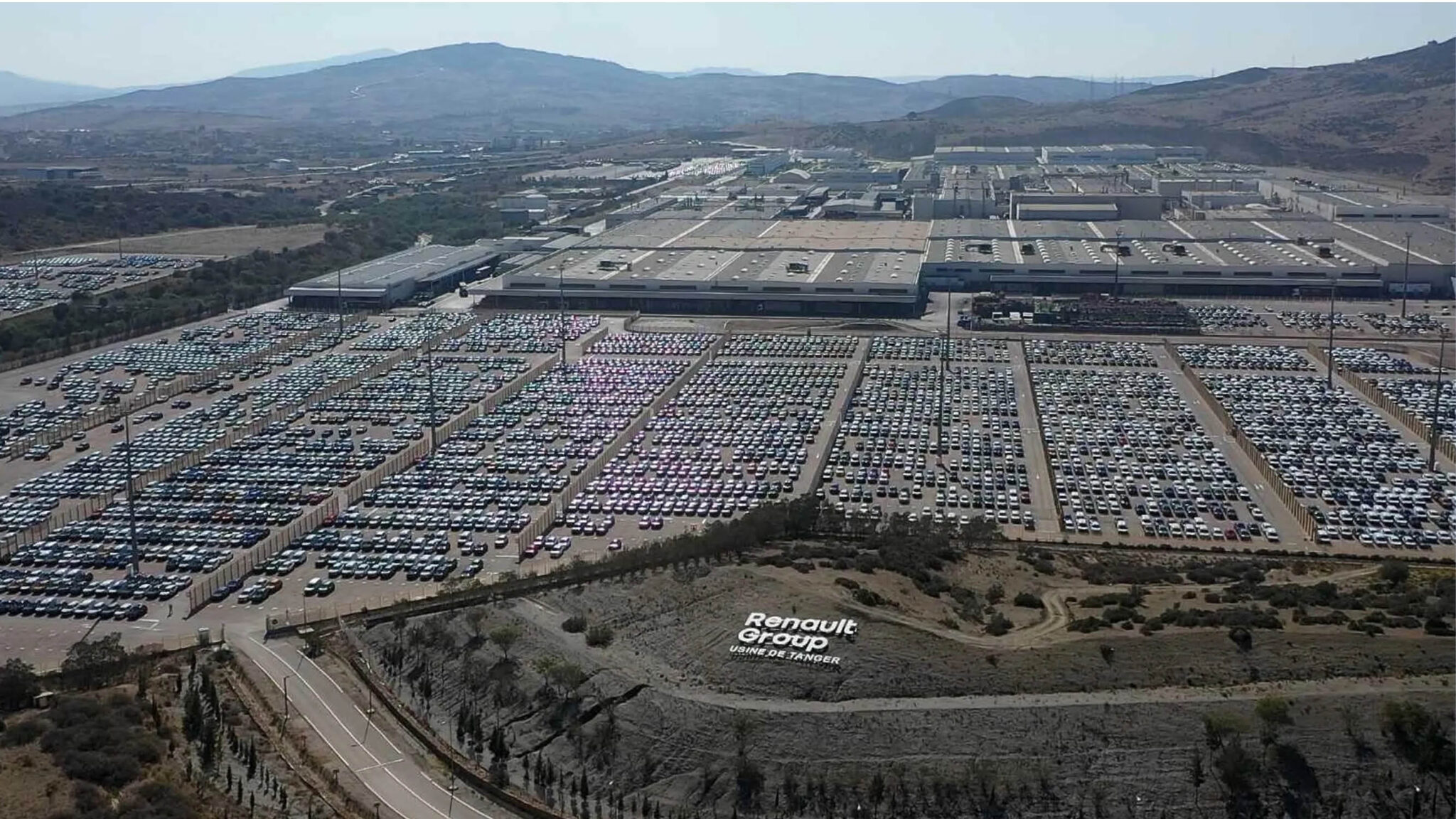
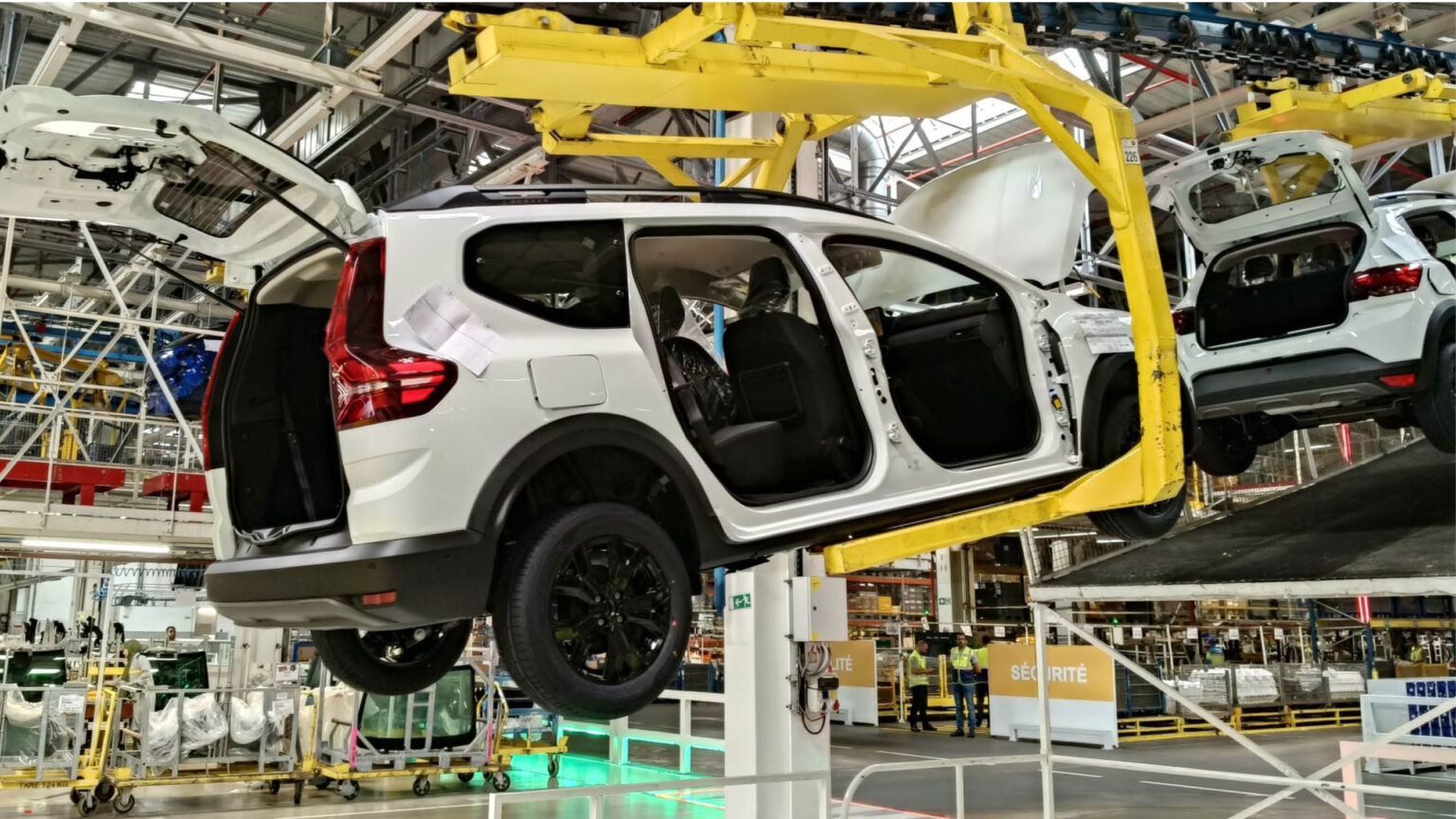
Inaugurated on February 9, 2012 with the production of the Lodgy followed by the Dokker, then the Sandero and Sandero Stepway from 2013, the Tangier plant quickly became the largest in Africa. It established itself as the locomotive for the entire Moroccan automotive sector, attracting suppliers and equipment manufacturers.
Some time later, another global manufacturer, Stellantis (PSA at the time), followed suit in 2015 by announcing a major industrial presence in Morocco, which would become the Kenitra plant.
Objectives Exceeded Ahead of Schedule
The success of Renault’s Moroccan bet, which was apparent from the first few months with increased production rates and exports (288,053 vehicles produced as early as 2016), has never wavered since, pushing the two partners, in a truly win-win logic, to regularly raise their industrial ambition.
No fewer than three amendments have been made to the initial 2007 agreement, each propelling the national automotive industry into a new dimension. As early as 2016, a first amendment was concluded to strengthen the ecosystem and make Morocco a global sourcing platform for Renault.
The objective was to achieve a local integration rate of 65%, double the number of suppliers, and achieve 20 billion dirhams per year in new parts purchases. In 2021, just after Covid, a second, even more ambitious amendment was signed, aiming to reach 2.5 billion euros in local turnover by 2030 and a local integration rate of 75%.
Commitments made to the Moroccan state that have been exceeded, or are about to be. “2.5 billion euros was our commitment made to the Kingdom in 2021 for the year 2030.
We also committed in 2021 to increase the local integration rate to 75%. In 2025, we are already at the level planned for 2030 in terms of parts purchasing, and we are ahead of schedule in terms of localization with a rate of 65.5% (excluding mechanical),” states François Provost, president of Renault Group, during an exchange with Moroccan media.
A New Qualitative and Technological Leap
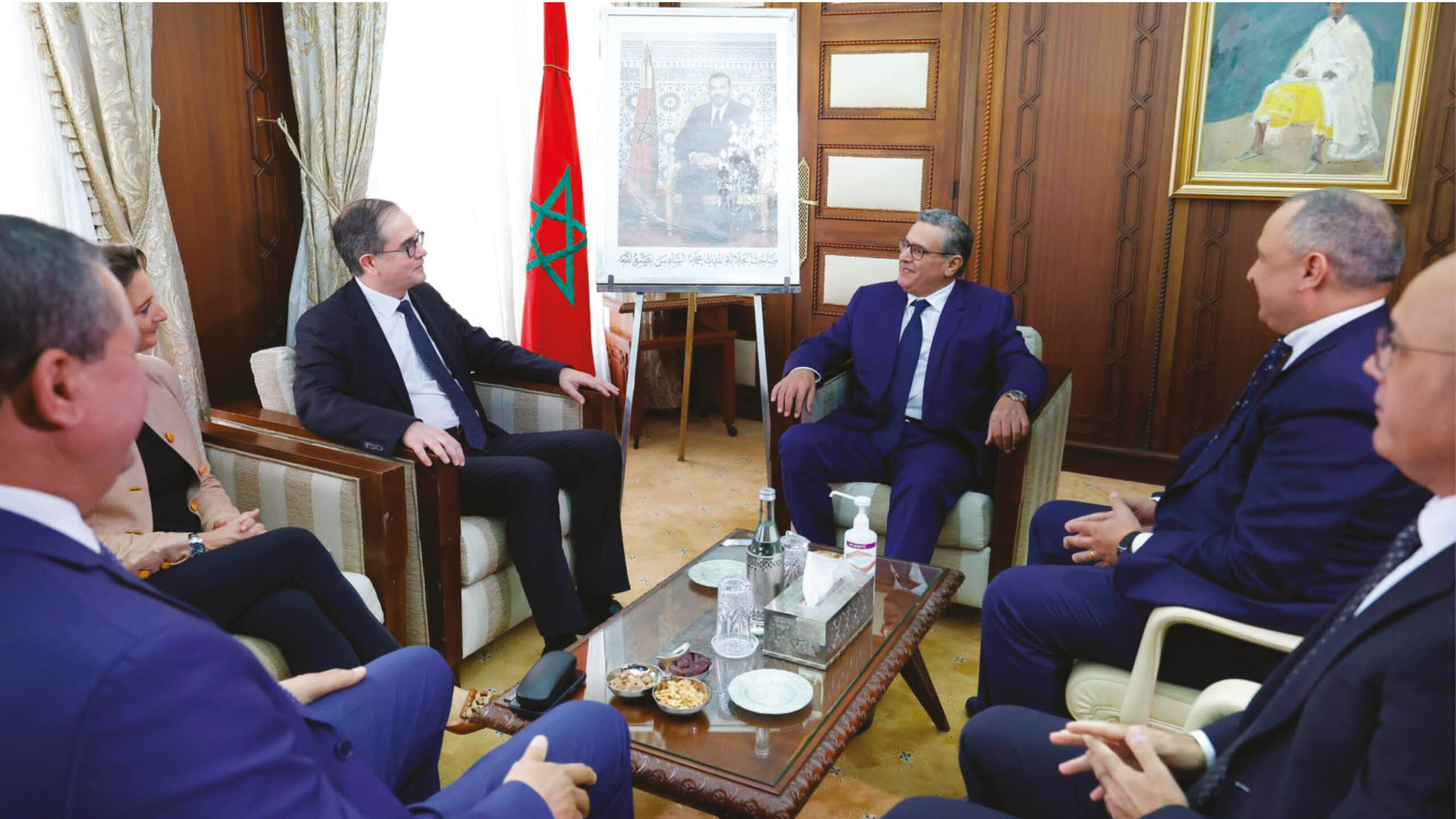
The brand new boss of the diamond group (Renault) indeed chose Morocco for his first visit outside of France since his appointment last July, succeeding Luca de Meo.
Beyond the symbolic importance of this first visit, which indicates the place occupied by the group’s two plants in Morocco (the Tangier plant and the Somaca plant in Casablanca) in the manufacturer’s global setup, François Provost did not come empty-handed: A new amendment, the third, was signed with the Moroccan government, setting the bar even higher in terms of local integration (80% by 2030), sourcing (3 billion euros in parts purchasing by 2030), and technological content, with the creation of 7,500 new jobs.
Electrification of the range, an R&D center, strengthening the supplier ecosystem, introduction of new industrial processes, creation of a digital hub in Casablanca…, a true qualitative and technological leap is planned for the Tangier plant. “This amendment is part of the continuity of the exemplary partnership that binds us to Morocco,” asserts Provost.
The president of Renault Group did not hesitate to list a few figures that testify to the importance acquired by the Moroccan base in the group’s global strategy. “Over 400,000 vehicles were produced again this year, following an already record-breaking 2024. This means that nearly one-fifth of Renault cars produced worldwide are made in Morocco.”
A Dense, Efficient, and Competitive Ecosystem
The supplier network has in parallel grown considerably. “From the very beginning of the Moroccan project, with the support of the Kingdom, we developed a supplier network. Today, we have 87 tier-one suppliers. We will have over 100 by 2030,” he assures. Even better, the Kingdom has become a parts supplier for the group’s other plants, particularly in Europe, the ultimate sign of trust and reliability, believes Provost, who knows what he’s talking about, having been the group’s purchasing director.
“Renault buys 2.5 billion worth of parts from suppliers in Morocco each year, about half of which is used in our plants in Morocco, and the rest, more than half, is exported to Renault plants in Spain, France, Romania, Tunisia, etc.”
He summarized: “We should not see Renault in Morocco simply as a factory and a sales network. What we are interested in developing in Morocco with all partners is the entire value chain.”
In addition to the two manufacturers based in Morocco, European manufacturers, notably German ones, also call upon the Renault ecosystem. “They are not forced to do so. They do it because Morocco is competitive. And Morocco is competitive because, under the impetus of His Majesty the King, the industrial strategy, with its consistency, stability, and ambition, has borne fruit. When manufacturers not present in Morocco source from Moroccan suppliers, it is no coincidence,” he analyzes.
Morocco, he continues, is indeed competitive in terms of costs, human resources, logistics, but also decarbonization, thanks to cheaper green energy. “This automotive ecosystem around the Renault Group is a very strong and remarkable reality for us in terms of efficiency.”
Toward a World-Class 4.0 Factory
With the new amendment, integration is stepping up a notch technologically. Renault is indeed announcing the launch of Renault Technologie Maroc, an engineering center dedicated to research and development activities, confirming the group’s ambition to make the Kingdom a full-fledged automotive hub.
The center’s mission will be to participate in the design and development of the group’s future vehicles produced in Morocco, led by Moroccan teams. It will include a technical skills center for developing technological professions to serve the group’s engineering network.
Digital is the other major novelty of the amendment signed in late October. Renault will establish an office of Renault Digital in Casablanca, the structure that carries the group’s digitalization projects.
“We had a global setup that was France-India. We have decided to include Morocco in it,” the Renault boss informs us. One of the main challenges is the digitalization of the Tangier plant: sensors, artificial intelligence, etc. Tangier will be in the global top tier of manufacturing 4.0 within two or three years, assures top management.
New industrial manufacturing processes, unprecedented in Africa, will also be introduced at the Tangier site. This is the case for hot stamping, which allows for parts that are both lighter and more rigid.
“It has been historically used for higher-end cars; now we have the opportunity to deploy the process on more affordable cars. It’s a real plus for the customer and a real innovation for the Tangier plant,” asserts Provost.
Other innovations could arrive, as Renault is also considering assembling batteries for hybridization systems in Morocco. “It’s not formally decided, but it’s something that will come naturally with the rise of the hybrid mix,” he specifies.
Electrification of the Dacia Range
In an unstable and competitive global market, Renault is therefore betting more than ever on Morocco to succeed in its new global strategic plan, which is expected to be unveiled in March 2026.
“We are preparing for the future. The future is new generations of Dacia brand cars, it’s new technologies, I’m thinking in particular of electrification. I remind you that there is already a hybrid engine in the Jogger today. Starting next year, we will have a hybrid on the Sandero.”
Indeed, a symbol of the Dacia brand’s success, the Sandero Stepway (which earns the nickname “Sandero Land” in Morocco) will benefit, for the first time, from an electrified powertrain, with the launch of its hybrid version planned for the 4th quarter of 2026 in Europe.
“Sandero is the best-selling car in Europe since 2017,” reminds Katrin Adt, Director of the Dacia brand, who is accompanying François Provost on his visit to Morocco. In the medium term, the group’s plants in Morocco will host new electrified ranges based on a new platform by 2030.
An advocate of a progressive, not hasty, electrification of vehicles, François Provost considers hybrid to be a modern, efficient, and accessible solution. “We are number 2 in hybrids in Europe behind Toyota. Our hybrid powertrains are more efficient and more affordable, notably thanks to Horse Powertrain, our joint venture dedicated to powertrains. We are optimizing the costs of these engines to make them as affordable as possible for Renault and Dacia customers.”
All of this will mechanically raise the overall integration rate to very high levels. With an installed production capacity of over 500,000 vehicles per year by the end of 2025, the group is now targeting up to 80% local integration by 2030. “We will reach a sort of asymptote at an 80% integration rate. I don’t know of a country in the world where we are above 80%,” comments the French industrialist, a graduate of the École Polytechnique and the École des Mines de Paris.
Somaca, Renault’s Casablanca plant, taken over in 2005, whose production capacity has increased crescendo to reach 100,000 vehicles per year, is also at the heart of the manufacturer’s future plans.
The Renault Kardian, which has been produced there since 2024, is indeed part of the group’s International Game Plan 2027 (namely the 8 new models intended to ensure the brand’s future growth in its markets outside Europe).
“Somaca, which is a smaller, more flexible plant than Tangier, can be an opportunity to seek opportunities outside Europe, particularly in Africa,” explains Provost. “Morocco is asserting itself more than ever as a strategic pillar of the group…,” he concludes.
Training Also Moves Upmarket
Renault has made training and human capital in Morocco a major lever of its strategy. As Mohamed Bachiri, CEO of Renault Morocco, points out, “the training component of Renault in Morocco is even an example of the quality of the public-private partnership, with the State having made the Institute of Training for the Automotive Industry Professions available under delegated management to the Renault Group.”
A true asset in the group’s overall training setup, this center has become a benchmark. It trains operators, technicians, and managers for the plants, but also for suppliers. “Since 2011, over three million hours of training have been provided by the group, one-third of which was intended for suppliers in the ecosystem,” emphasized the executive.
To prepare for the group’s industrial future, Renault has established a master’s degree in Automotive Engineering 4.0 in partnership with the Moroccan Ministry of Higher Education, to meet medium-term human resource needs. “This started with the ENSA of Tetouan,” states Bachiri.
The general idea is now to train for the professions of today and tomorrow, and to focus more on engineering and digital. Especially since, as Provost highlights, “there are a lot of resources and skills in Morocco in digital. This is important for us, as it brings us a great deal in terms of traceability and quality.”