Kingdom
Public policy: Morocco bets on a results culture
At a government workshop, Otmane Gair, president of the ONDH, said that public policies must now produce concrete, measurable and sustainable results to meet citizens’ expectations and efficiency requirements.

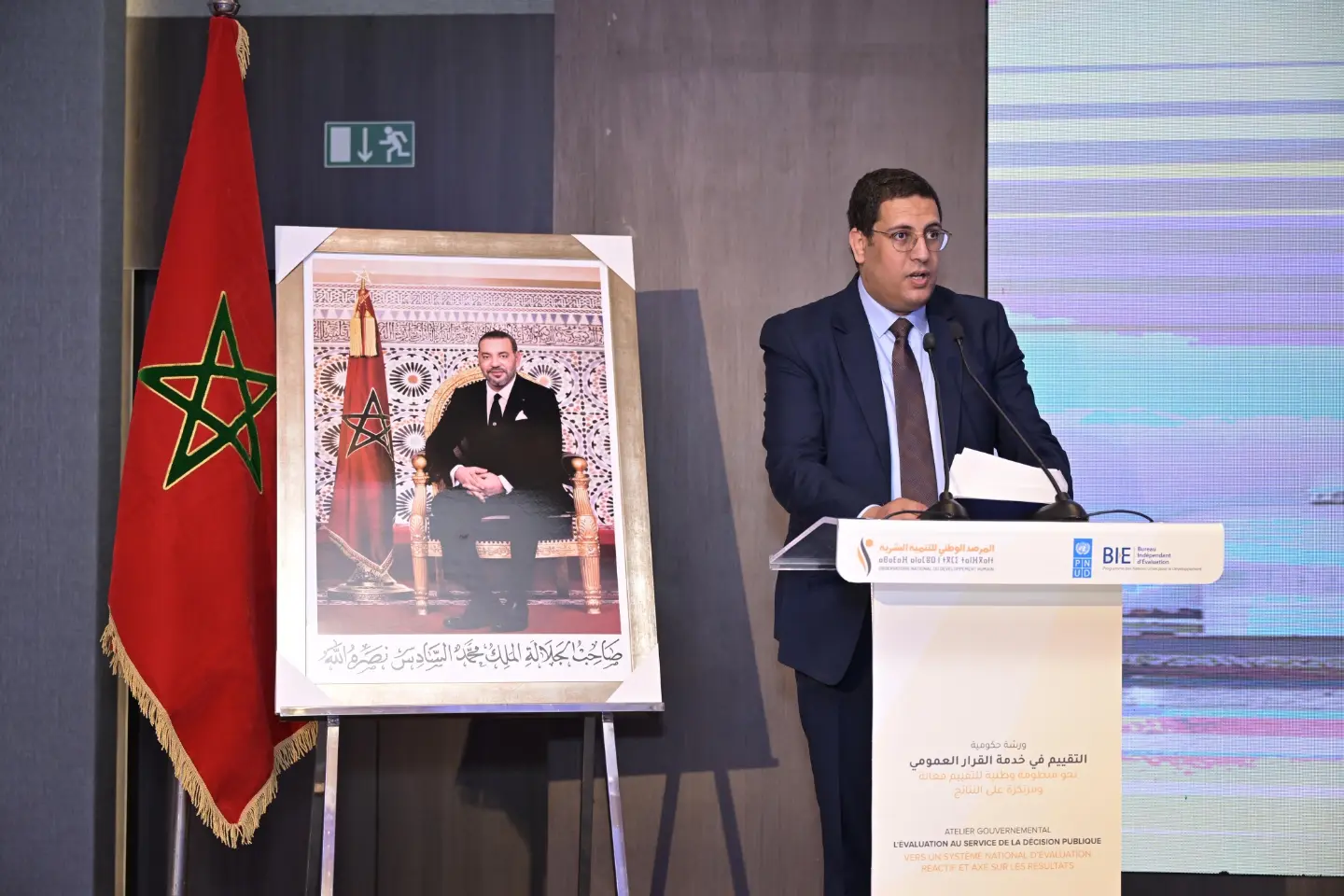
The National Observatory for Human Development (ONDH), in partnership with the Independent Evaluation Office of the United Nations Development Programme (UNDP), organized a government workshop on Wednesday in Rabat focused on the role of evaluation in improving public decision-making.
Held under the theme “Evaluation in the service of public decision-making: towards a responsive, results-oriented national evaluation system,” the meeting brought together ministerial representatives, public agencies, national experts and international partners.
In his opening remarks, ONDH president Otmane Gair emphasized that social changes, growing citizen expectations and efficiency imperatives now require public policies to demonstrate concrete, measurable and sustainable results. He said evaluation can no longer be seen as a one-off exercise carried out at the end of a program, but must be integrated into all stages of the public action cycle.
Participants highlighted the importance of a results-based approach that makes it possible to measure the real impact of public policies, identify necessary adjustments and guide decisions based on evidence. The goal is also to strengthen the accountability of public institutions, optimize the use of resources and promote institutional learning.
The workshop also recalled the role played by the ONDH in producing analyses on human development, social and territorial inequalities, and in evaluating public programs. Speakers stressed the need to develop a genuine national culture of evaluation, based on the principles of independence, credibility, transparency, equity and inclusion.
The sessions covered several themes, notably international evaluation standards, the integration of human rights- and gender-equality-based approaches, and methodologies suited to complex public policies.
Particular attention was given to mechanisms that can turn evaluation findings into operational recommendations likely to improve the design and implementation of public programs.
For the organizers, developing an effective national evaluation system requires both strengthening technical capacities and increasing demand for evaluation from public decision-makers. That condition is seen as essential to firmly embed a results culture at the heart of Moroccan public governance.