Kingdom
President of the World Water Council: Morocco, a model in water resource management
Loïc Fauchon stated at the opening ceremony of the 9th edition of SITeau that the Kingdom is admired for its forward-looking vision of water and for its mastery of all techniques and technologies related to the management and mobilisation of water resources.

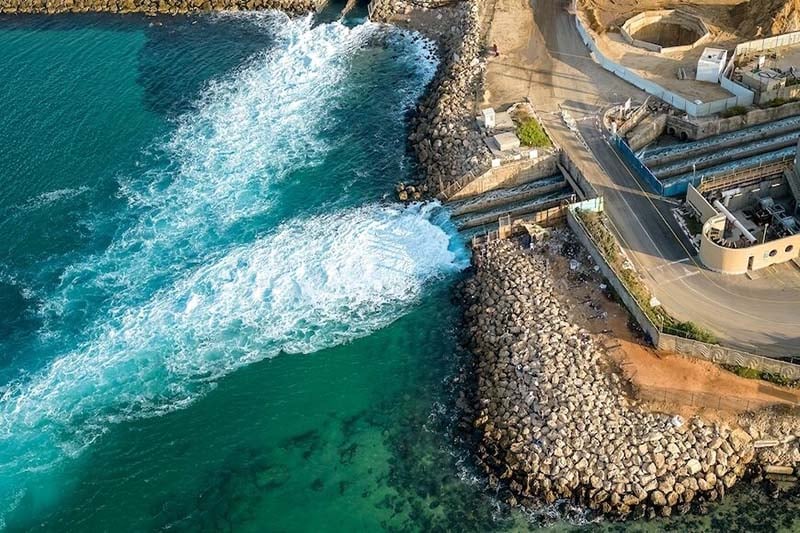
Thanks to a proactive and integrated policy, Morocco is now asserting itself as a genuine model in water resource management, said Loïc Fauchon, President of the World Water Council, on Wednesday in Marrakech.
“At the World Water Council, the Kingdom is admired for the way it looks to the future of water and for its mastery of all techniques and technologies related to water management and mobilisation,” Mr. Fauchon noted during the opening ceremony of the 9th edition of the International Exhibition of Water, Sanitation and Energy Technologies (SITeau).
These achievements, he added, reflect internationally recognised know-how and a Moroccan excellence that deserves to be shared at the global level, describing Morocco as a country “at the forefront” in the field of water.
Addressing global water-related challenges, notably water scarcity, demographic and urban growth, and the increasing frequency of droughts and floods, Mr. Fauchon stressed the need to adopt an approach resolutely focused on action and concrete solutions.
In this context, he highlighted the central role of innovation and new technologies in ensuring sustainable and resilient water resource management.
For his part, Ayache Khellaf, Secretary General of the High Commission for Planning (HCP), emphasised that the HCP has been interested in this issue for several years through forward-looking studies devoted to cities and major territorial challenges. He specified that these studies are not isolated academic exercises, but form part of a continuity with major national foresight initiatives, while remaining in constant dialogue with sectoral strategies led by the various ministerial departments.
The successive episodes of drought, growing needs, and health impacts linked to climate change underline the urgency of adopting integrated, systemic and resolutely innovative approaches. This makes it essential to anticipate future transformations and strengthen territorial resilience in the face of environmental and climate challenges, he noted.
Similarly, Belaid Bougadir, President of Cadi Ayyad University (UCA), stated that the university fully supports this national dynamic and actively contributes to reflection and action around challenges related to water, artificial intelligence and sustainable development. He noted that UCA has made this theme a priority axis of its scientific and territorial development project, convinced that responses to water and climate crises must necessarily be grounded in knowledge, research and innovation.
Mr. Bougadir explained that UCA has gradually built a genuine academic and scientific ecosystem mobilising multiple disciplines and competencies around issues of water, energy, the environment and sustainability. He added that institutions under the University now offer specialised training in a wide range of fields, notably climatology, integrated water resource management, desalination, sustainable agriculture, environmental governance, water law, and plant technologies applied to smart territories.
The challenges facing the world in the water sector require not only technological and scientific solutions, but also new forms of governance, cooperation and knowledge transmission, he continued, before reaffirming UCA’s full commitment to continuing its engagement alongside all national and international partners to promote scientific research, innovation, training and cooperation around the major challenges related to water, energy and sustainable development.
Held under the High Patronage of His Majesty King Mohammed VI, SITeau is organised in partnership with the General Confederation of Moroccan Enterprises (CGEM), the Moroccan Coalition for Water (COALMA), Cadi Ayyad University (UCA) in Marrakech, as well as media and institutional stakeholders, in addition to specific partnerships linked to the various components of the exhibition.