Influences
President of Interpol: Morocco has made the choice to invest sustainably in enhancing the influence of its police force
According to Lucas Philippe, the DGSN, beyond strengthening its operational and technological capacities, is working towards a profound transformation of the relationship between the police and citizens. He also praised improvements in reception, increased responsiveness, continuity of service, and a culture focused on results, performance, and impact.

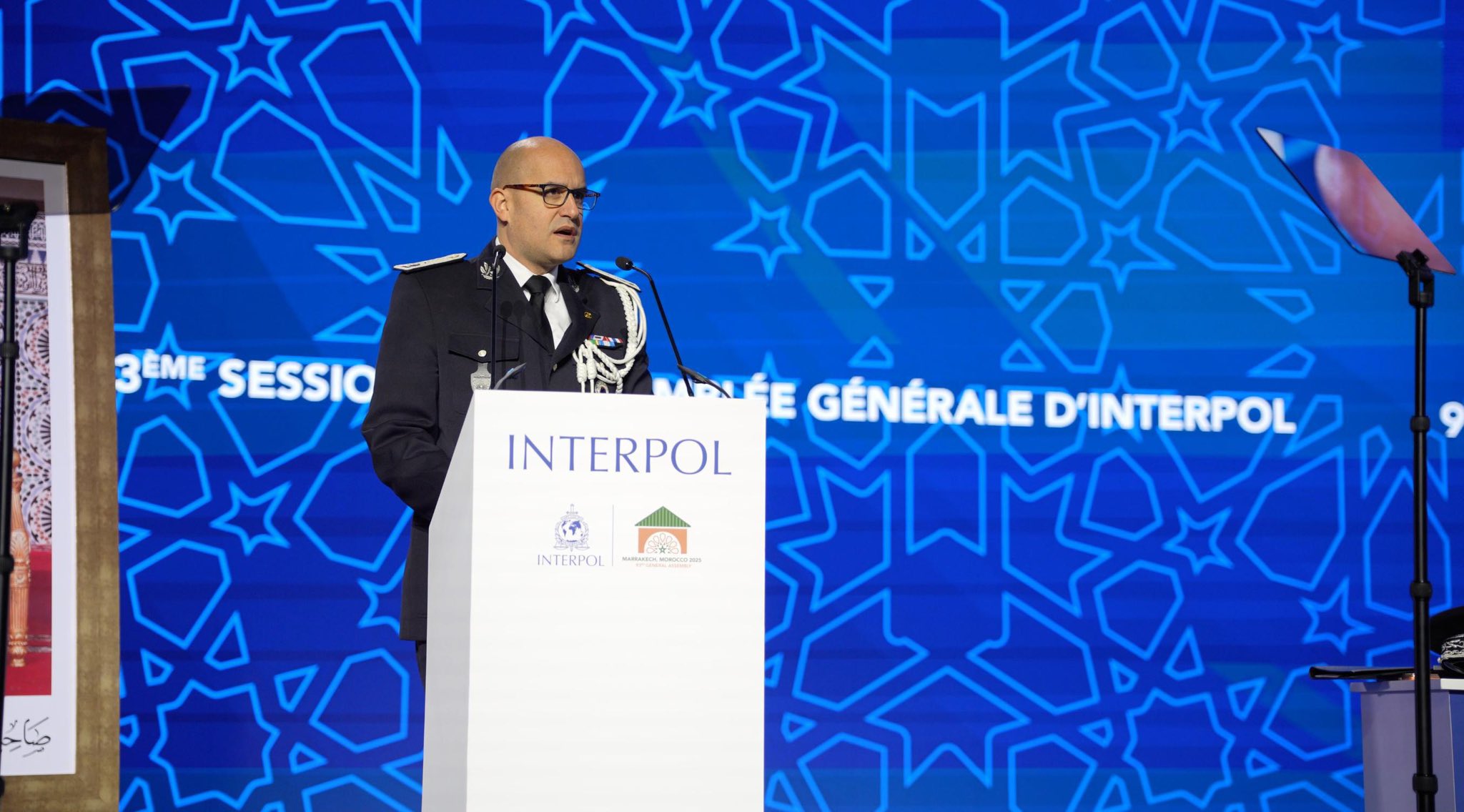
Under the leadership of His Majesty King Mohammed VI, the Kingdom of Morocco has made the strategic choice to invest sustainably in strengthening the influence of its police institution, its operational capacities, training, technology, and the working conditions of its personnel, stated on Sunday in Rabat the President of the International Criminal Police Organization (Interpol), Lucas Philippe.
“The standing of a police institution is measured on several levels. It begins internally, in the pride of those who serve it. It extends to citizens, in the trust it inspires. And it reaches beyond borders, in the credibility it projects on the international stage,” Mr Philippe emphasised, speaking at the opening of the Open Days of the General Directorate for National Security (DGSN).
He noted in this regard that the DGSN, beyond strengthening operational and technological capacities, is engaged in a deep transformation of the relationship between the police and citizens, praising “improved reception, enhanced responsiveness, continuity of service, and a culture of results, performance, and impact — a transformation that, at every level, is grounded in human-centred trust.”
He went on to say that the new headquarters of the DGSN crowns this ambition. “Its leaders embody it. Because security requires resources, vision, and recognition commensurate with the responsibilities entrusted to those who ensure it,” he stated, adding that it represents “a real mark of confidence in the mission and professionalism” of the police community.
“This is precisely the DNA of Interpol,” he remarked, noting that the organisation has, for more than 100 years, projected its influence through “the unique unifying power of security.”
The President of Interpol further stated that he shares with the DGSN the conviction that this influence also depends on the concrete conditions in which police officers carry out their duties on a daily basis, explaining that this is why Interpol’s headquarters in Lyon is currently undergoing a major expansion project reflecting its ambitions.
At Interpol, the vision is that a sense of belonging must be cultivated not only at the national level but also beyond borders, he continued, stressing that “our objective is ambitious: to create a genuine global police community — that of the 25 million police officers across 196 member countries — united around a common mission: to protect and to strengthen bonds of trust and collective pride.”
Highlighting the shared conviction that there can be no stability, attractiveness, or trust without security — and no security without strong, modern, and recognised police institutions — he noted that “Morocco has understood this, and you are demonstrating it today.”
The President of Interpol also expressed his most sincere and admiring congratulations to all the women and men of the DGSN on the occasion of its anniversary, along with his best wishes for success in this new and significant stage in the history of the General Directorate for National Security.